




 Ultralight
 TrueWood Lite
 Solid Oak & Walnut
 Solid Bamboo
 Paint-Ready

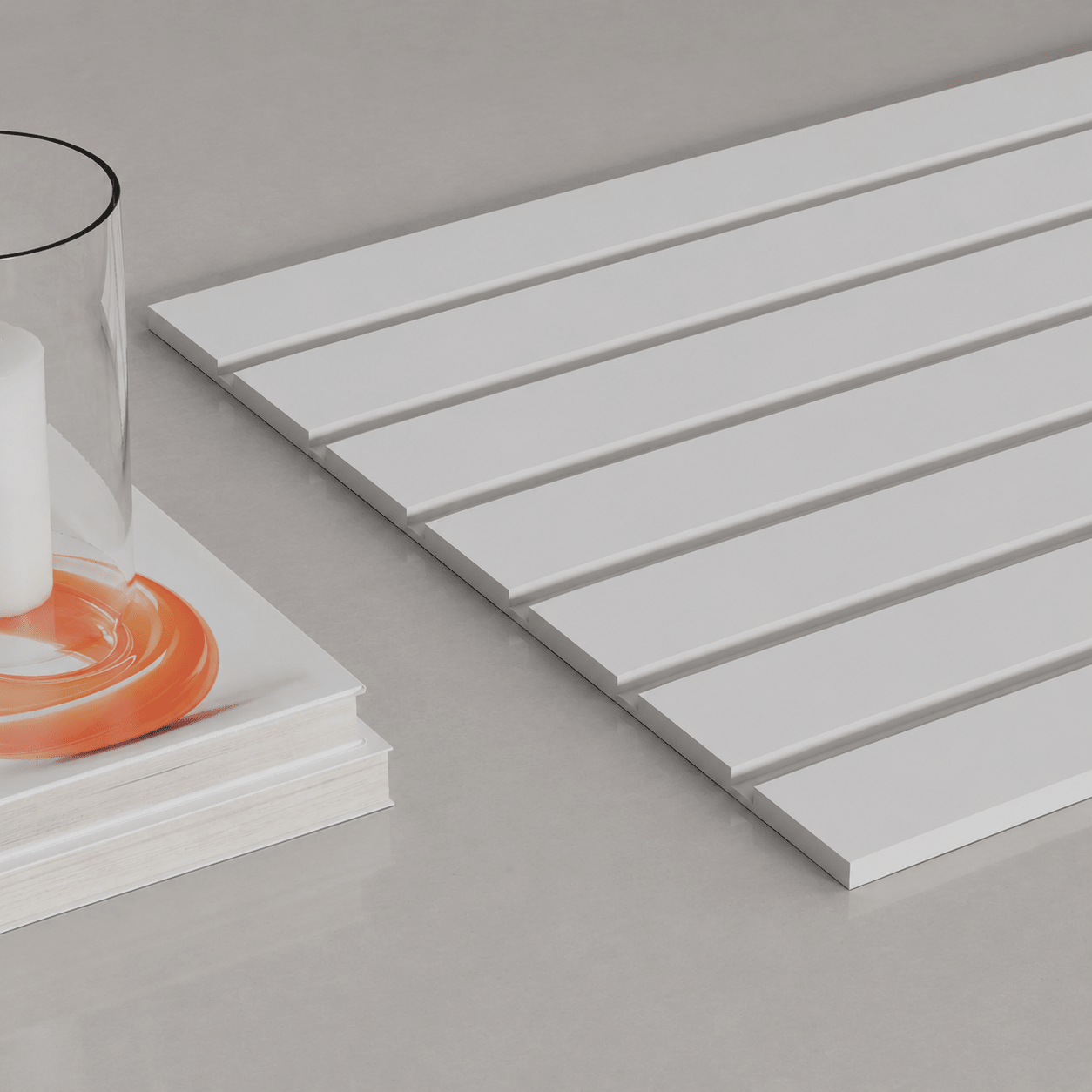
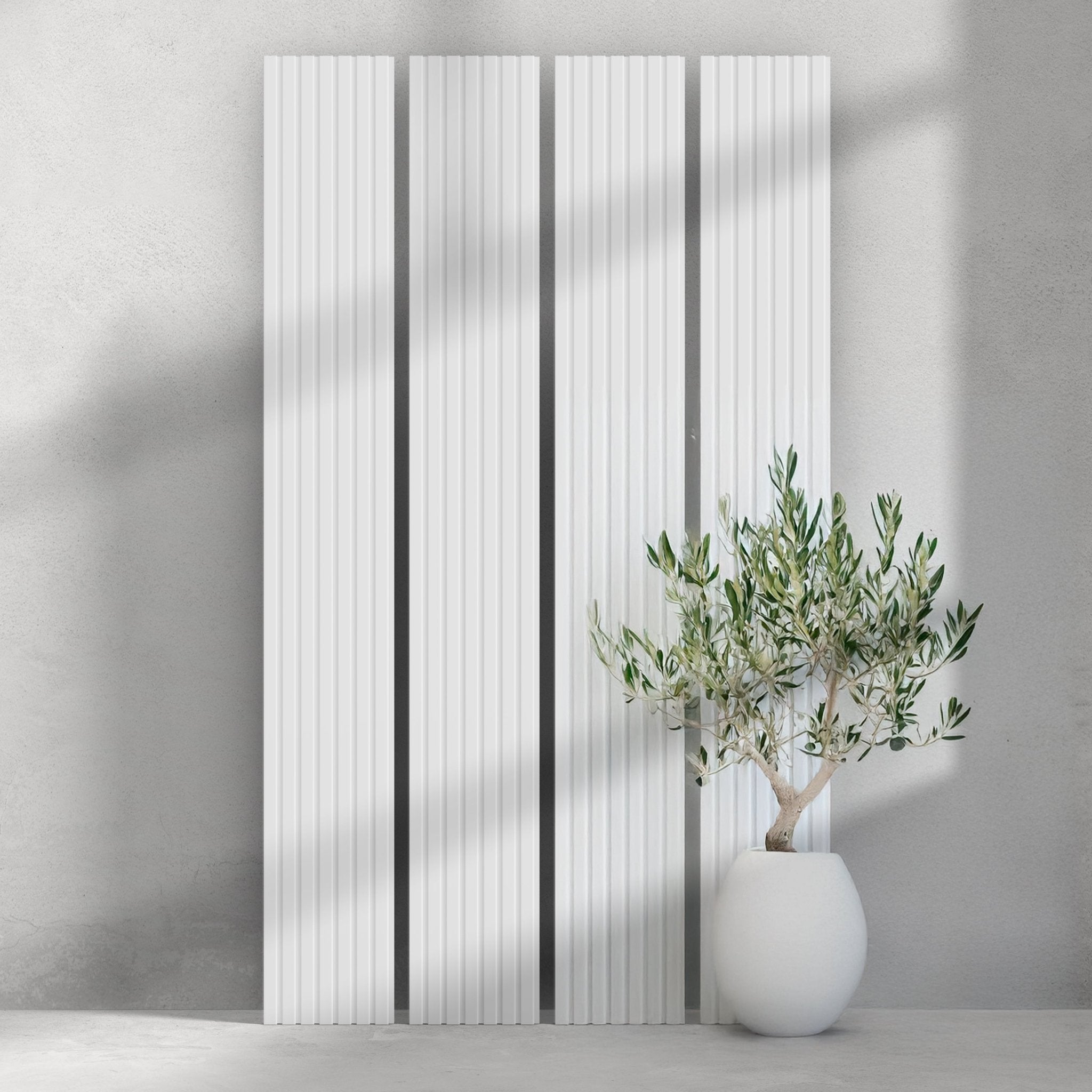


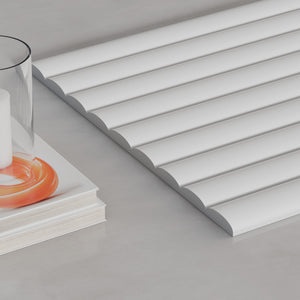
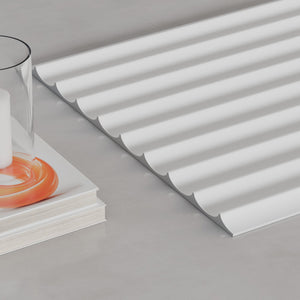
Slat Paint-Ready Fluted Wall Panel
Primed, sanded and ready for your color — three profiles cut into one panel.
- Five coats of primer — paint straight onto it
- Three profiles — Slat, Ridge or Valley
- Bends in both directions — columns, arches, curves
- Cuts with a handsaw — no special tools

In stock — Delivery soon


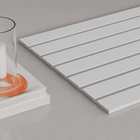
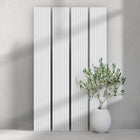
Bring your vision to life with flexible, paint-ready fluted wall panels in three profiles and three lengths. Professionally primed MDF, easy to cut and effortless to install—perfect for flat or curved walls.
Available in three distinct profiles—Ridge, Valley and Slat—and cut to fit 8ft, 9ft and 10ft walls (Ridge in 8ft and 9ft), these panels are made from MDF and factory primed for easy painting and repainting. Each panel is strong yet flexible, so it can go on a flat wall or follow a curve like a column or archway. Whether you’re wrapping a feature wall or adding architectural interest to a residential or commercial space, these panels install with construction adhesive and finishing nails, connect seamlessly, and cut cleanly to size with basic tools. For indoor, dry areas only.
 Features & Benefits
 Features & Benefits
Primed and sanded flat. Paint goes straight on; only cut edges and filled nail holes need a touch-up.
Any color, any sheen, and a new one in three years without stripping back.
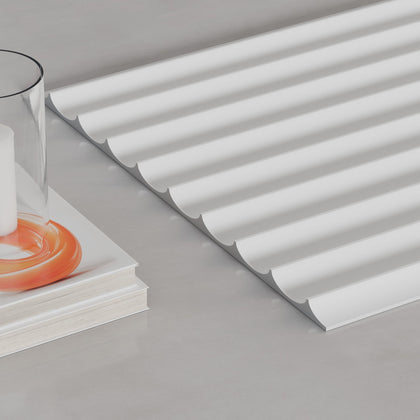
Slat for a square-cut rhythm, Ridge for soft half-rounds, Valley for scooped hollows.
Deep cuts and a thin board behind them follow a column, archway or curved wall.
A handsaw, jigsaw or circular saw. No special blade.
Most walls take a panel with one trim rather than a splice. Ridge stops at 106″.
 Materials & Construction
 Materials & Construction
Routed MDF faceThe profile is routed into the face
Five coats of primerSanded flat, ready to paint
PVC backing filmKeeps a panel this thin rigid enough to hang
 Sizing & Coverage
 Sizing & Coverage
Pick your height
How many boxes?
A 10 ft wall (120″) takes 3 boxes.
 Installation & Care
 Installation & Care
- Settle and plan
Give the boxes a day lying flat in the room. Measure the wall and work out how many boxes you need.
- Glue
Lay the panel face-down and run one continuous S-bead down the back, about 2″ in from every edge. It goes straight onto drywall, plaster or timber, no battens.
- Press
Press it to your plumb line and brace it until the adhesive grabs. Slat profile: hang every panel the same way round, or the joins will show. Ridge and Valley can go either way.
- Nail
Finishing nails into the low point of the profile, never a face or a peak. Set the heads, fill and sand flush. Fill and sand Valley joins too.
- Paint
Two thin coats. Spray is best. On Valley, brush the scoops first, because a roller bridges them.
You'll need
- Construction adhesive, rated for wood and your wall
- Caulk gun
- Finishing nails
- 4 ft level or a laser, and a pencil
- Handsaw or jigsaw with a fine-tooth blade
- Filler and sandpaper, for nail holes and Valley joins
- Caulk, where the run meets trim
- Roller, brush or sprayer, for the paint
Cutting tips
- Cut face up with a handsaw or jigsaw, face down with a circular saw, so any breakout lands on the back.
- Run painter's tape along the cut line before you saw, so the primed face doesn't chip at the edge.
- Rip at a low point and the new edge still butts cleanly to the next panel. Back it up: only 0.06″ of board sits there.
- A cut edge is raw MDF: prime it before painting.
- Keep the sheen low so the profile's shadow carries.
- Outlets and switches: use a jigsaw.
Care
- Dust with a soft cloth
- Once painted, wipe gently with a damp, non-abrasive cloth
- Repaint whenever you like, no sanding or re-priming


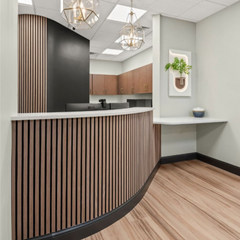
You’re in good company.
303510+ sq ft of our panels are already up in 2500+ homes & businesses across all 50 states. Join them. ★★★★★4.9 from 293 reviews
Why Paint-Ready
Ready for your color
Low-VOC MDF with the profile routed into the face and five coats of primer, sanded flat. Pick Slat, Ridge or Valley and paint it any color.

Four steps, one afternoon
Glue the back, press it up, tack it with finishing nails, then paint. Light enough to hold up on your own.

Four panels to a box
47.2″ of wall width per box. Panels butt edge to edge, so nothing is lost at a join.

Five coats of primer
Sanded flat at the factory, so your paint goes straight on. No priming, no sanding.

Cuts with a handsaw
A handsaw, jigsaw or circular saw trims a panel around a switch or a door frame.
The details
Product specification
Actual routed dimensions, not nominal ones.
Low-VOC MDF with the profile routed into the face, five coats of primer on the front and a PVC film on the back. Every profile leaves 0.06″ of board under the deepest cut, so deeper profiles start from a thicker board. Panels are 11.80″ wide and butt edge to edge, so four cover the full 47.2″ of a box.
By length
Per box of 4 panels, by the height you pick.
| 94.49″7′10″ tall | 106″8′10″ tall | 118.11″9′10″ tallSelected | |
|---|---|---|---|
| Coverage | 30.97 sq ft | 34.74 sq ft | 38.71 sq ft |
| Weight | 26 lbs | 30 lbs | 37 lbs |
Construction
Profile & size
Box & install
FAQ
Paint-Ready questions
Pick a topic, or search all 26 answers.

Still stuck? Ask us anything about your wall. We’re real people in Garden Grove, CA, not a bot.
Sizing & boxesHow many boxes of Paint-Ready do I need?
Measure your wall width in inches and divide by 47.2 — that is what one box of four panels covers. Round up, and order a spare box if your wall has openings to cut around. A ten-foot wall (120″) takes three boxes.
Panels butt edge to edge, so nothing is lost at the joins.
Enter your wall width to see how many boxes.
Rounded up to whole boxes for one wall at full panel height. Add a box if you’ll cut around windows or doors.
Sizing & boxesHow much does a box of Paint-Ready weigh?
A box holds four panels. Slat and Valley weigh about 26 lbs at 94.49″, 30 lbs at 106″ and 37 lbs at 118.11″. Ridge is heavier: about 35 lbs at 94.49″ and 45 lbs at 106″ (Ridge isn’t made in 118″). Those are whole-carton weights, packaging included.
Sizing & boxesWhat is the difference between Slat, Ridge and Valley?
Slat is a square-cut profile — a 1.11″ flat face beside a 0.55″ gap, cut 0.14″ deep. Ridge is a run of convex half-rounds repeating every 1.31″, cut 0.29″ deep. Valley is the inverse: a 1.18″ concave scoop with a 0.13″ flat peak between each one, cut 0.31″ deep. Slat reads as clean lines, Ridge as soft relief, Valley as deeper shadow.
Sizing & boxesAre all three profiles the same thickness?
No. Every profile leaves the same 0.06″ of board beneath the deepest point of the cut, so a deeper profile starts from a thicker board. Slat finishes at 0.20″, Ridge at 0.35″ and Valley at 0.37″.
InstallHow do I install them?
Construction adhesive on the back of the panel, pressed straight onto drywall, plaster or timber. Finishing nails hold each panel while the adhesive sets, driven into the groove or trough where the shadow hides them. No battens or subframe to build first.
InstallCan I cut the panels? How easy is it?
Yes. A handsaw, jigsaw or circular saw all work — it is MDF, not hardwood, so no specialist blade is needed. Cut face-side up with a handsaw or jigsaw and face-side down with a circular saw so any breakout lands on the back. A cut edge is raw MDF, so prime it before you paint.
InstallHow do I cut around outlets and light switches?
Mark the opening on the face, drill a starter hole inside the waste and cut it out with a jigsaw. Test-fit before the adhesive goes on. Standard outlet extenders bring the box forward to sit flush with the new face.
InstallWill the seam show where two panels meet?
Each profile is cut so the panel edge falls where a shadow already is. Ridge and Valley panels are cut at the bottom of a notch or scoop, so two half profiles close into one whole one across the join. On Slat, one panel ends on a slat’s top corner and the next begins at the groove floor, putting the seam in the shoulder line. Slat and Ridge joins need nothing more. On Valley, a continuous curve shows any step, so fill the join, sand it flush and paint over it.
InstallDoes it matter which way up the panels go?
On Slat, yes. The Slat profile isn’t symmetrical, so every panel must go up the same way round. Turn one and you either butt two slat faces together with no channel between them, or open a channel twice the width of the rest — both show instantly on a painted wall.
Ridge and Valley are symmetrical, so those panels can be turned end for end freely.
InstallCan they be installed on a ceiling?
Yes. Use construction adhesive and finishing nails as you would on a wall, and support each panel while the adhesive sets.
InstallCan they be installed horizontally?
Yes. The profile runs the length of the panel, so hanging them horizontally turns vertical fluting into horizontal banding. Plan your cuts from the same end of each panel so the pattern stays in step across the wall.
InstallCan I hang a TV or shelves on the panels?
Lightweight items can mount to the panel itself. For anything heavy, find the studs behind the panels and fix through into them — the panels are a finish, not a structural layer.
InstallHow do I finish an outside corner or an exposed edge?
Mitre the two panels where they meet, or run a slim trim down the corner and paint it the same color so it disappears. An exposed end can be filled and sanded, then painted with the rest of the wall.
InstallCan they be stacked for a taller wall?
Yes. Panels come cut for 8ft, 9ft and 10ft walls, so most rooms take a single run. For anything taller, stack a second piece and keep the horizontal join at a consistent height across the wall, where it reads as a deliberate line.
InstallDo the panels flex in both directions?
Yes. There is very little board behind the deepest part of the cut, so the panels bend horizontally and vertically — enough to wrap a column, an archway or a curved feature wall.
Paint & materialsWhat does paint-ready actually mean?
The face arrives primed — five coats, sanded flat. You paint straight onto the factory face with no priming or sanding. The only prep is filling the nail holes (and the joins on Valley) and priming any cut edge.
Paint & materialsWhat are the panels made of?
MDF, with the profile routed into the face and primer over it. A PVC film is bonded to the back, which keeps a panel this thin rigid enough to handle and hang.
Paint & materialsCan I paint them before installing?
We recommend painting after the panels are up. Nail holes need filling, Valley joins need sanding and cut edges need priming, so painting first means touching in every one of those afterwards. Spray gives the best result on all three profiles.
Paint & materialsWhat kind of paint should I use?
Any interior wall paint will take over the factory primer. Sheen decides how the profile reads: a flat or matte finish keeps the shadow and reads the profile as shape, while the higher the gloss, the more the surface reflects and the flatter the shadow looks. Go for two thin coats — heavy coats pool in the low points and soften the profile. Spray is best on all three; a short-nap roller works on Slat and Ridge; on Valley, cut in with a brush first.
Paint & materialsCan I repaint them later?
Yes, as often as you like. Clean the surface, let it dry and paint over it — no sanding back or re-priming.
Paint & materialsDo the panels absorb sound?
No. These are decorative panels with no acoustic backing. The profile breaks up a flat wall visually, but it will not change how a room sounds. For acoustic performance, look at our felt-backed slat panels instead.
Shipping & careCan I use them in a kitchen or bathroom?
Indoor, dry areas only. The face is primed MDF with no moisture protection of its own — whatever resistance the finished wall has comes from the paint you choose — so we don’t rate them for bathrooms, wet areas or outdoors. In a kitchen, keep them well away from sinks, splashbacks and anywhere they will get wet, and prime every cut edge before you paint.
Shipping & careAre the panels renter-friendly?
Not really. They go up with construction adhesive, which will take the wall surface with it when it comes off. If you may need to remove them, fix a plywood backer to the wall first and mount the panels to that.
Shipping & careDo you have samples?
Yes. A single profile is $4.99, or all three come in the Paint-Ready Sample Kit for $12.99. Worth painting a swatch before you commit a wall — color behaves differently once it is sitting in a shadow.
Shipping & careHow much does shipping cost?
Shipping is free to the contiguous U.S. on most panel orders. The exceptions are samples and 118″ panels ordered in quantities of 1–3 boxes, where shipping is calculated at checkout — order 4 or more 118″ boxes and shipping is free again. Alaska and Hawaii are calculated at checkout.
Shipping & careWhere are you based?
We’re a family-owned business based in Southern California, and all of our panels ship directly from our SoCal facility.
Reviews
What Paint-Ready owners say
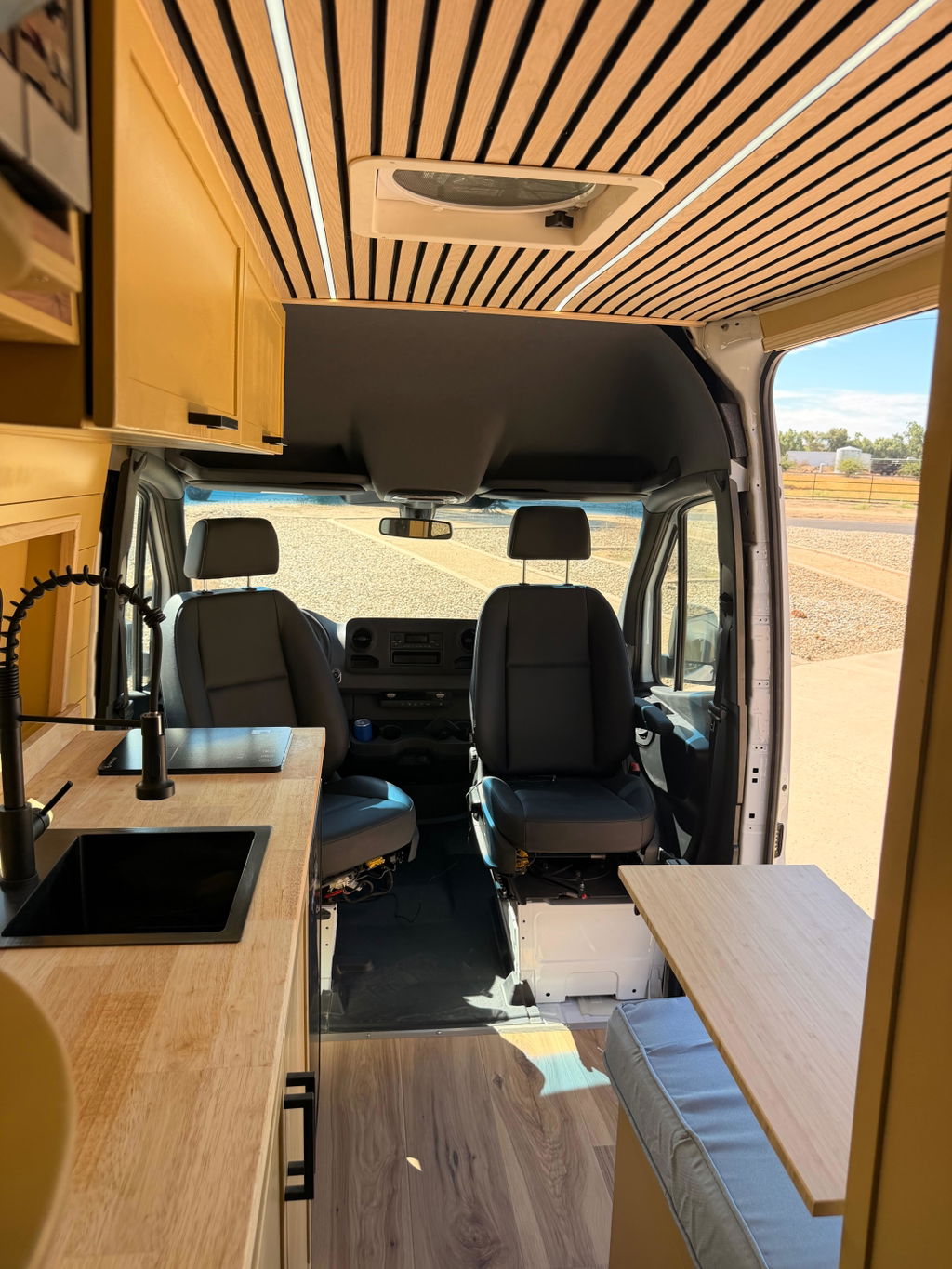
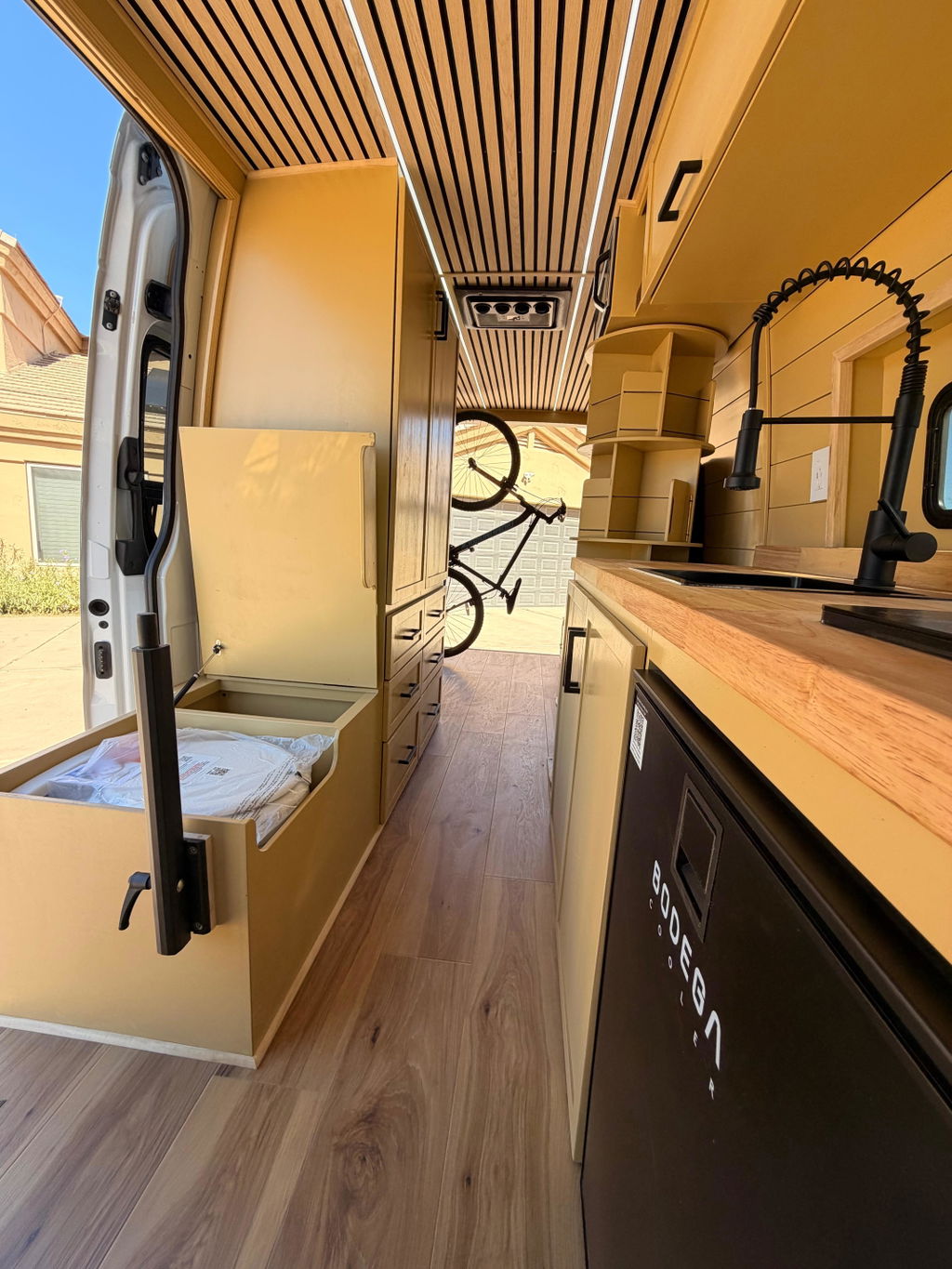
Fantastic product, cuts easily, mounts easily and looks great! Our company uses them as campervan ceilings.
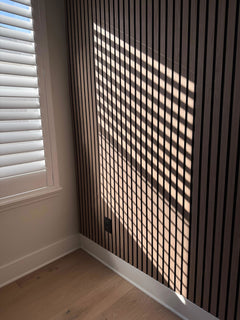
Absolutely love the finished product!! The flexible slat walls were very easy to install and the process of cutting the panels to size or around outlets was also easy to manage. Highly recommend to elevate your space!
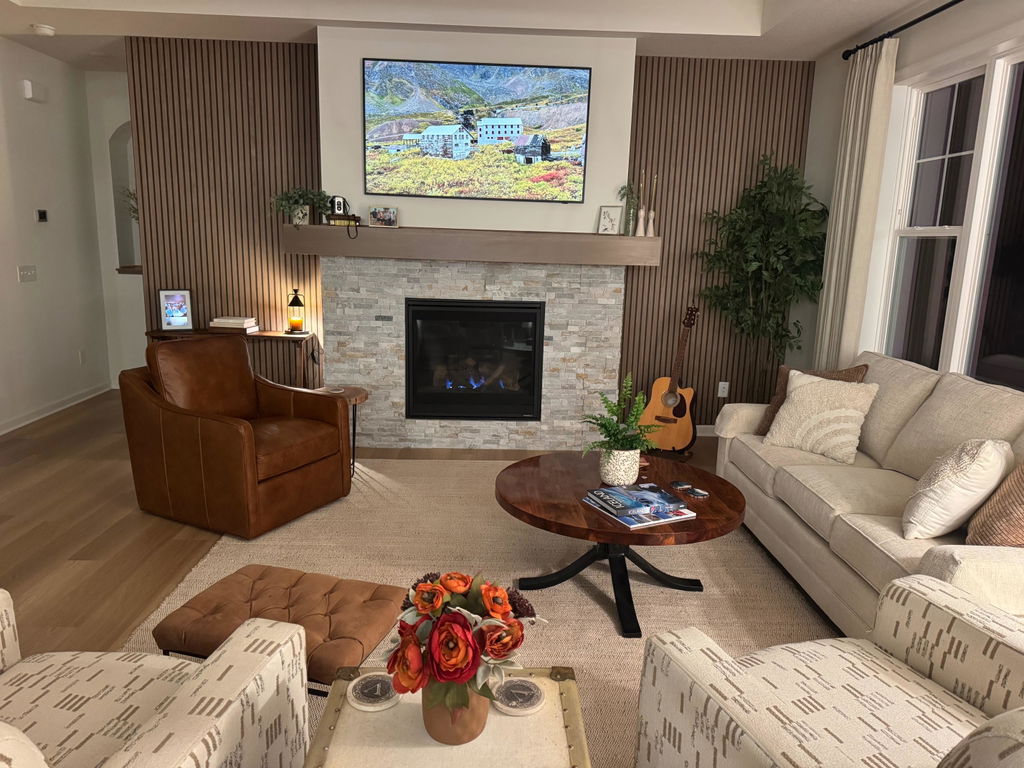
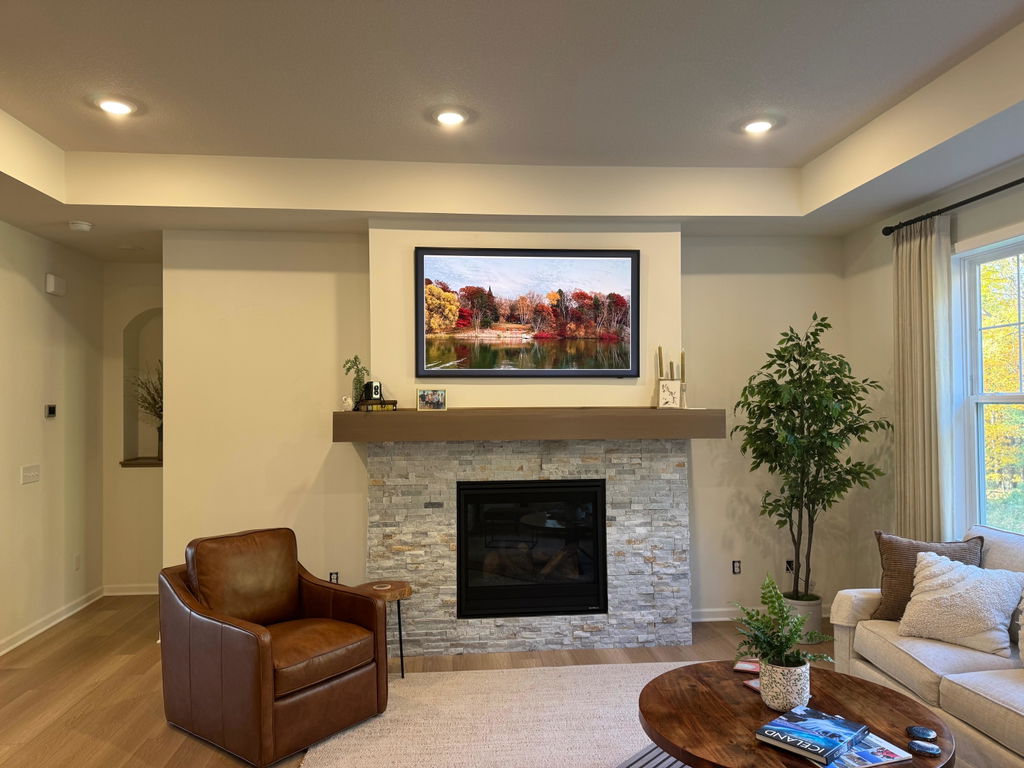
Everything about this company is absolutely outstanding! Quality of the bamboo slats was top notch with excellent, consistent coloring of wood across over 21 feet of slats; customer service answering questions was responsive, clear, courteous, and spot on; the shipping was fast and each pair of slat panels was separately boxed and well-protected so there was ZERO damage to the slats; the installation using circular saw, jig saw, and drill was easy, just like YouTube described. I was worried that cutting the slats would cause splintering, but painter's tape prevented that. I shopped around for two months looking at various companies and wood slats. This company stood out for their solid bamboo slats in 1 foot wide panels from California. The company's attention to detail and superb customer service only made the experience so much more satisfying. But the best part was the final result: the slat panels completely transformed a cold, blank wall into a warm backdrop for our art and Frame TV.
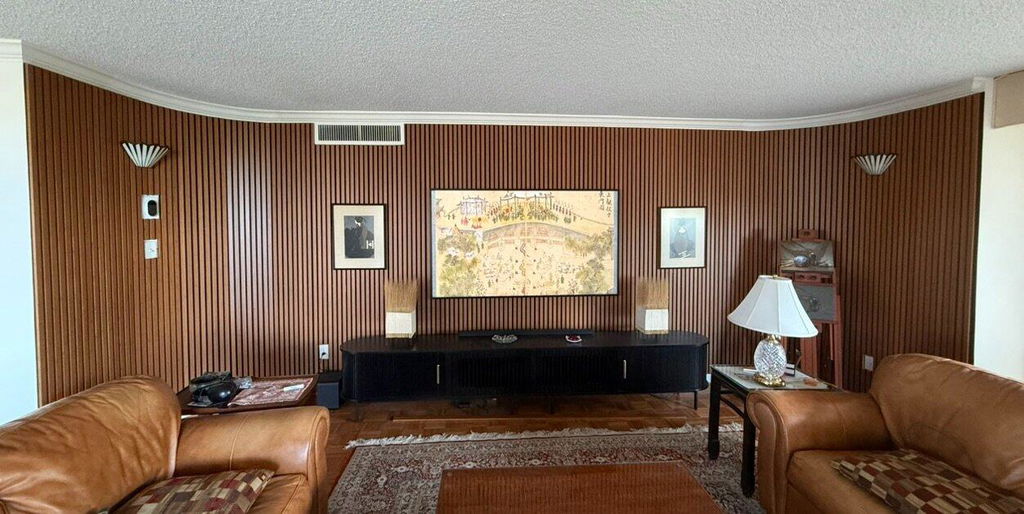
Slats.co makes such an amazing product! I cut and installed their wall panels in my home office in one day and it completely transformed my office into a quiet, warm, inviting, and professional workspace. I cannot say enough about this amazing product! Thank you Slats.co!!
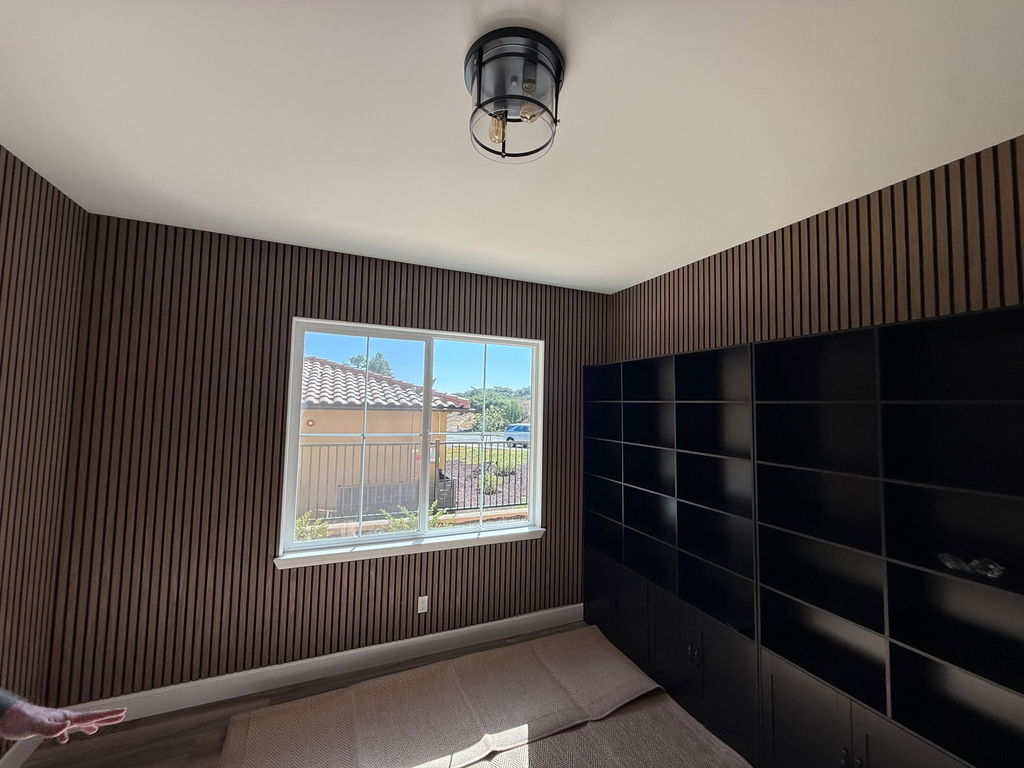
Felt backing and the slats itself are good material. I ordered 3 boxes, out of which 1 had stapled slats on felt while other 2 were glued. The staples one became loose at few points and cutting them was difficult as loose pieces came out. I had to glue them back. I believe they updated the process and now glueing them on the felt which is much better. I would recommend getting the glued on panels instead of staples.
Lite version looks good but I wish they made regular version for long lengths too. Overall, I am happy how they look on the wall - Get the truewood!
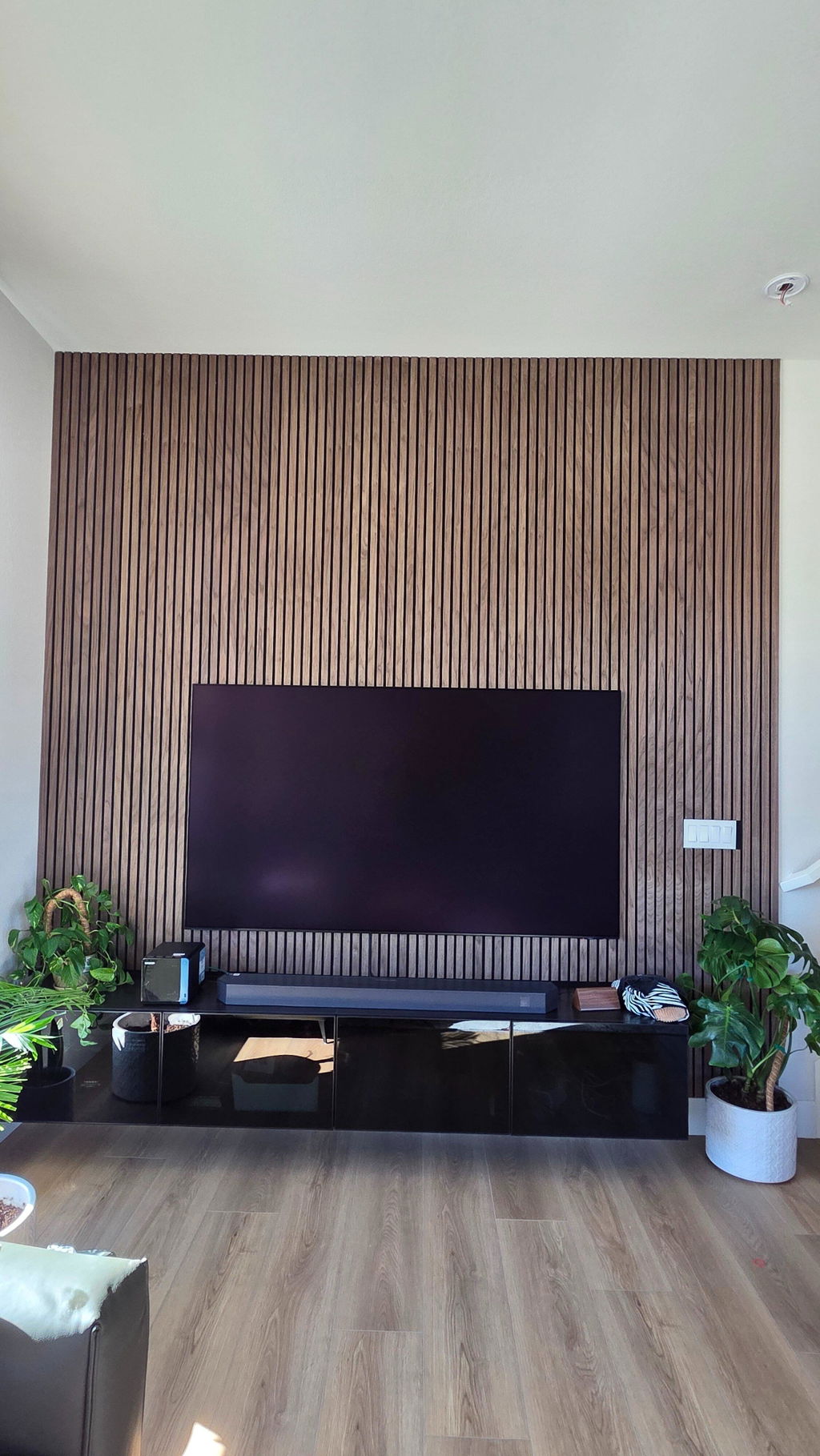
VERY happy with this purchase! Excellent product quality, easy installation, and superb customer service! The wood has dimension to it and looks great, especially in a room with a lot of natural light. Highly recommend!
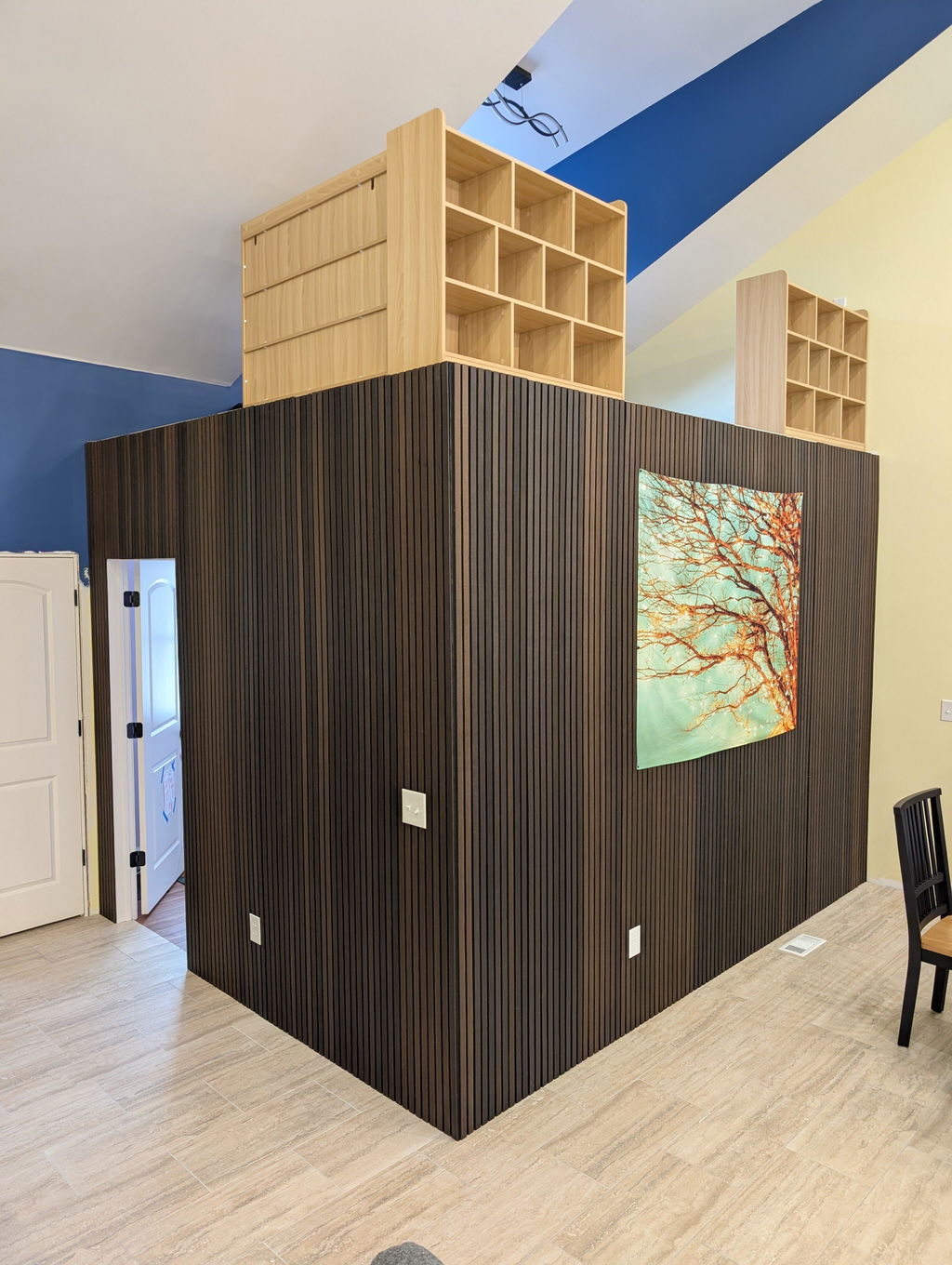
We had a great paper white room hat needed a feature wall to make it pop. So after a ton of research, we figured we needed the Ultralight Walnut version, and we are so glad we did. We are so addicted to the outcome that we have identified two more rooms/walls to do the same, and we ordered 5 more boxes!
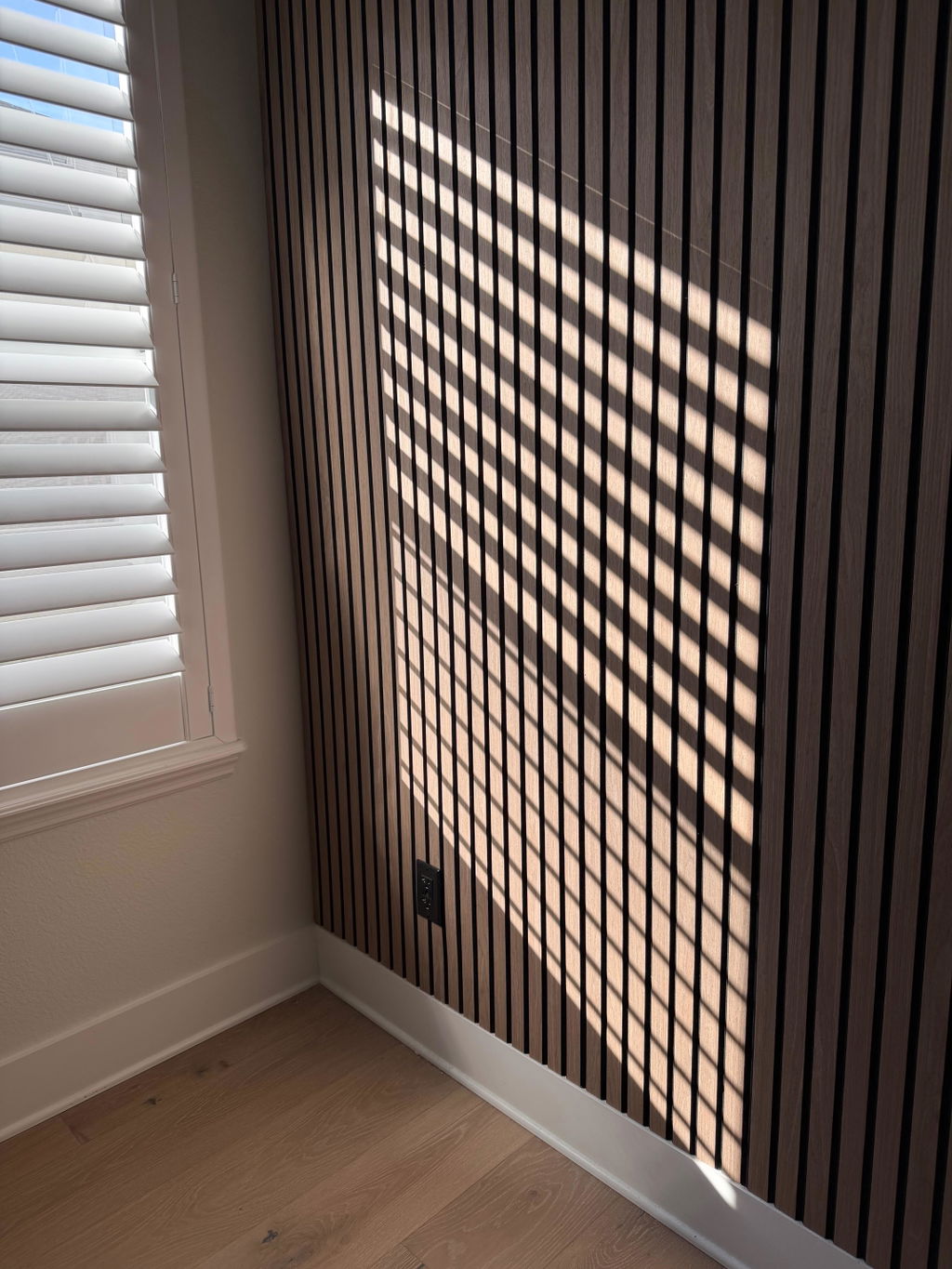
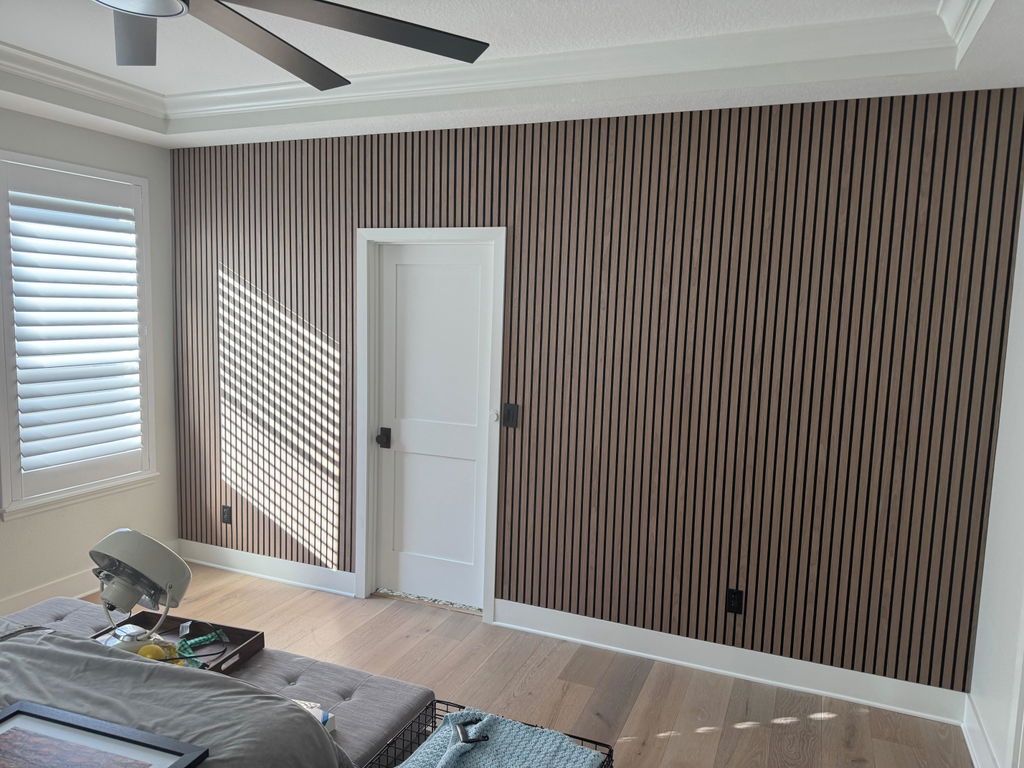
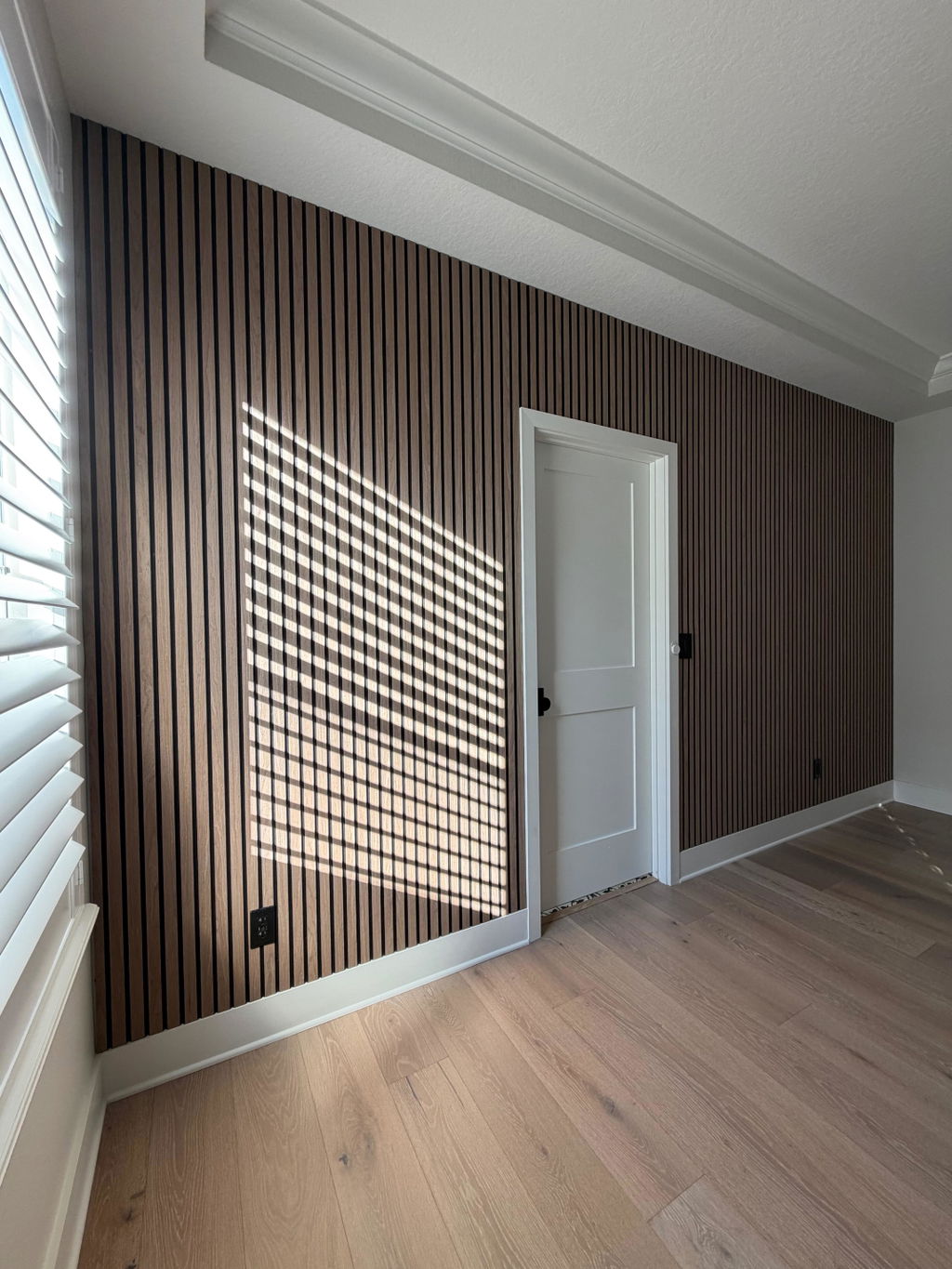
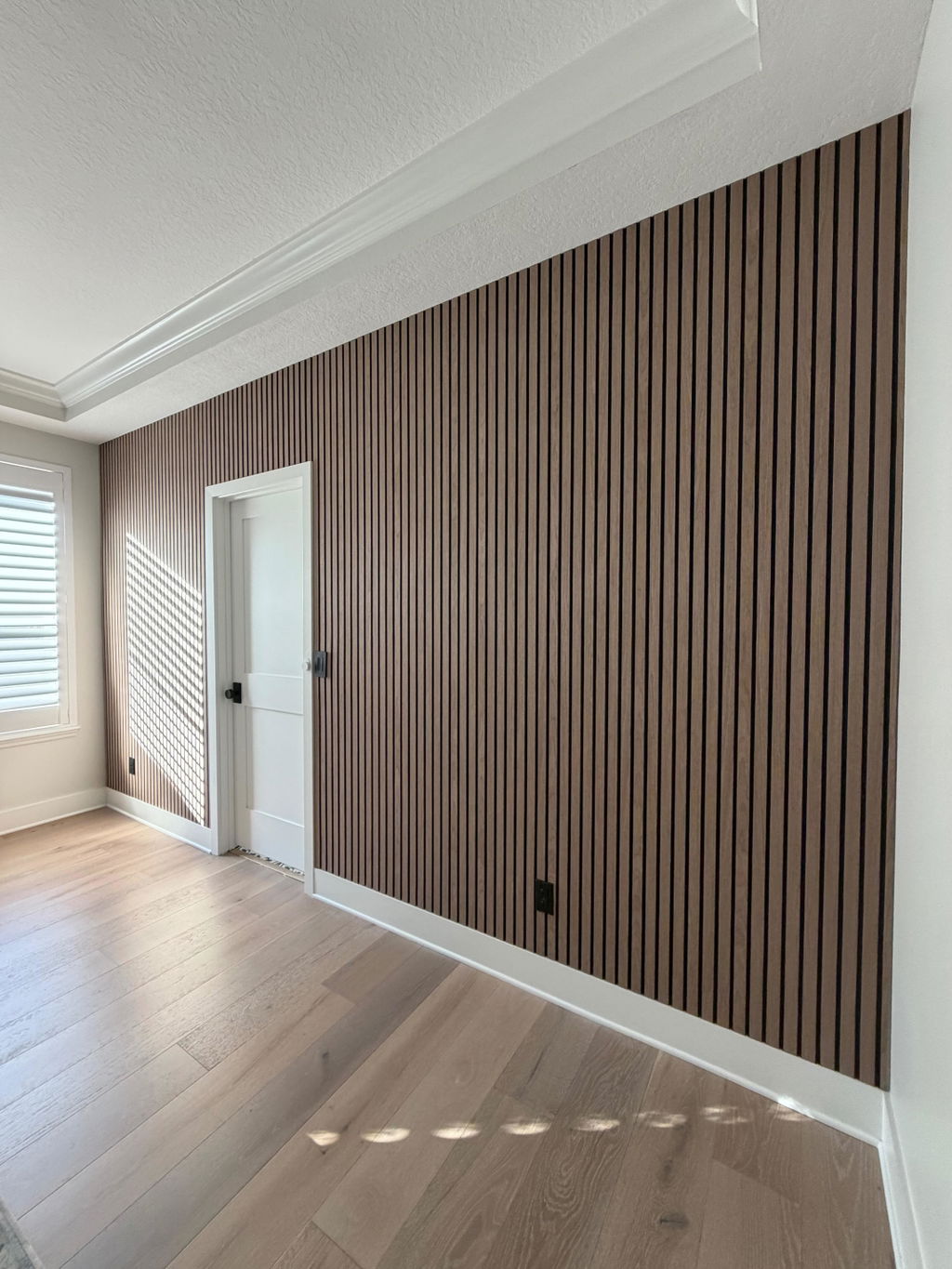
Overall I am happy with the new slats. The veneer is extremely thin and I had to be careful not to chip it simply handling them during cutting and install. They did cut well on my table saw. They look great installed, but I'm not expecting years of durability. If the veneer was even a 16th of an inch, I'd give them 5 stars.
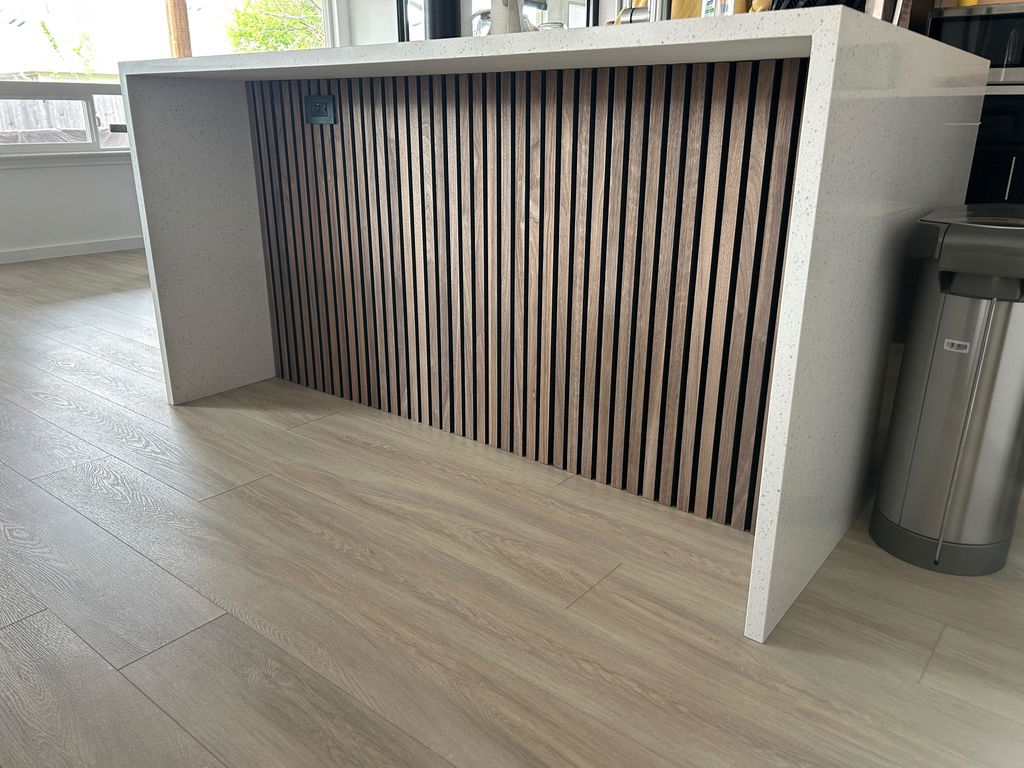
These were just what I was imagining my plain-walled office space needed. Having virtual meetings with an empty white space behind me was getting old and I didn't want to just hang shelves. Enter Slats and I now have the visual interest I needed (with the help of a couple framed pictures). Perfect in every way!
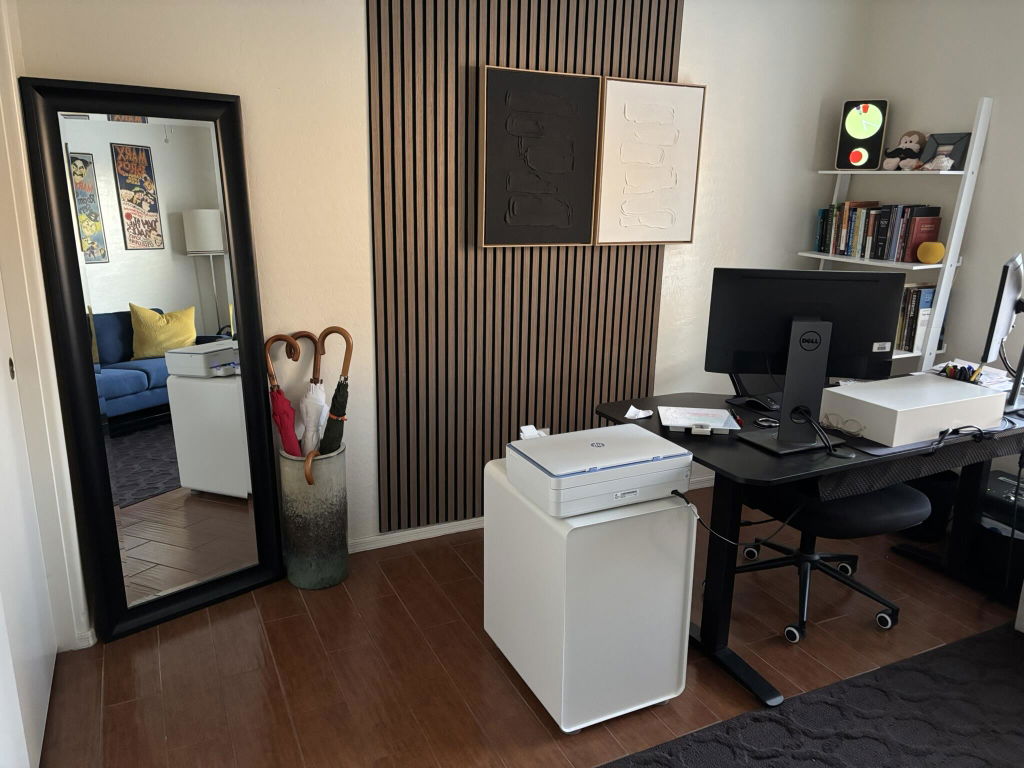
I had a wall that was a little boring and the room on the other side, sometimes complained about noise. It was easy to cover the entire wall with these, and I just used a box cutter, ruler, and finishing nails.
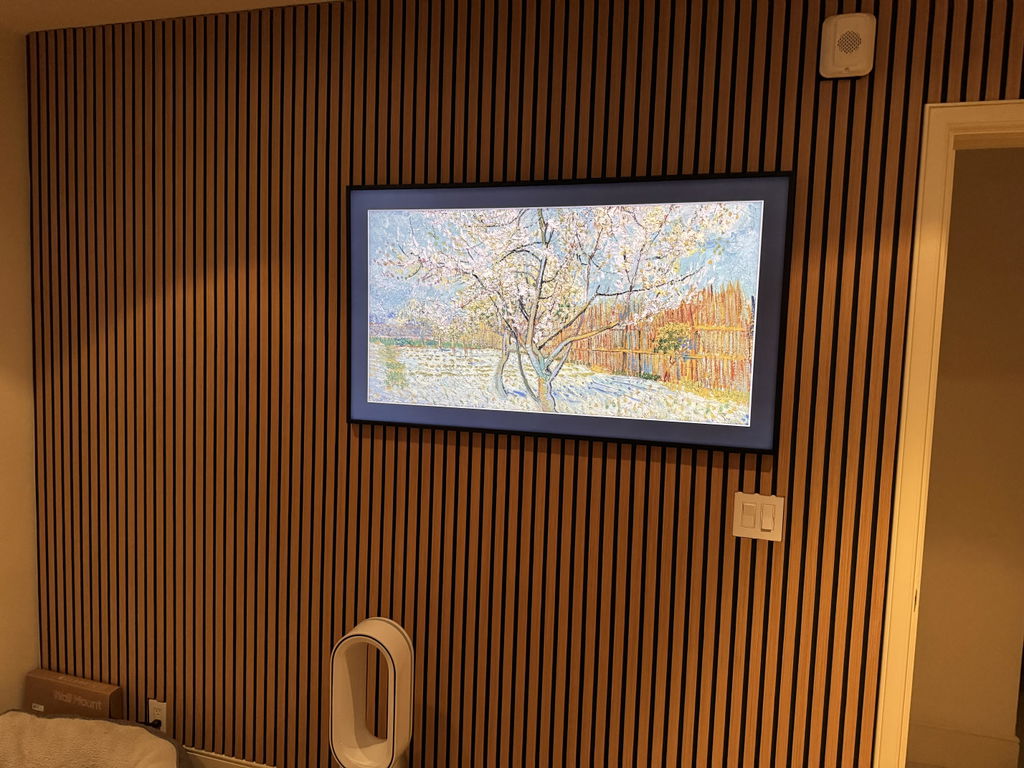
They look beautiful and work well at damping sound. Shipping was quick, and the product was nicely packaged.
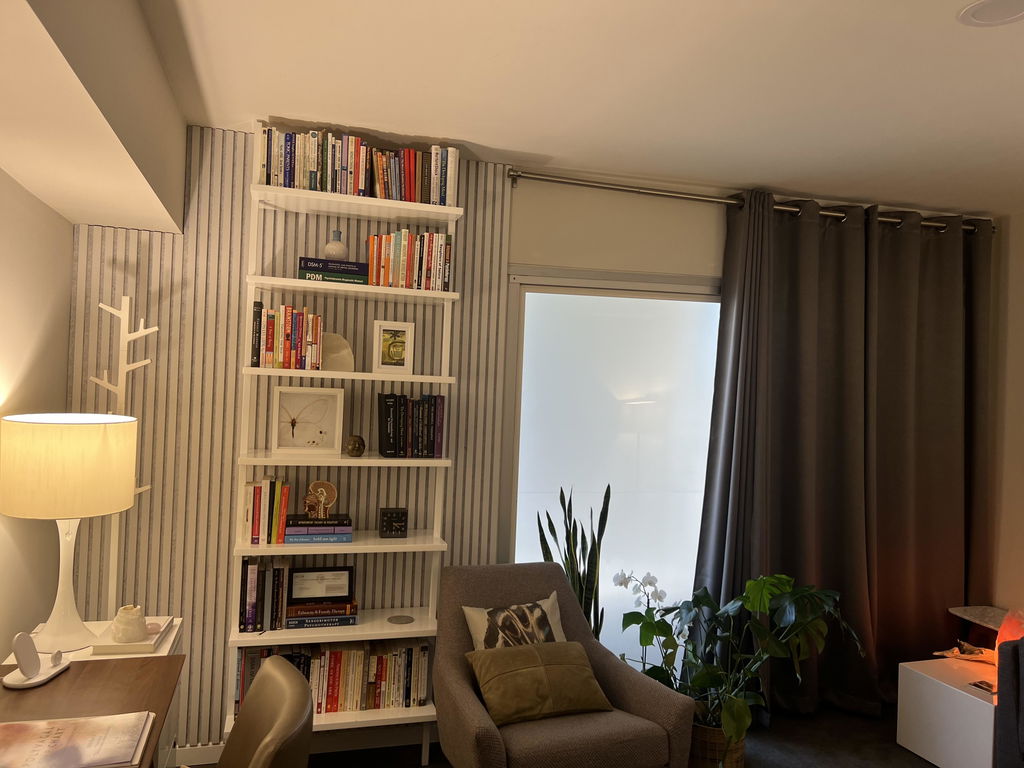
Quality product. I would like the felt applied more often to the slats as my only input.
Exactly what I needed for my room. I needed minimal depth due to existing crown molding and trim, as well as extra tall lengths due to vaulted ceilings. Product came fast and was pretty easy to work with.
Fantastic product!
Beautiful real solid Walnut hardwood. Surface feels smooth and solid. Natural minor warping, but not a problem after glued and mounted to wall.
Super nice! Just what I was hoping for and they look really classy. The black felt and gray oak is a great combo. These are perfect for our .5" thick trim.
Pleased with the quality and the ease of installation with the product.
Slats has been very helpful with a miss order on my part and resolved my order.
It’s been installed and looks great.
Dark Smoke Oak TrueWood Lite 3-Sided Veneer Acoustic Slat Panel
Very easy to put up and looks amazing
Beautiful wood ! Easy to install only thing that i dislike is the slats come loose. Needsmore staples and maybe glue to hold the slats on . I worked around that prby gluing and tapping the slats that came off.
Could not be happier with American Walnut TrueWood Lite 3-Sided Veneer Acoustic Slat Panel. The order arrived within days. It is a high quality product. The slates went up easily and added a rich look to an otherwise plain room. Will definitely order again for future projects!
American Walnut TrueWood Lite 3-Sided Veneer Acoustic Slat Panel is a great product. Easy install with construction adhesive. Used my trac saw to cut the slats and it worked great both horizontal and vertical. Staining was easy due to the three-sided veneer. Matches perfectly to my black walnut dining table. Slatsco offered great customer service. Can't wait to install some of their other great products.
I absolutely love these slats! The quality is fantastic, and they look beautiful once installed. They’re also surprisingly easy to work with — easy to cut to size, and you can attach them to the wall using adhesive or nails.
One tip: be a little careful when taking them out of the box and handling them before installation, as you don’t want to accidentally bend them.
What really stood out to me was the customer service. Truly A+++! They are incredibly kind, genuine, helpful, and very fast to respond. You can really tell there are real people behind this company who care about their customers.
I also love supporting a small, family-owned business, especially when both the product and service are this good. I would absolutely purchase from them again and highly recommend them to anyone considering these slats!
Great quality product, uniform and clean all around.
ULTRALIGHT Flexible Lightweight White Oak Acoustic Wood Slat Wall Panels with Beige Felt Backing
Also in Paint-Ready
Same construction, other profiles
The same primed MDF panel, with a different profile cut into the face.