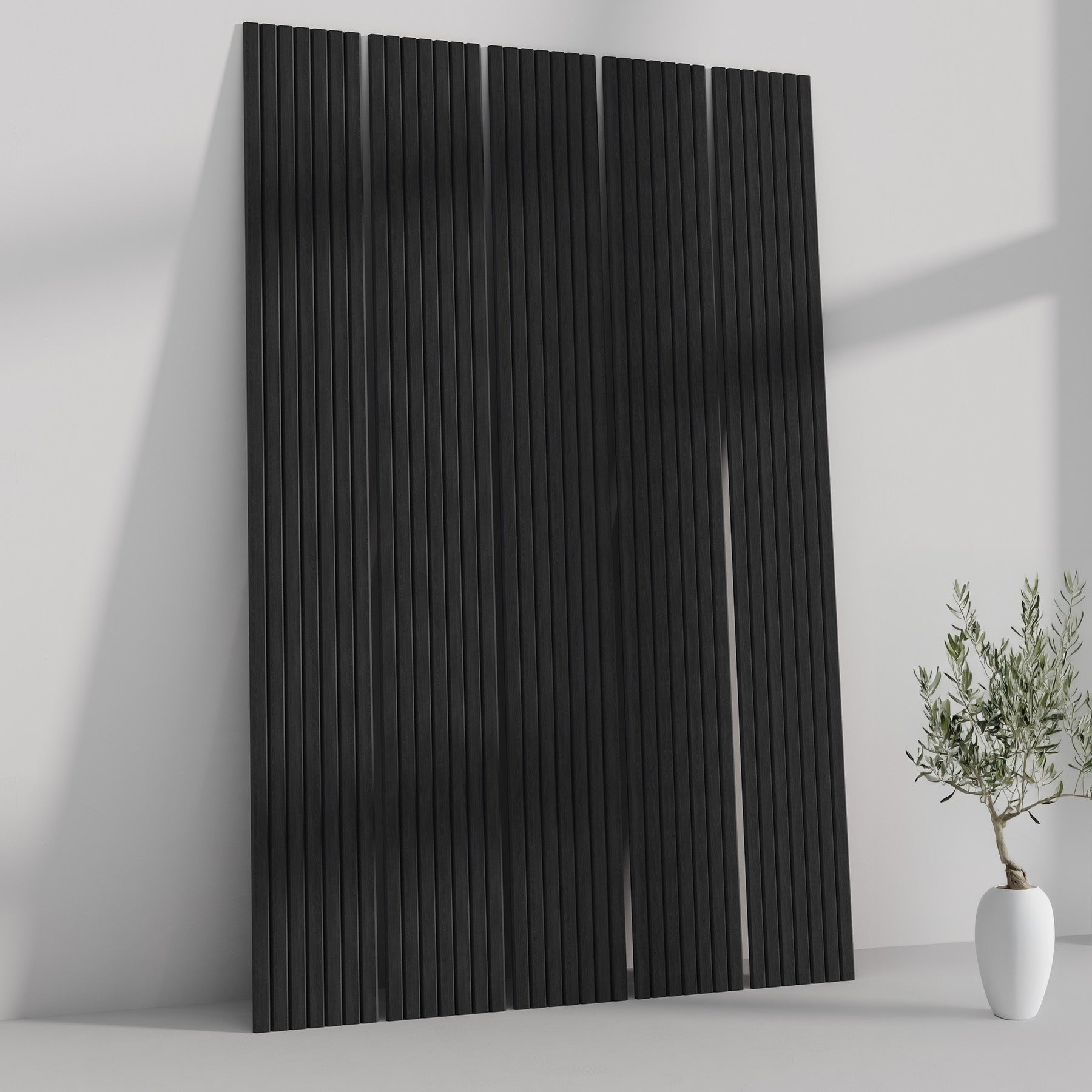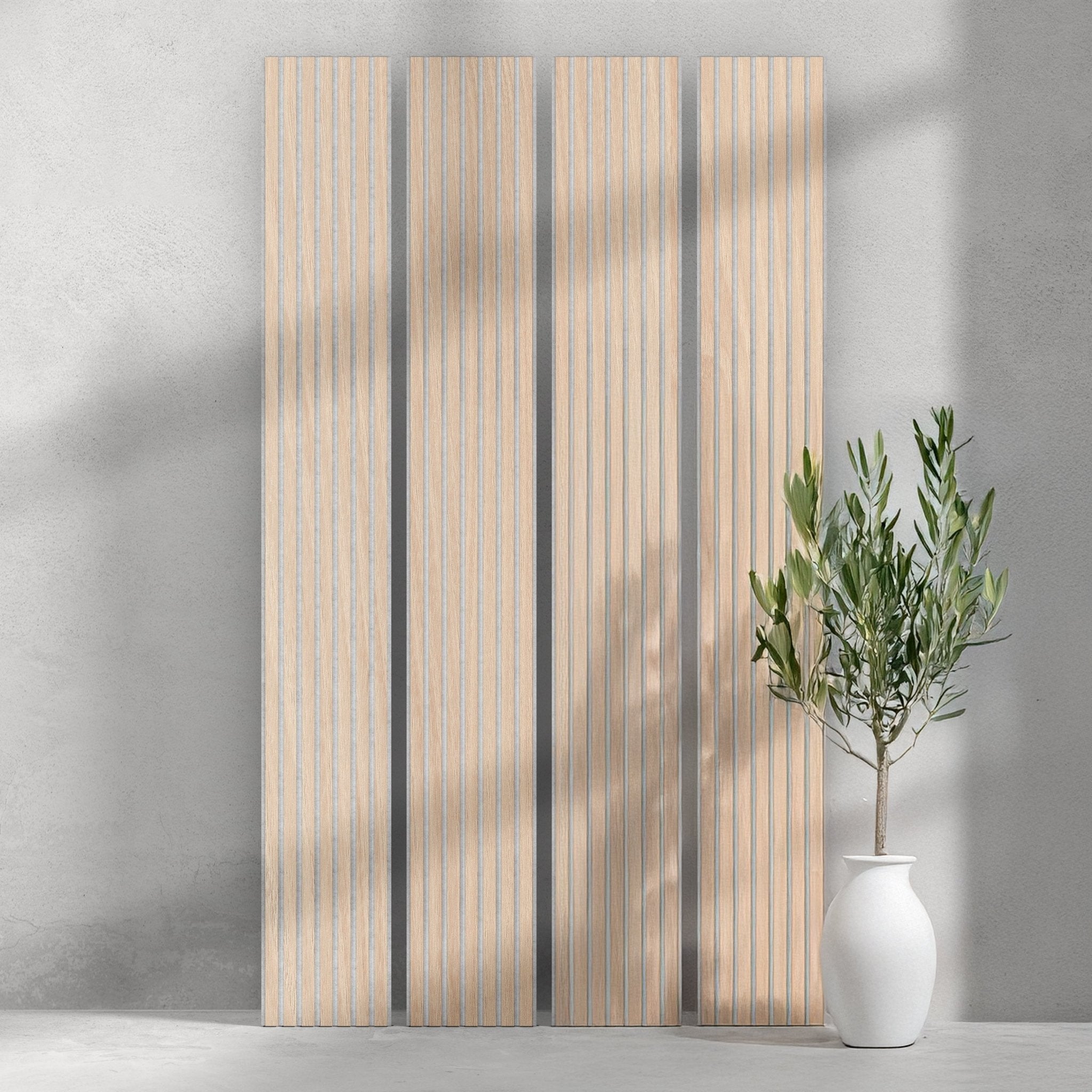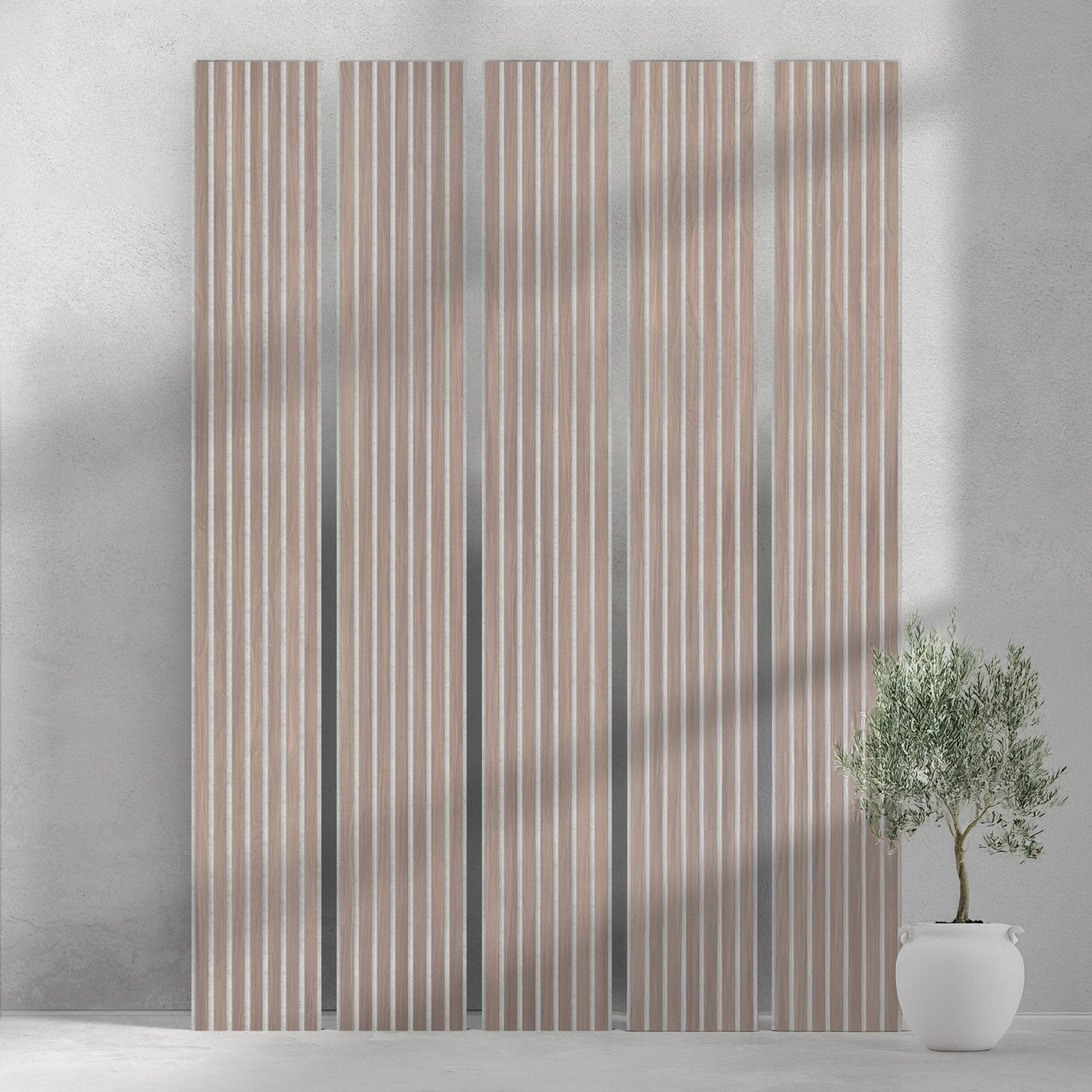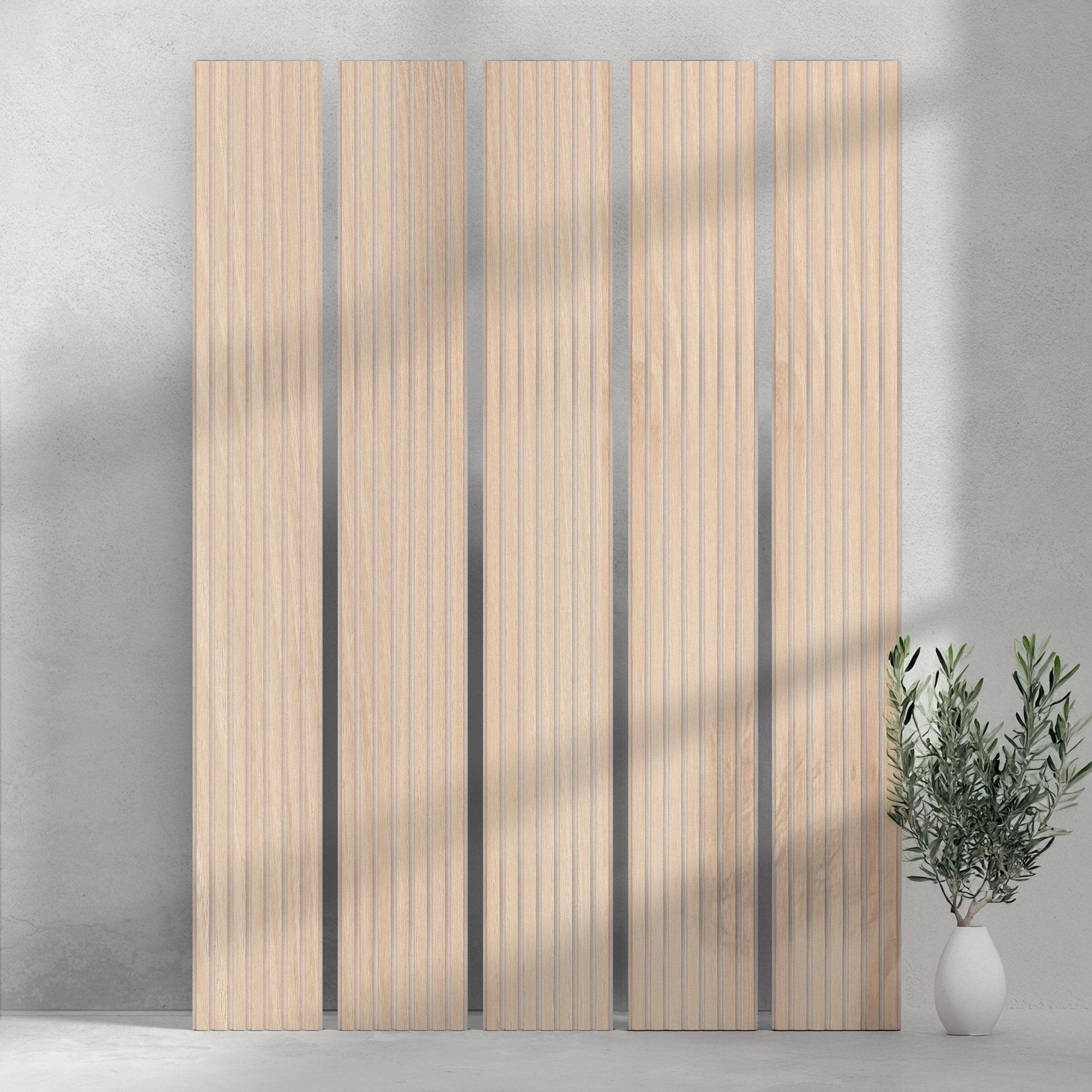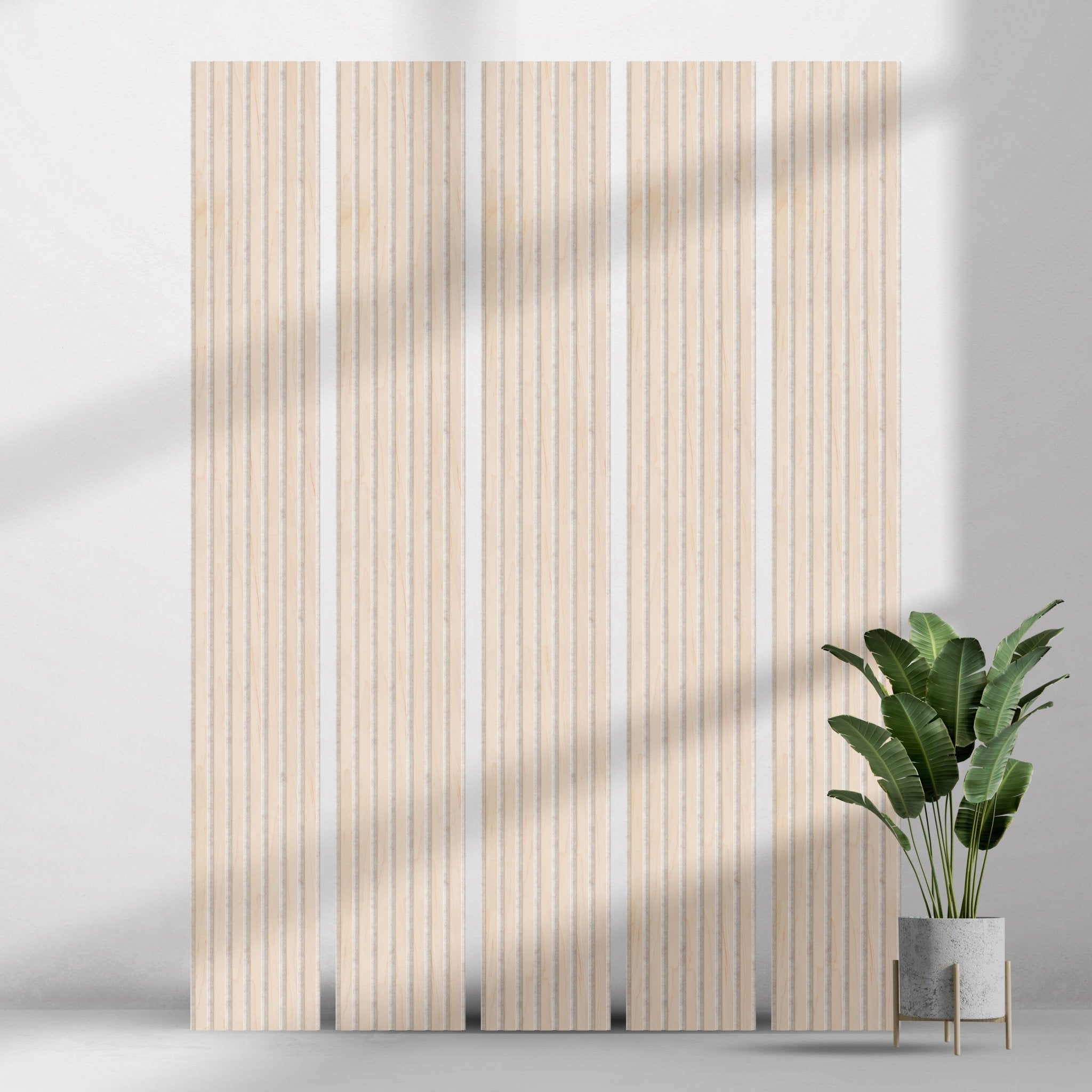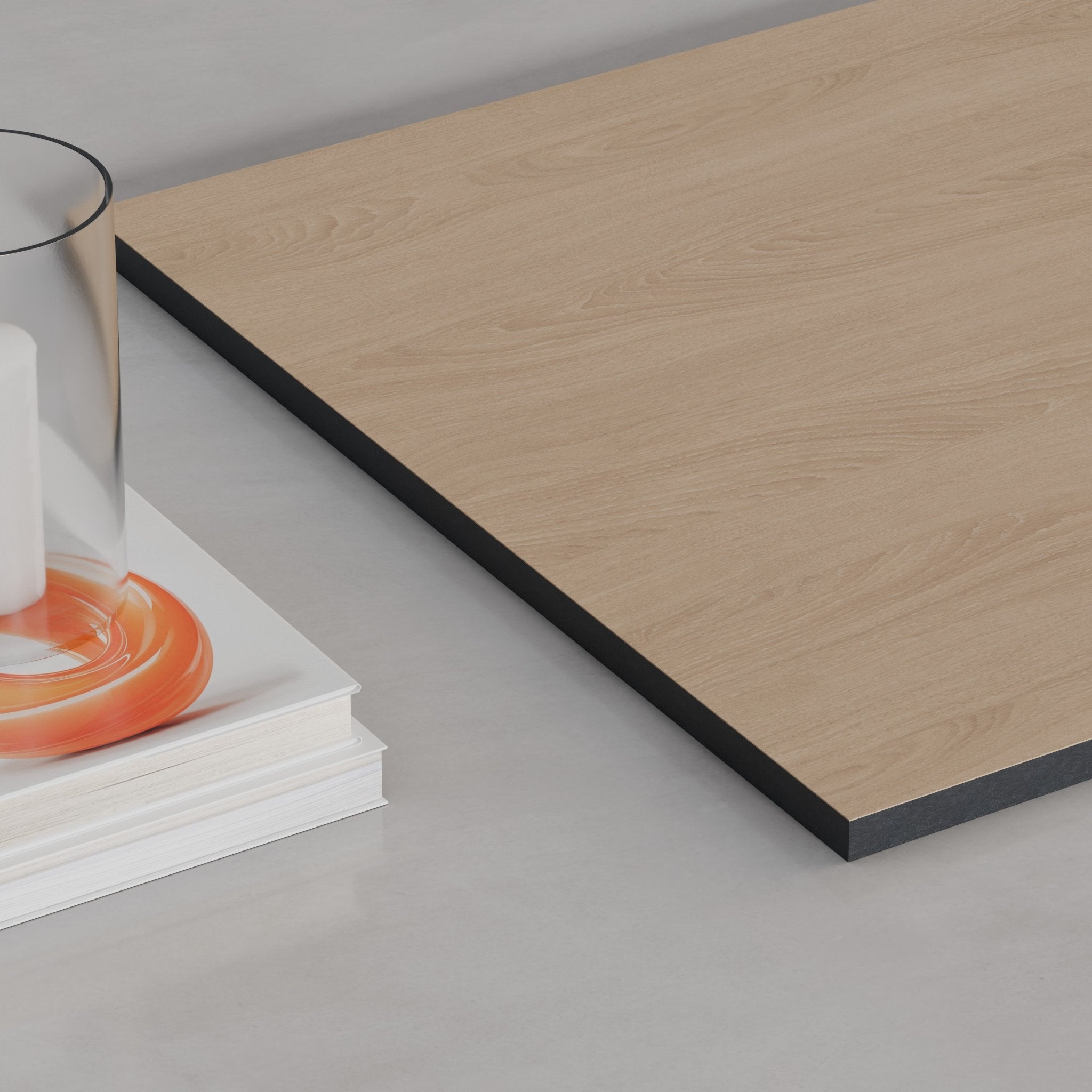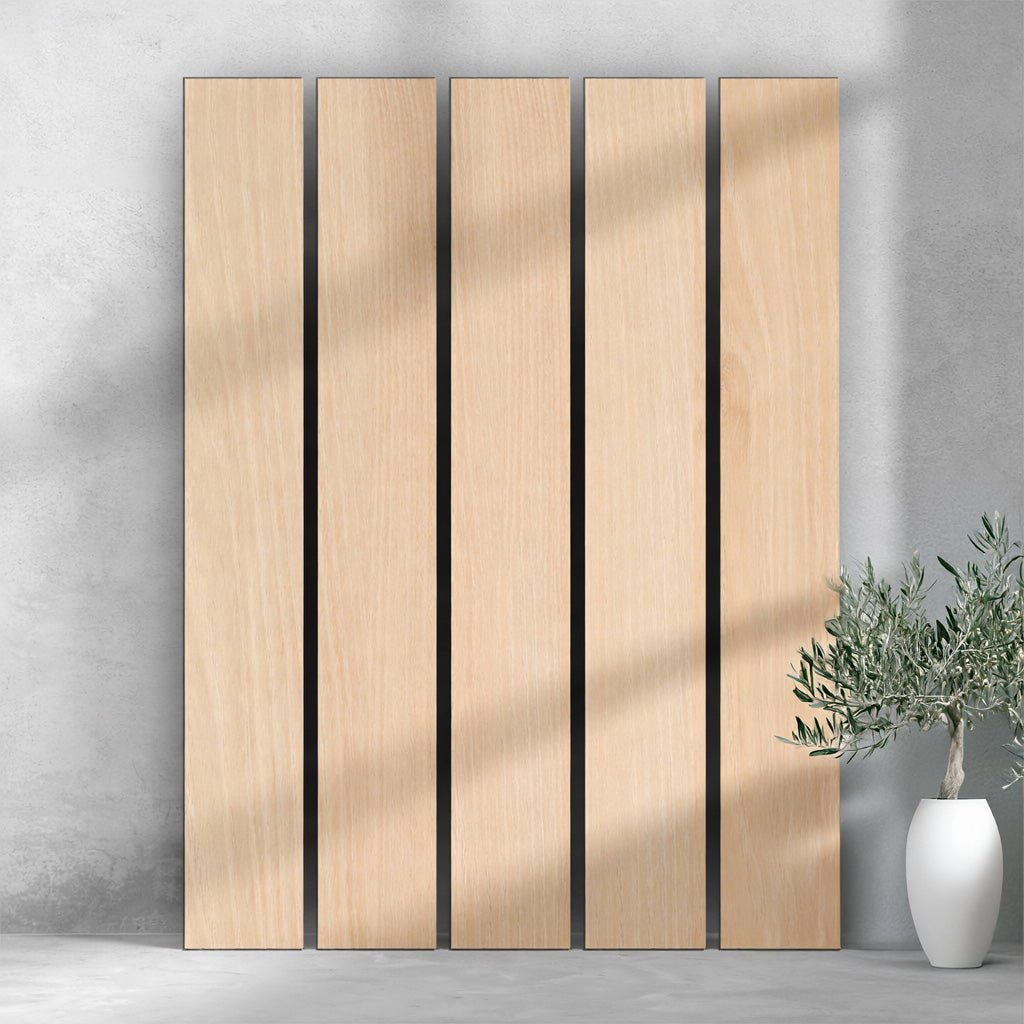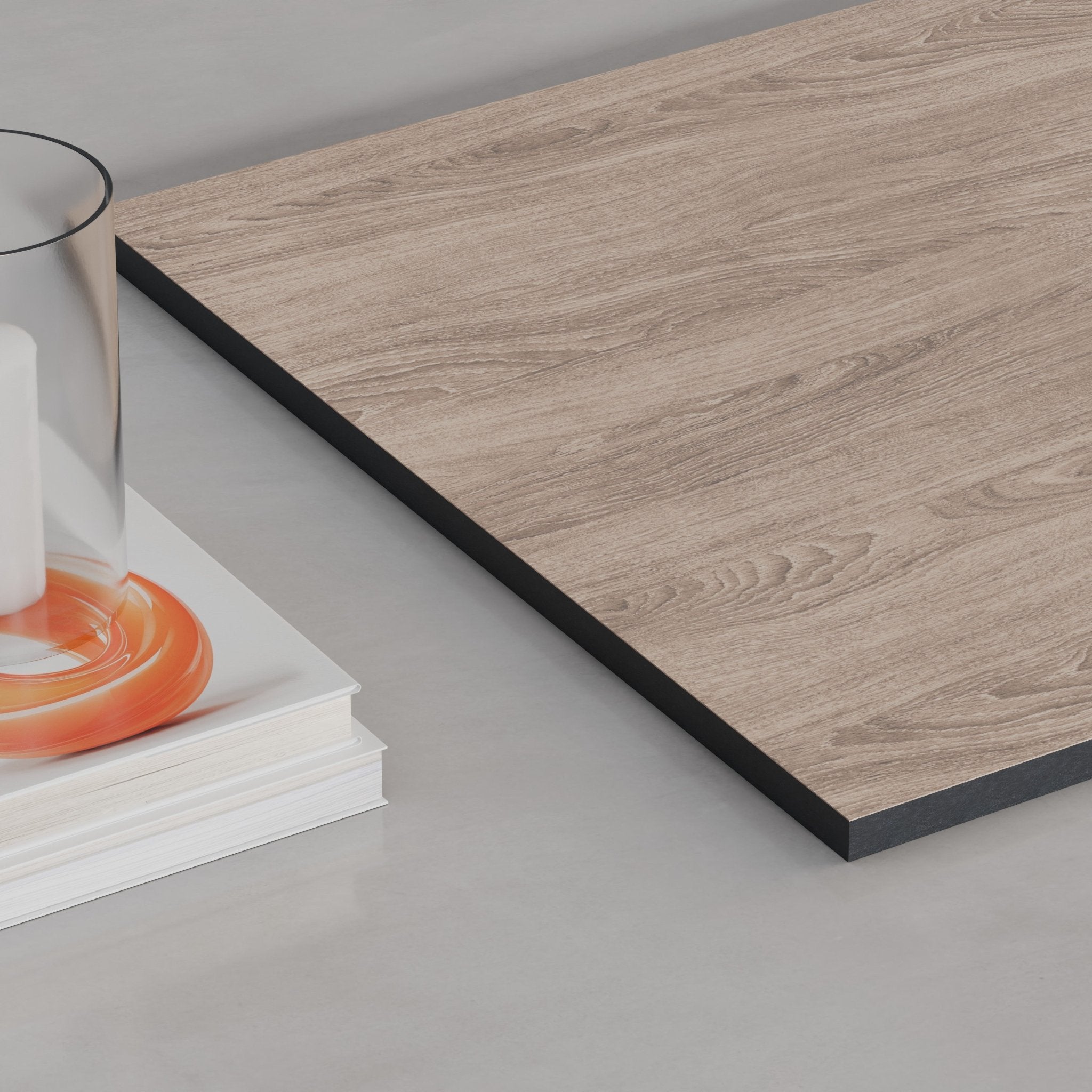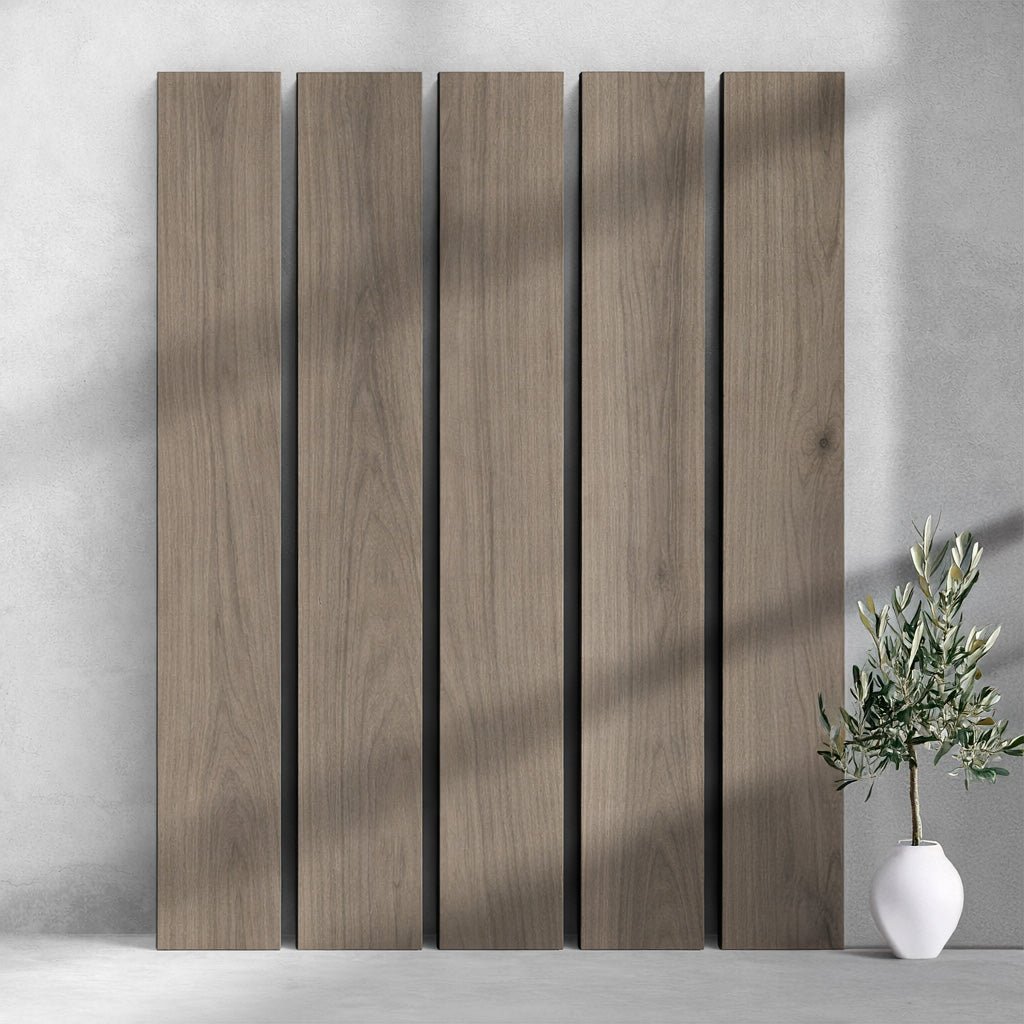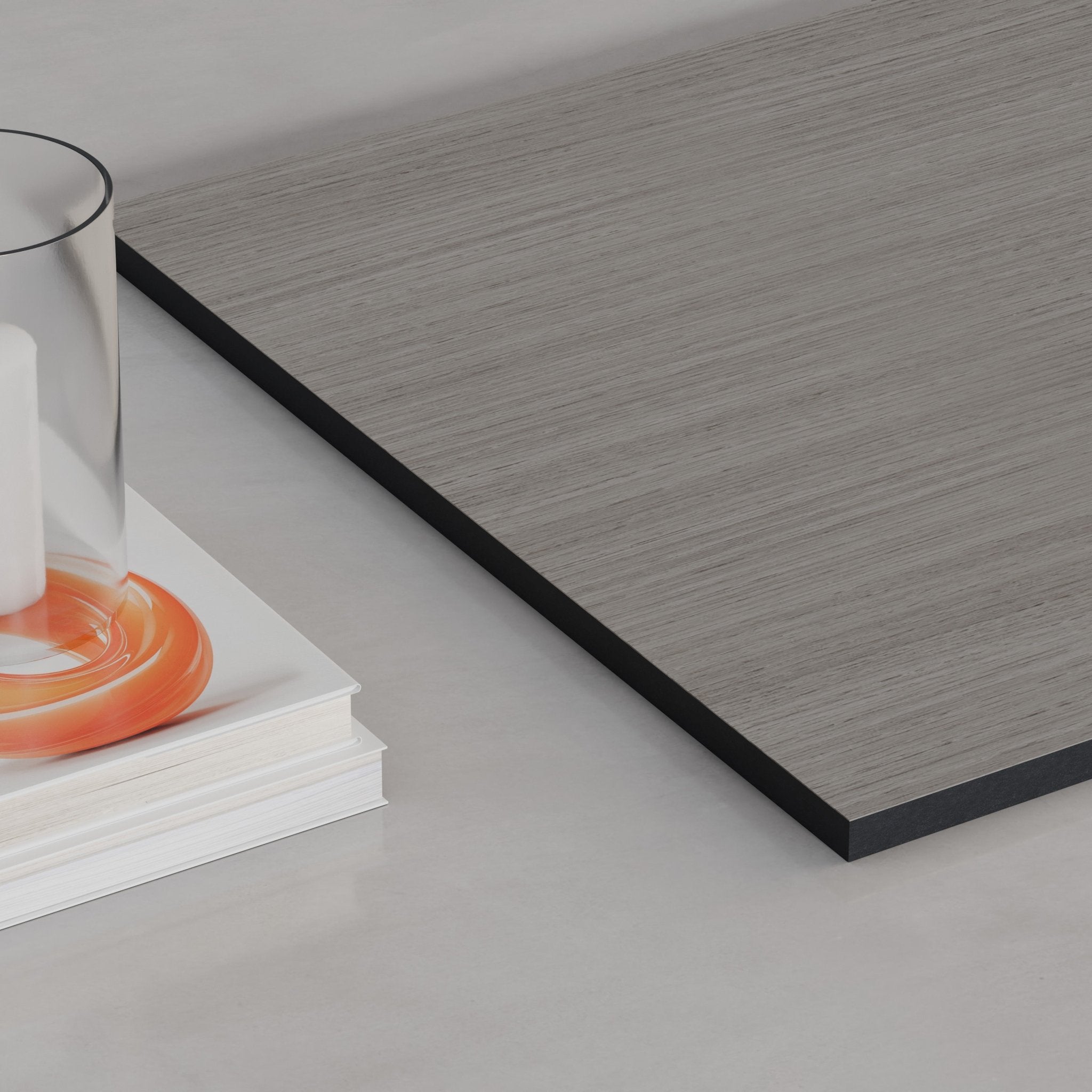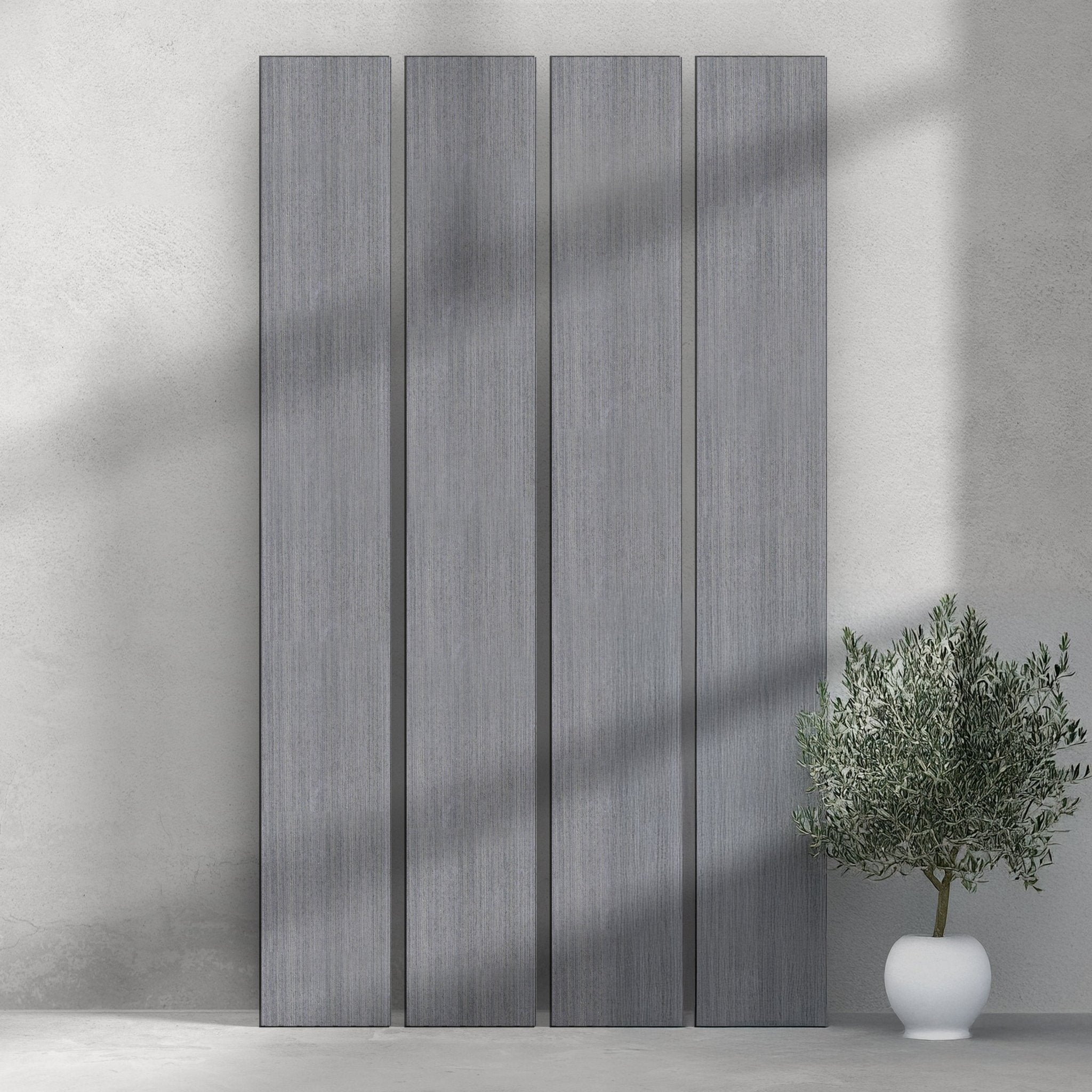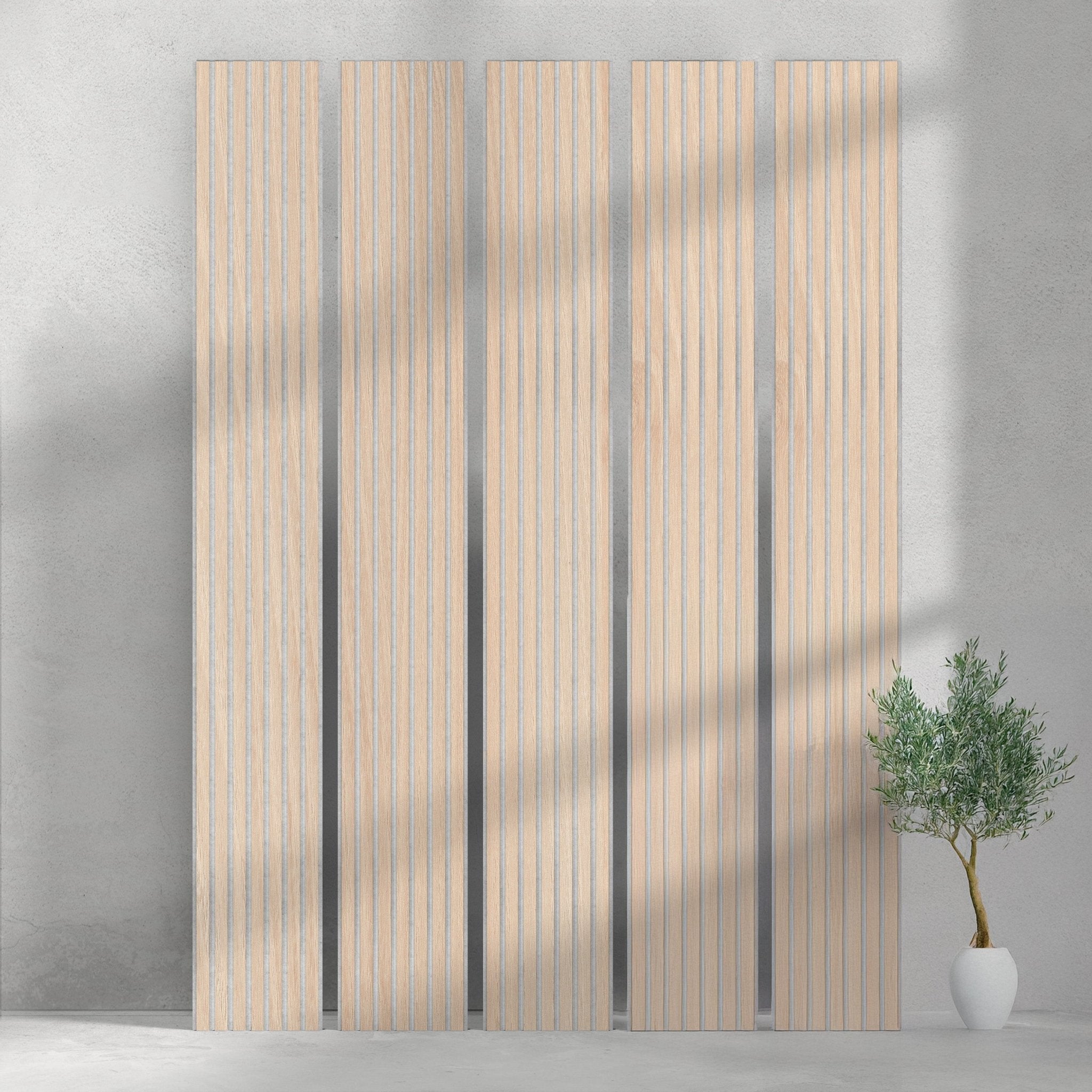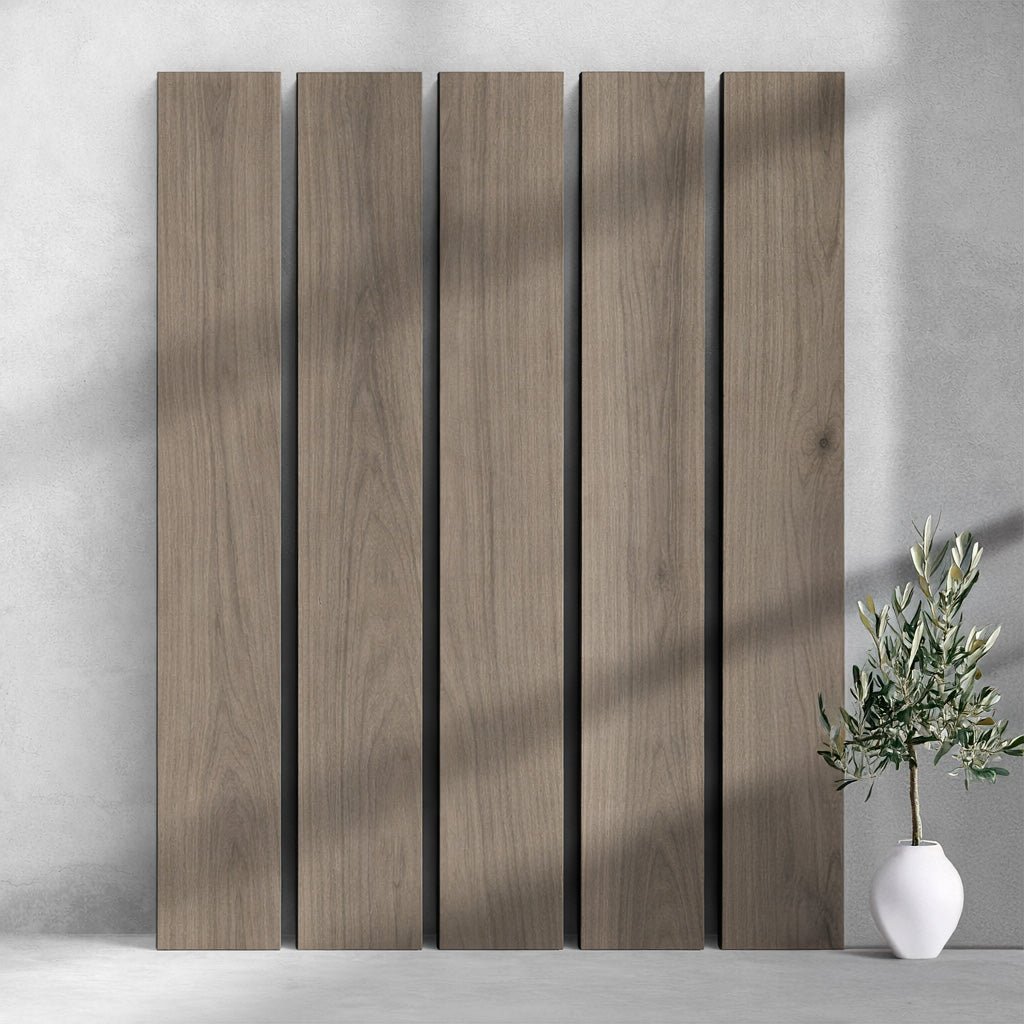
Solid Slat Panel Sample Kit
Built for people who read the spec sheet. Every slat solid, all the way through.
- 100% Solid — no veneer, no MDF — milled front to back
- Half-inch slats on 9mm acoustic felt — real depth, real shadow
- Cut it. It’s still solid — no pale core to hide
- The top of the Slats range — walnut, oak or bamboo
In stock — Delivery soon
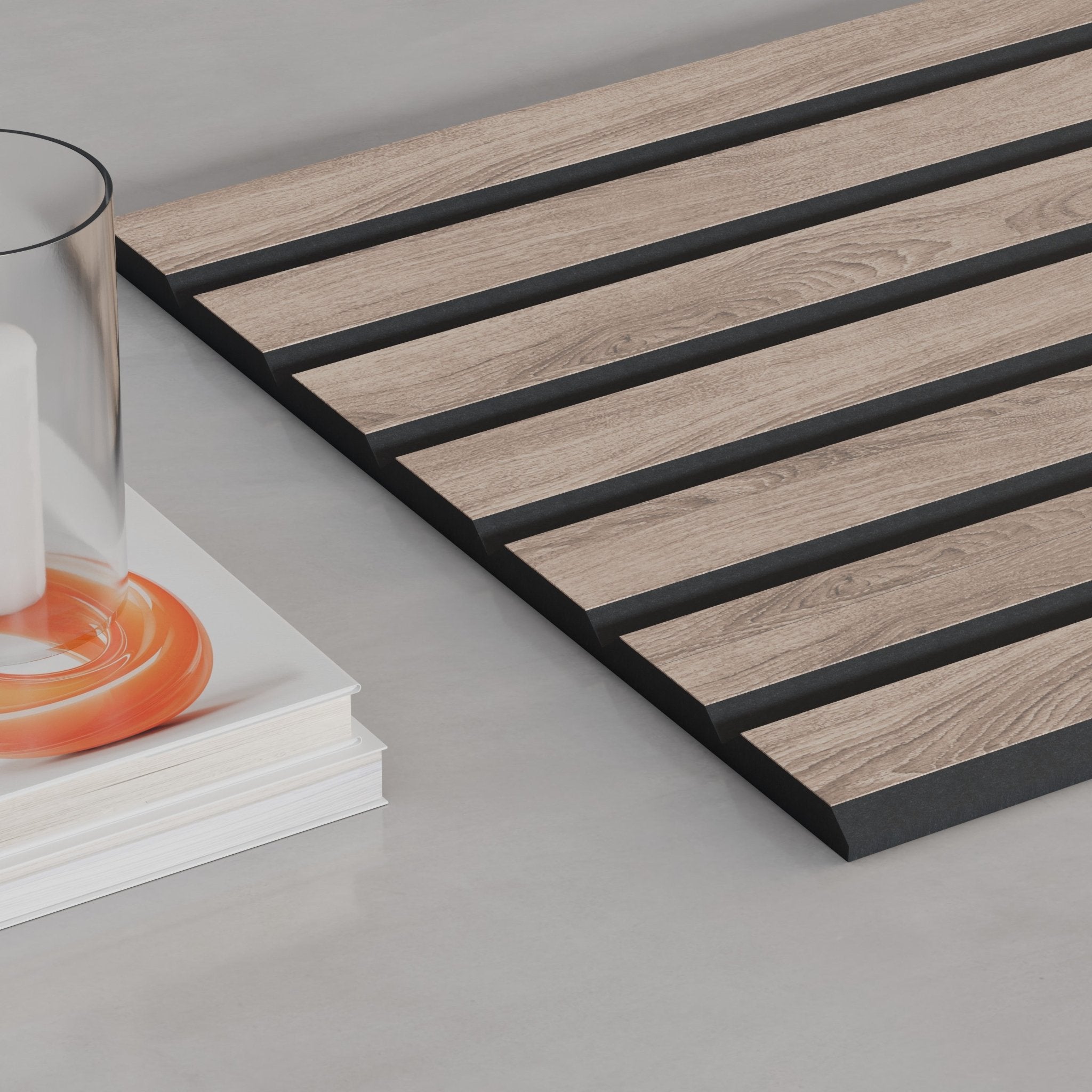
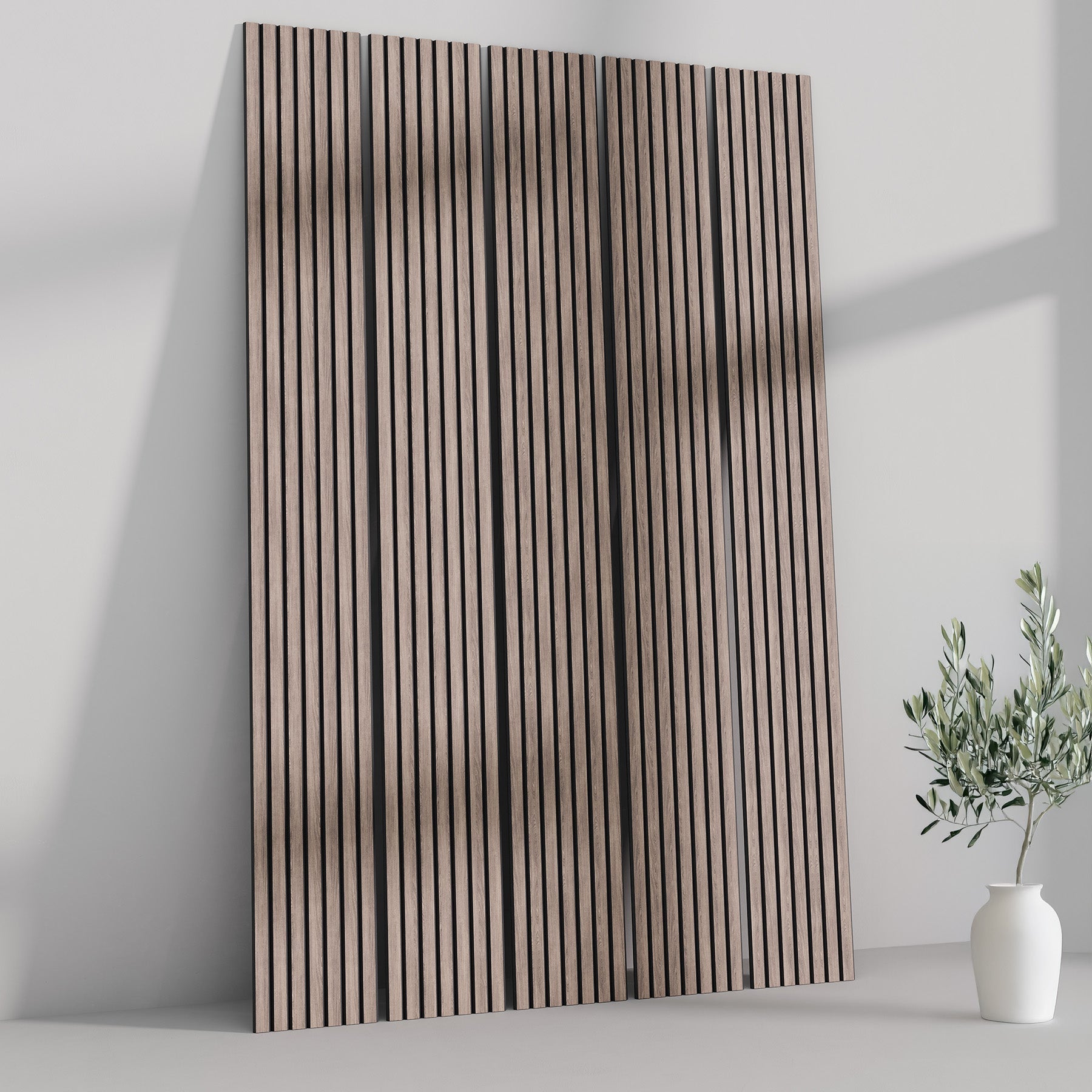
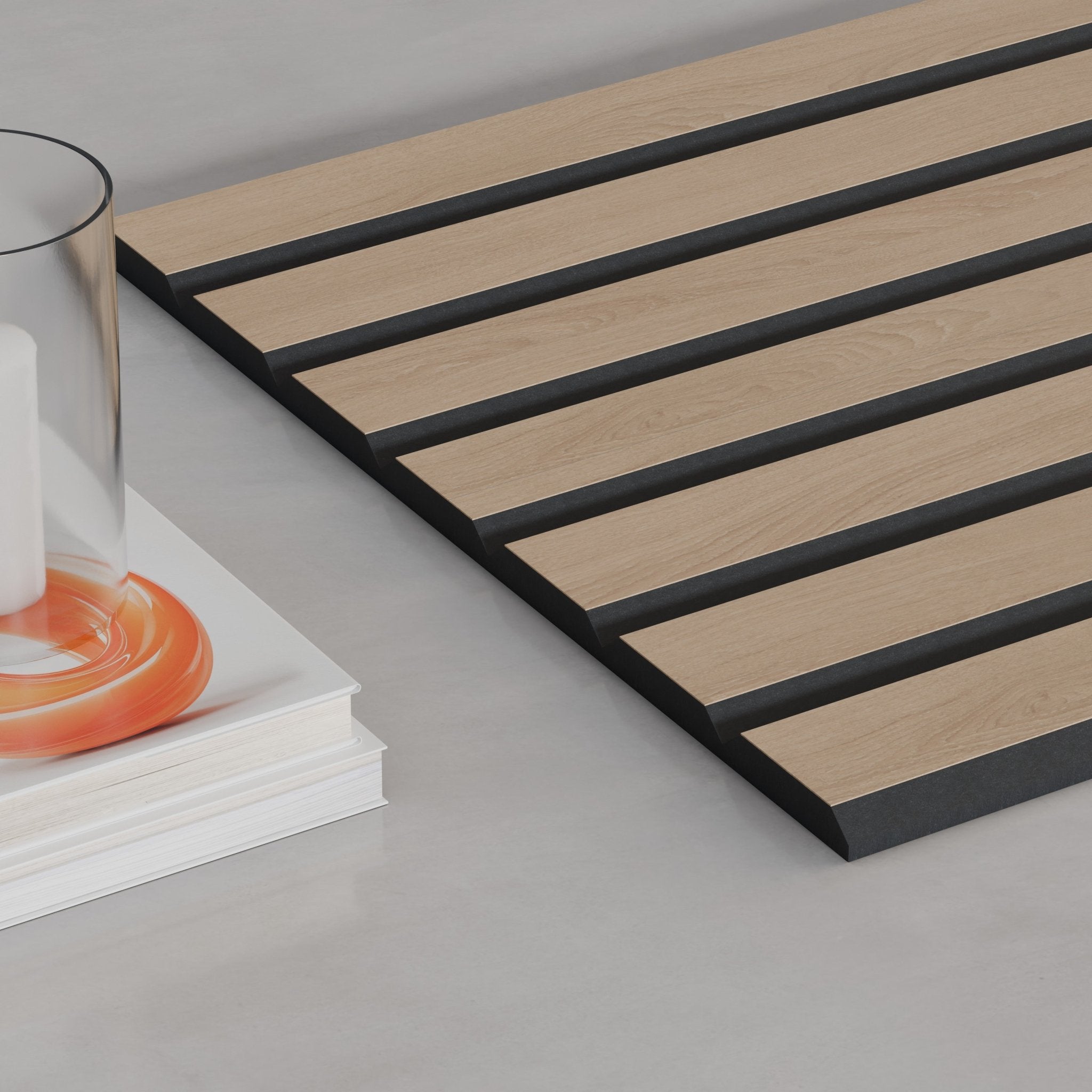
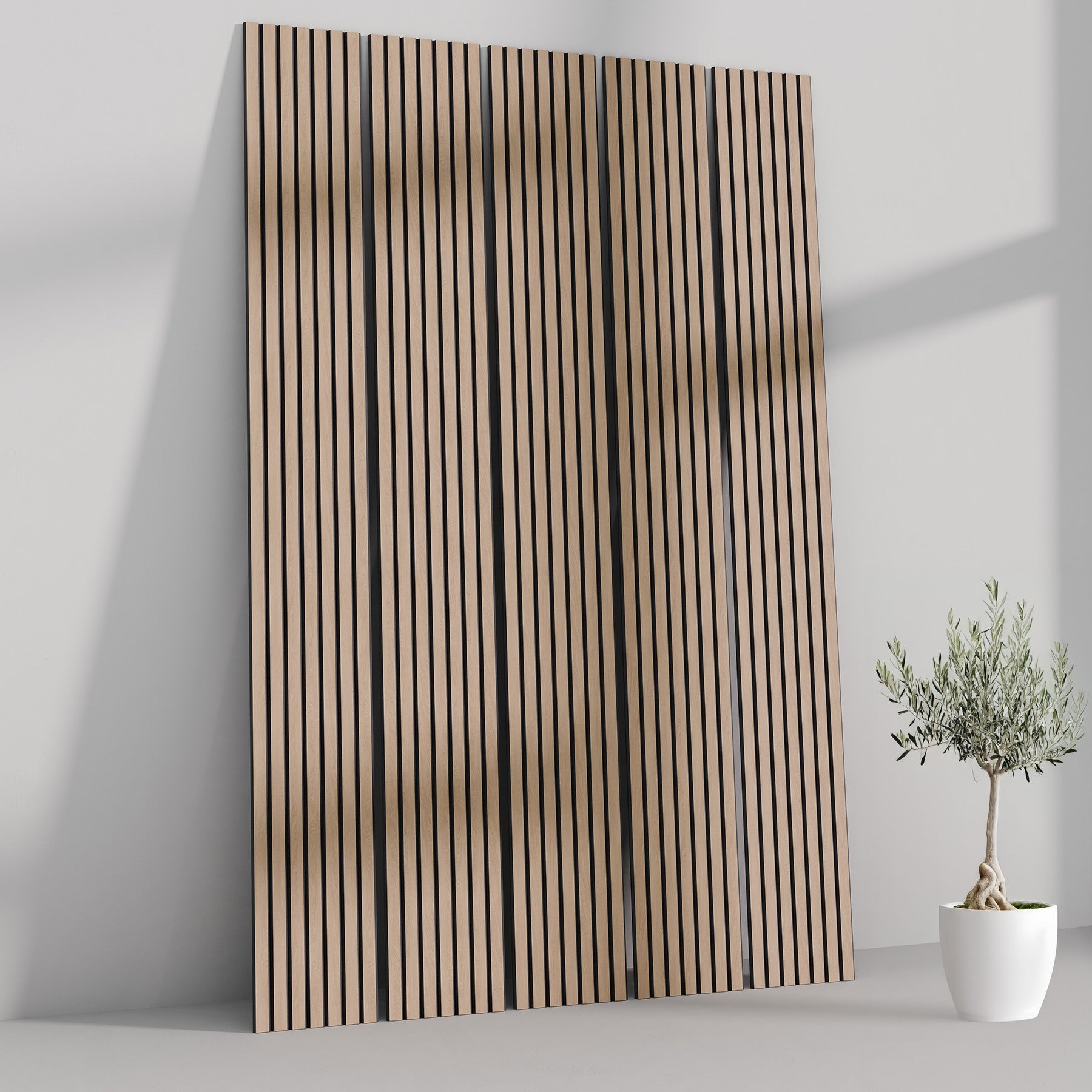
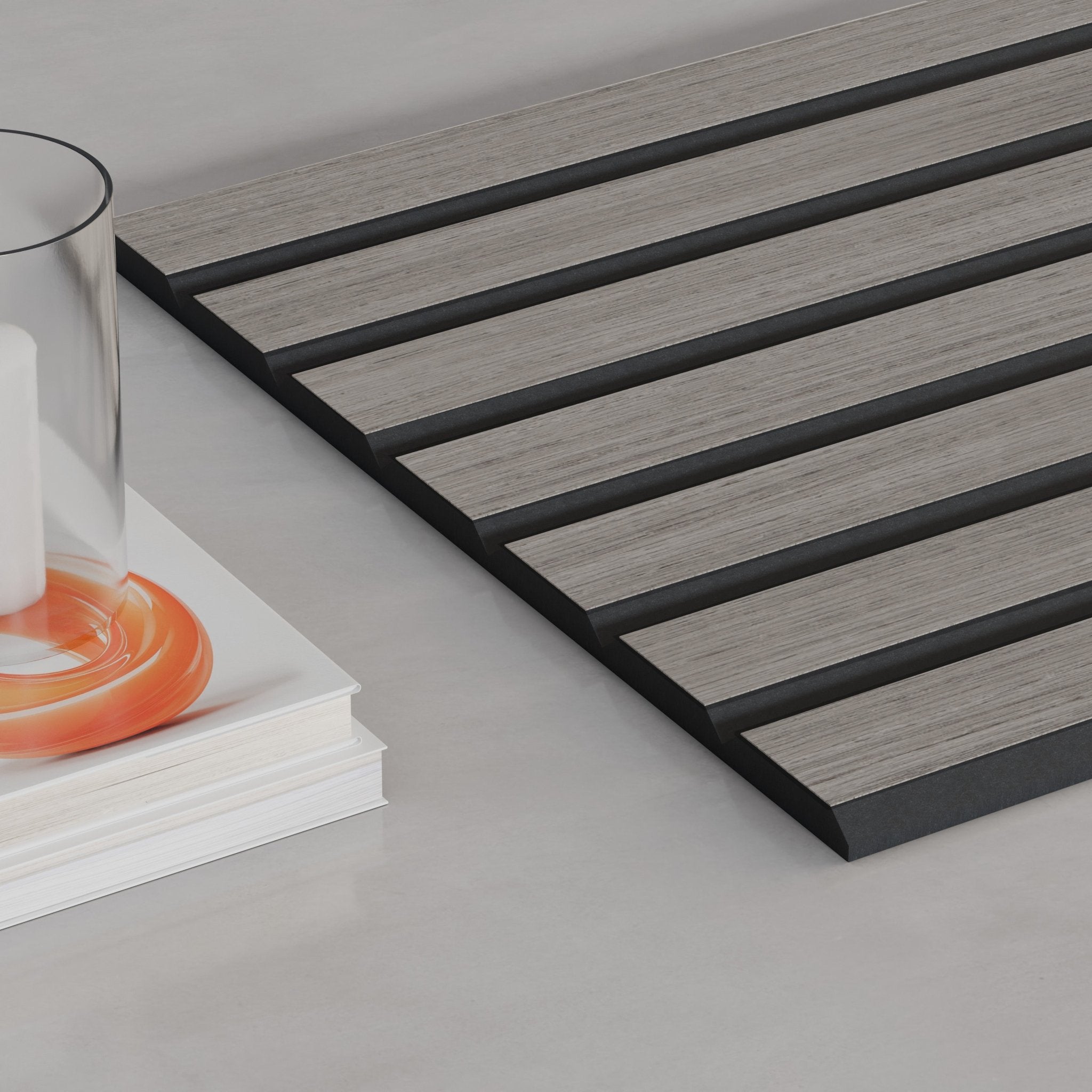
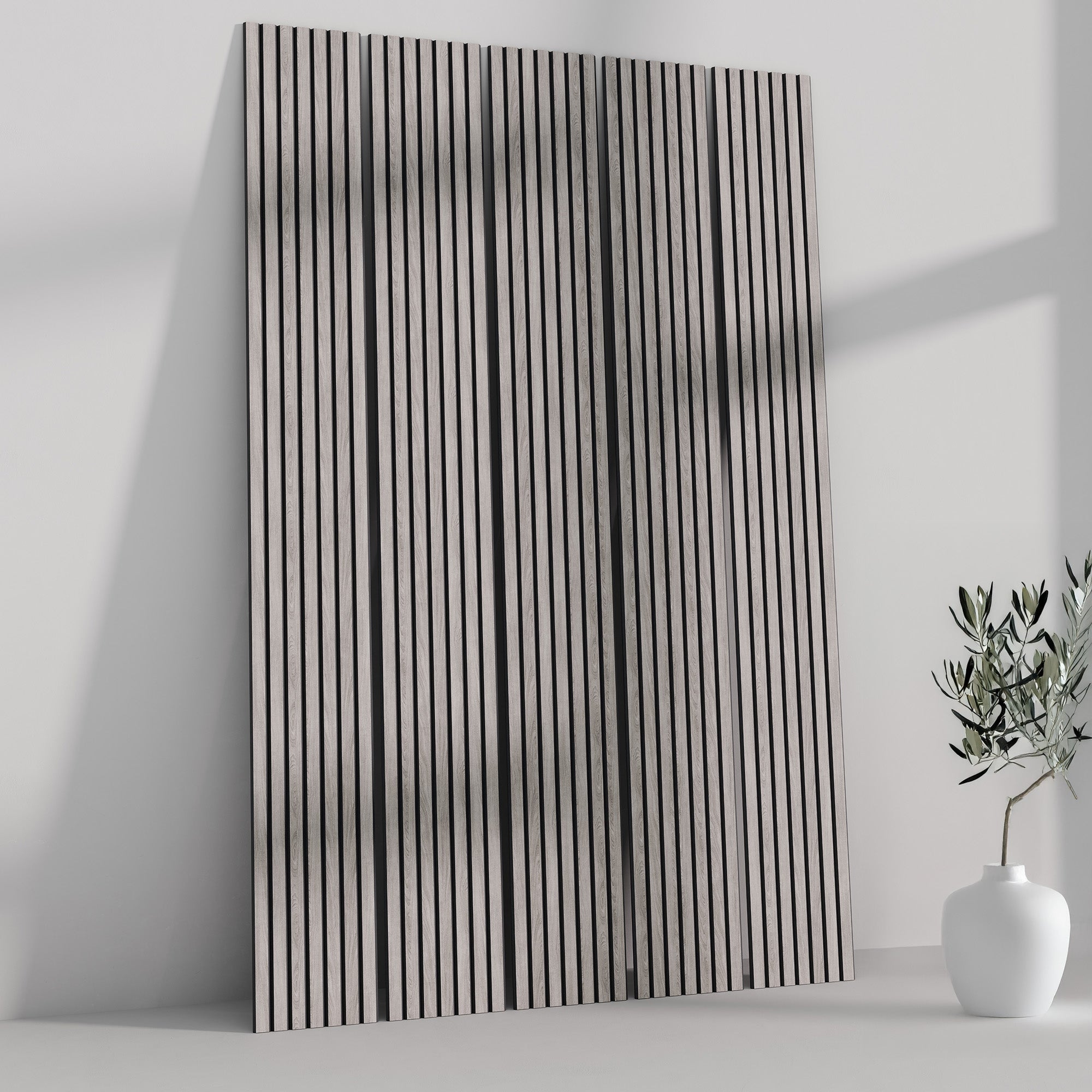
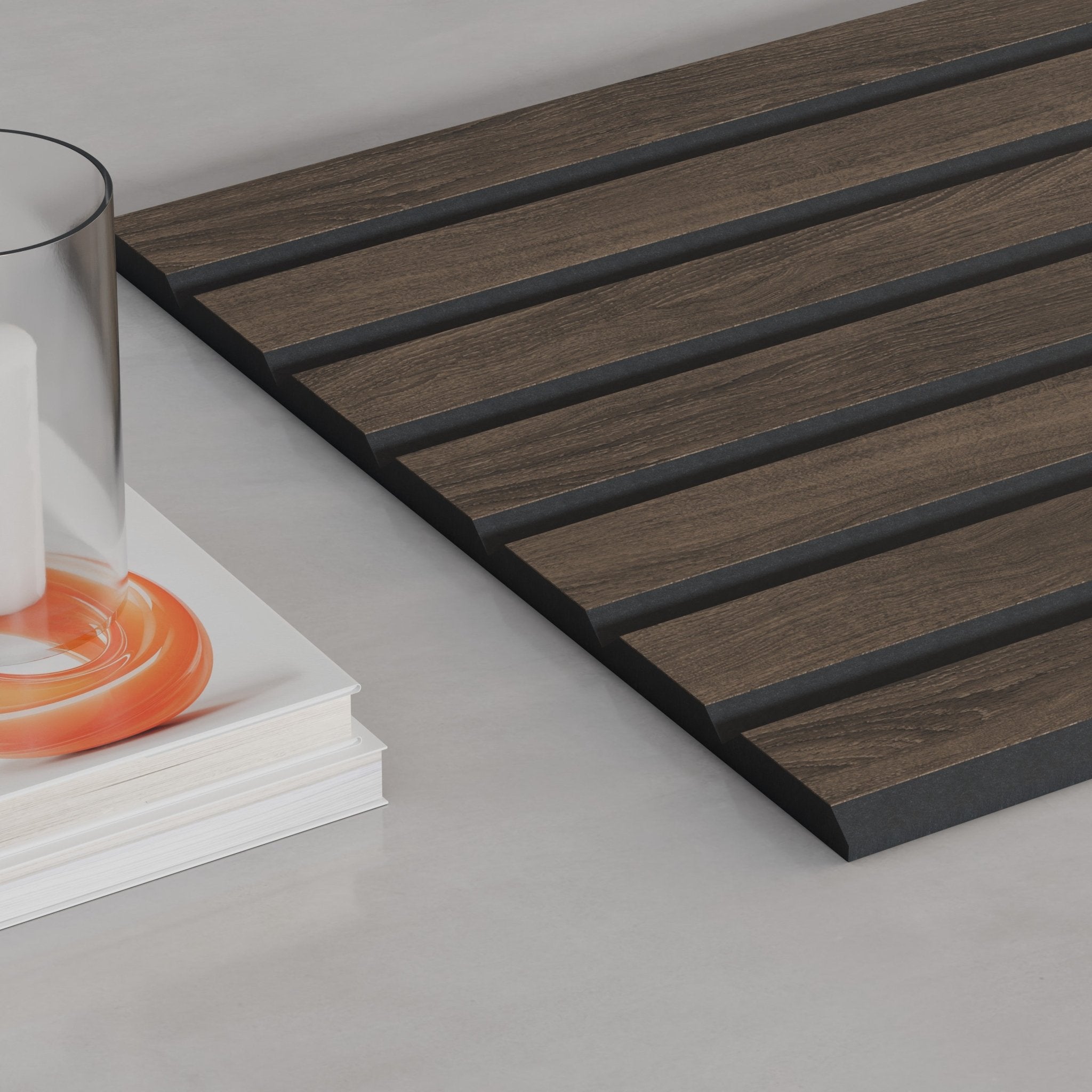
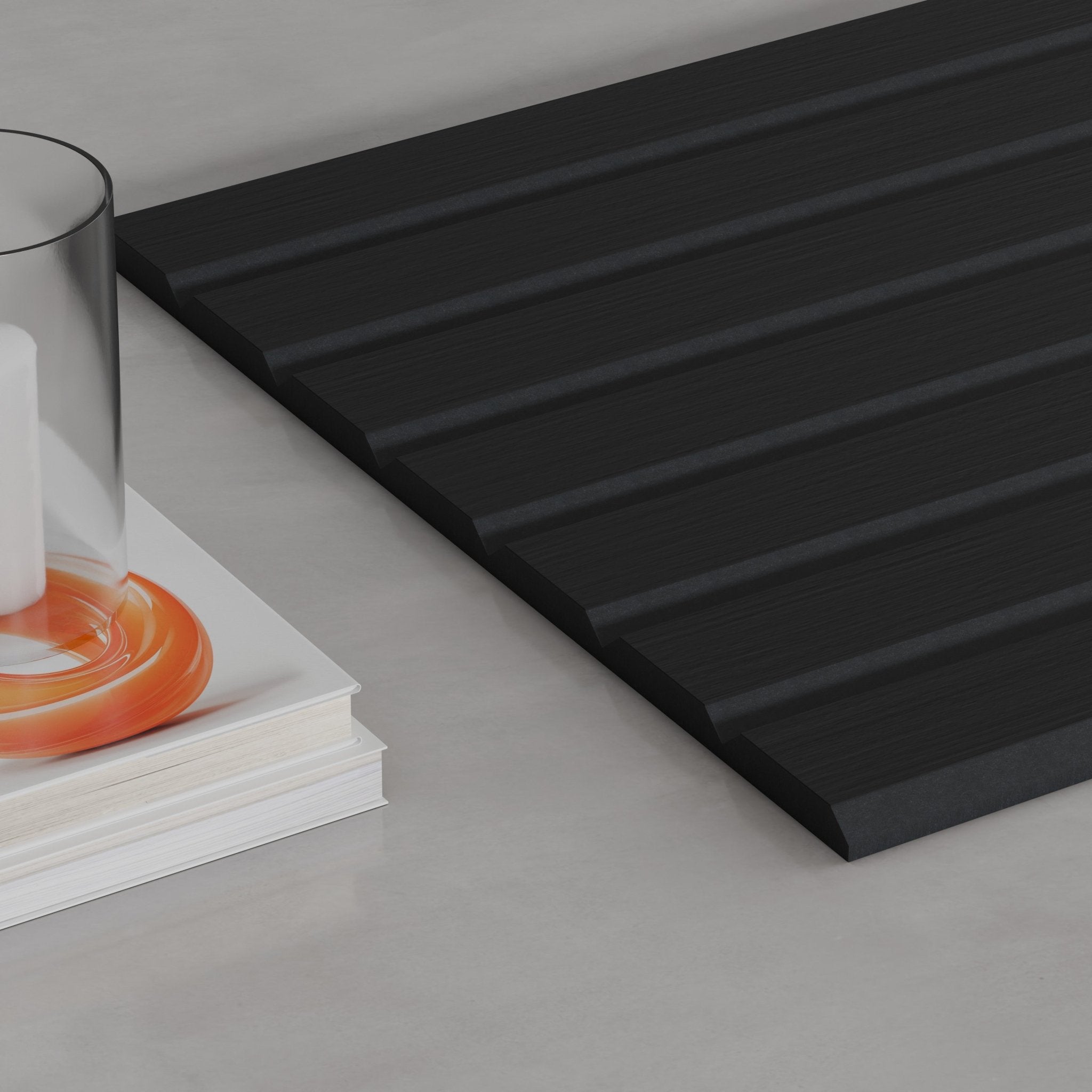
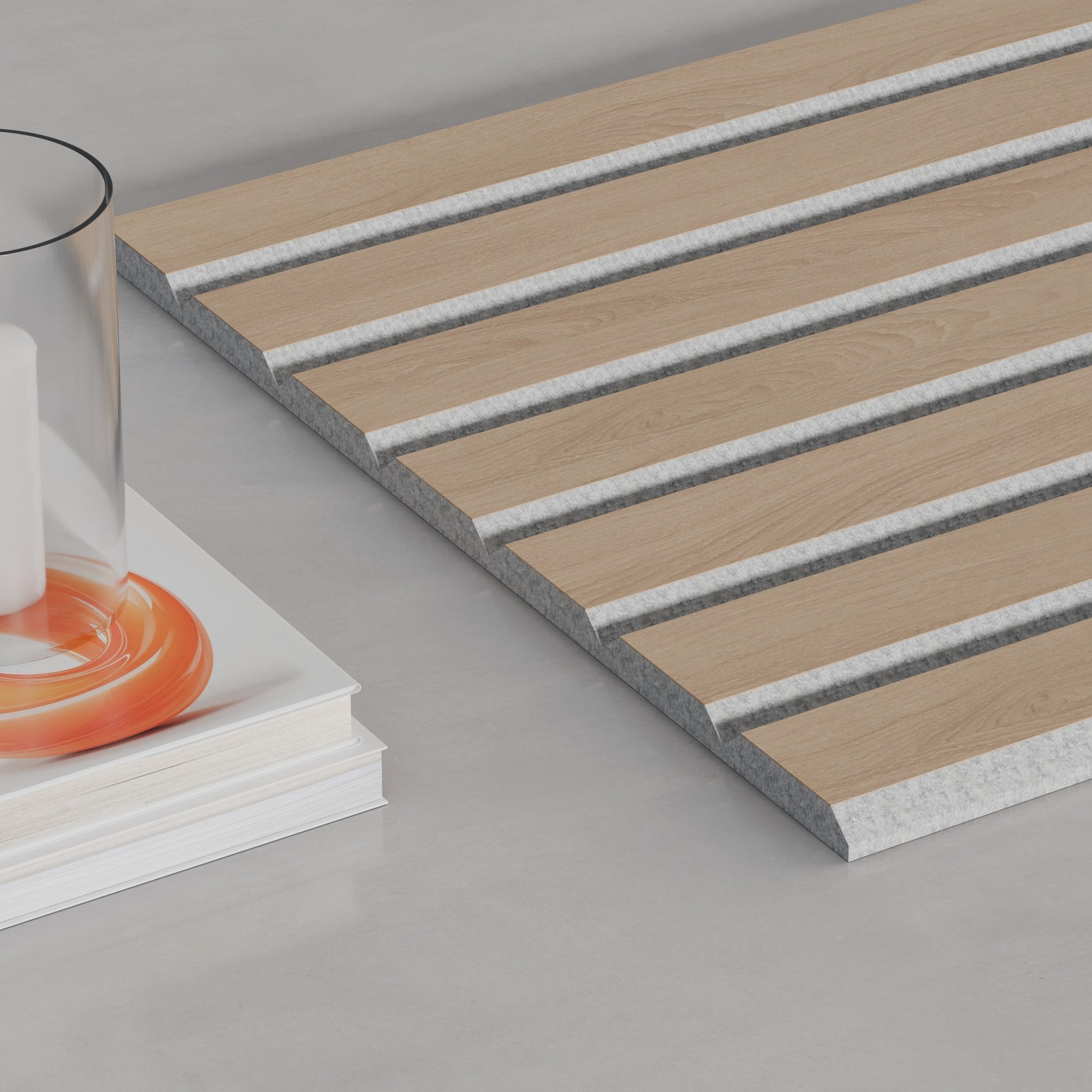
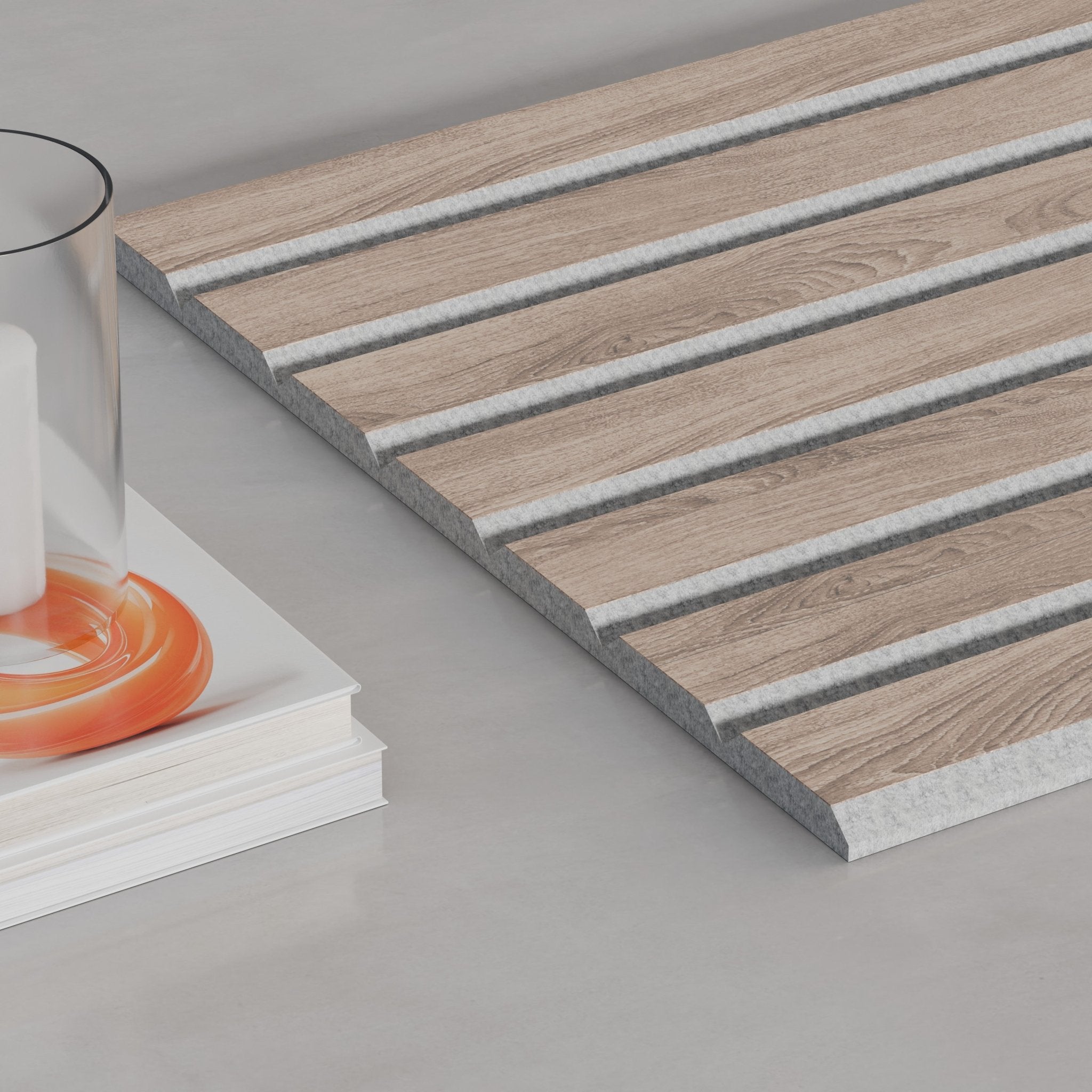
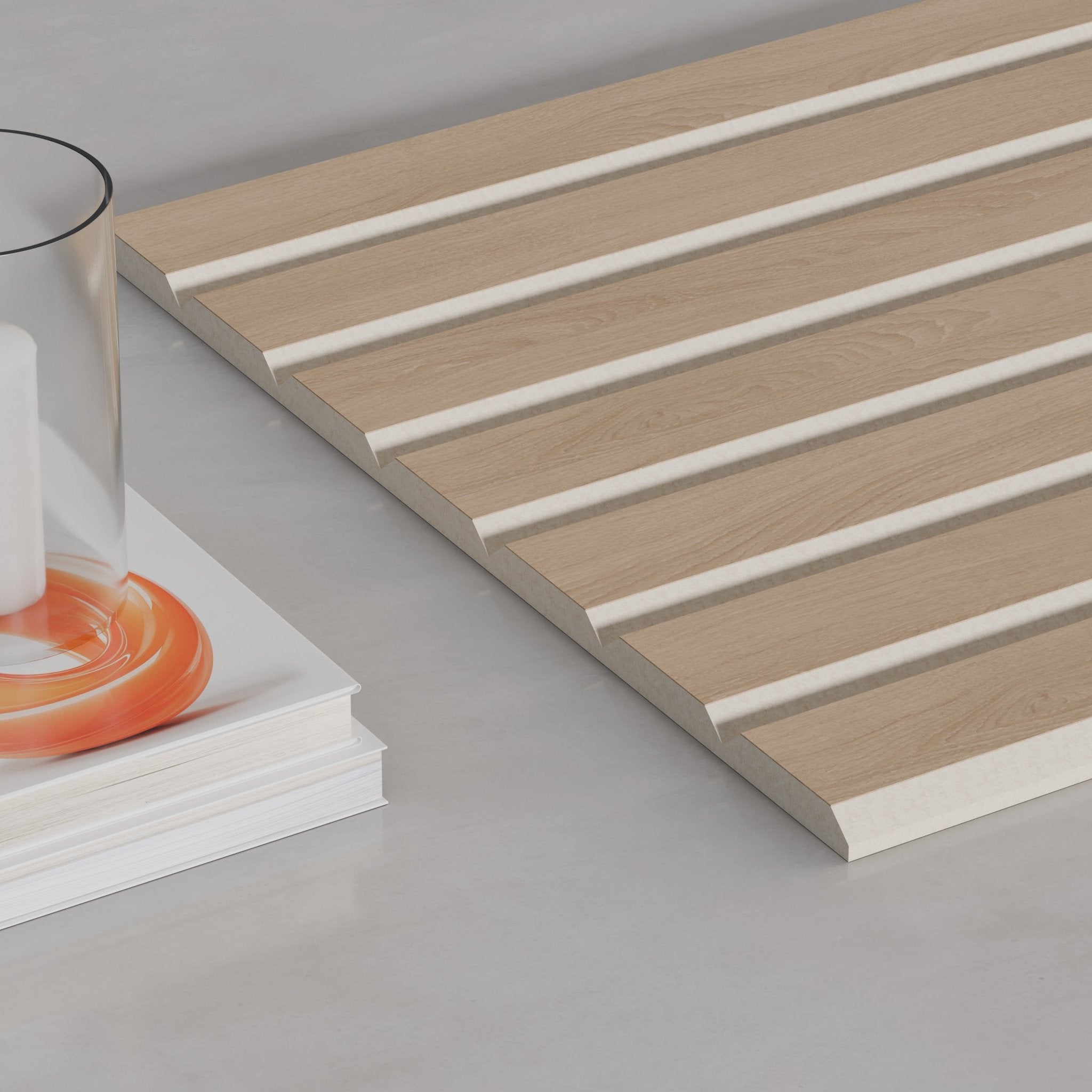
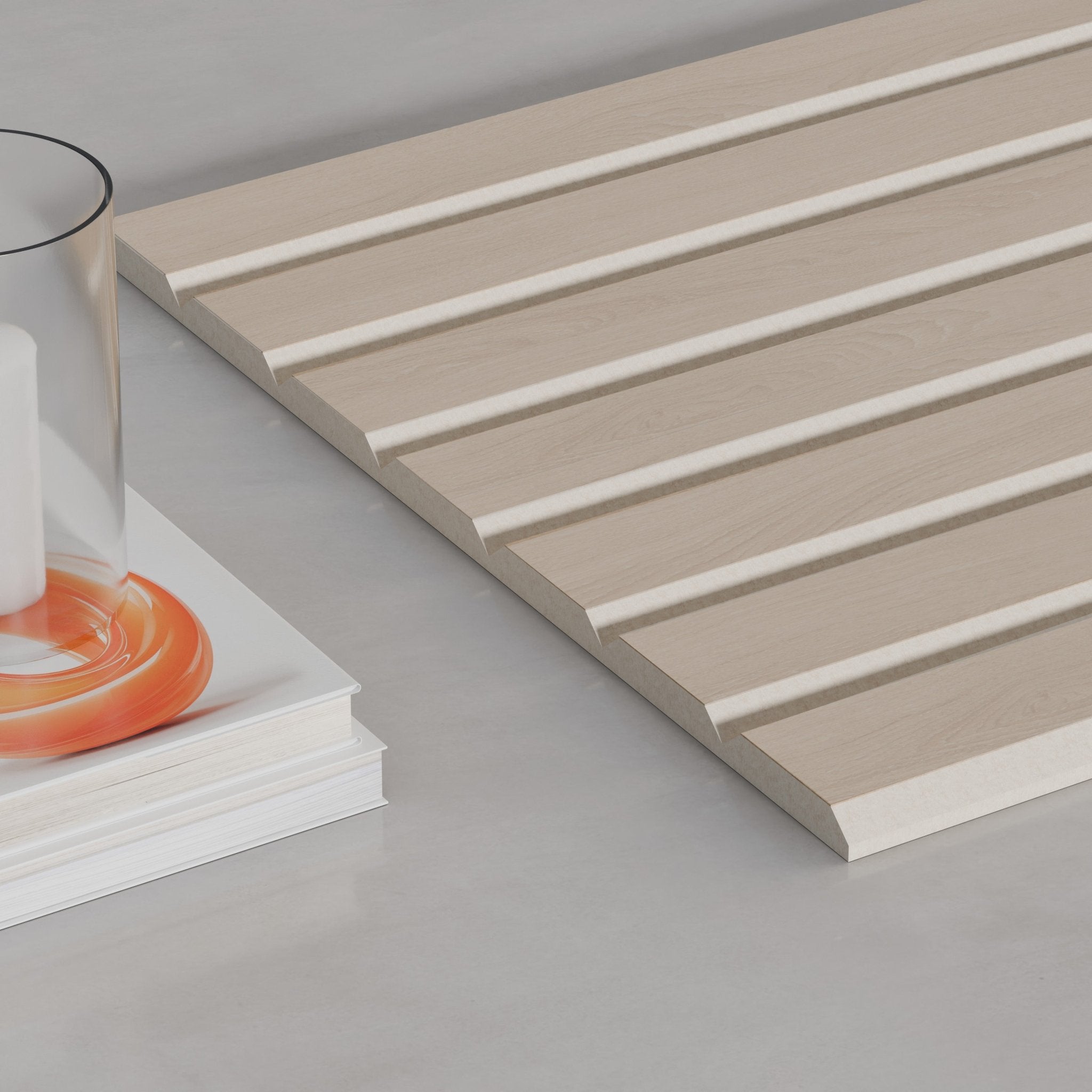
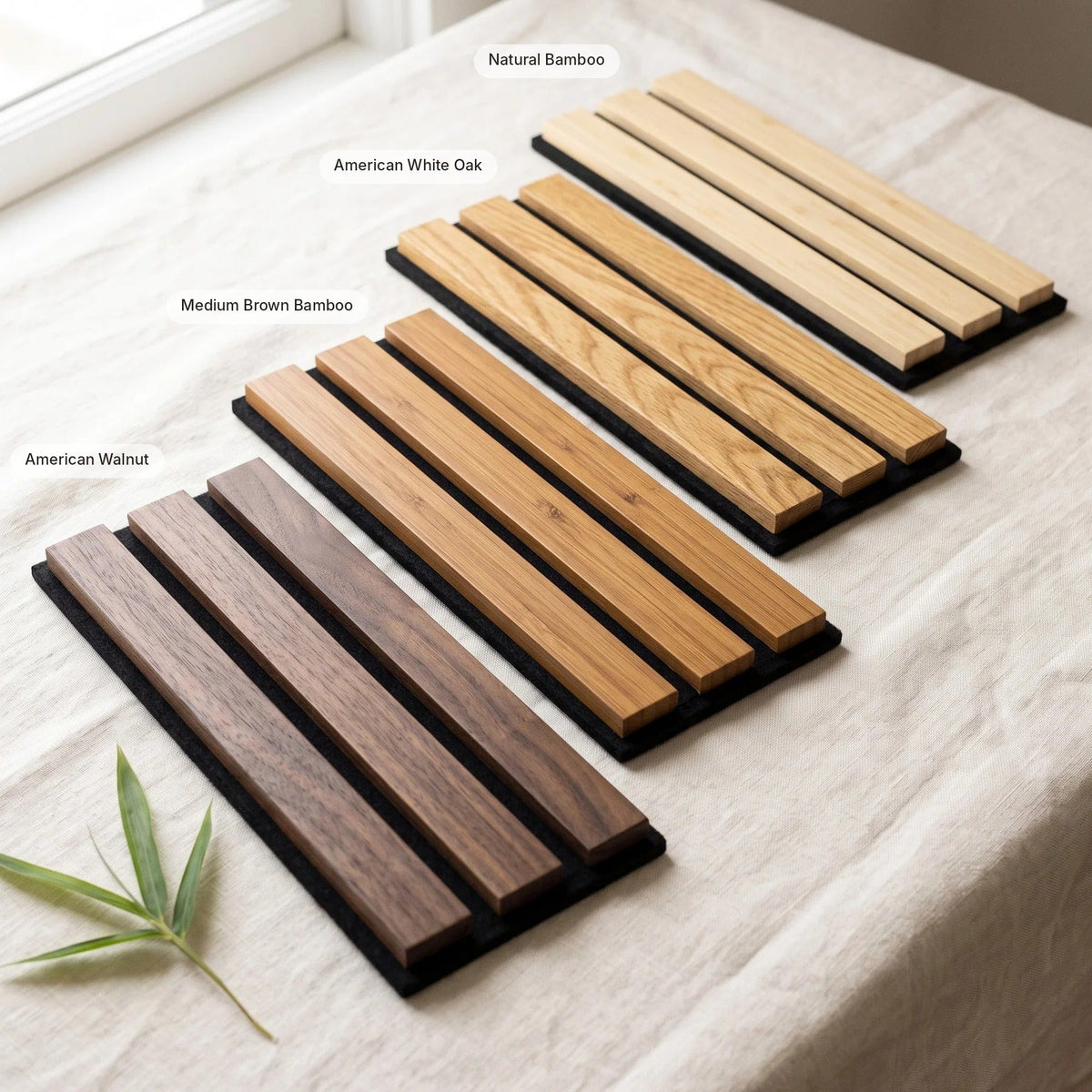
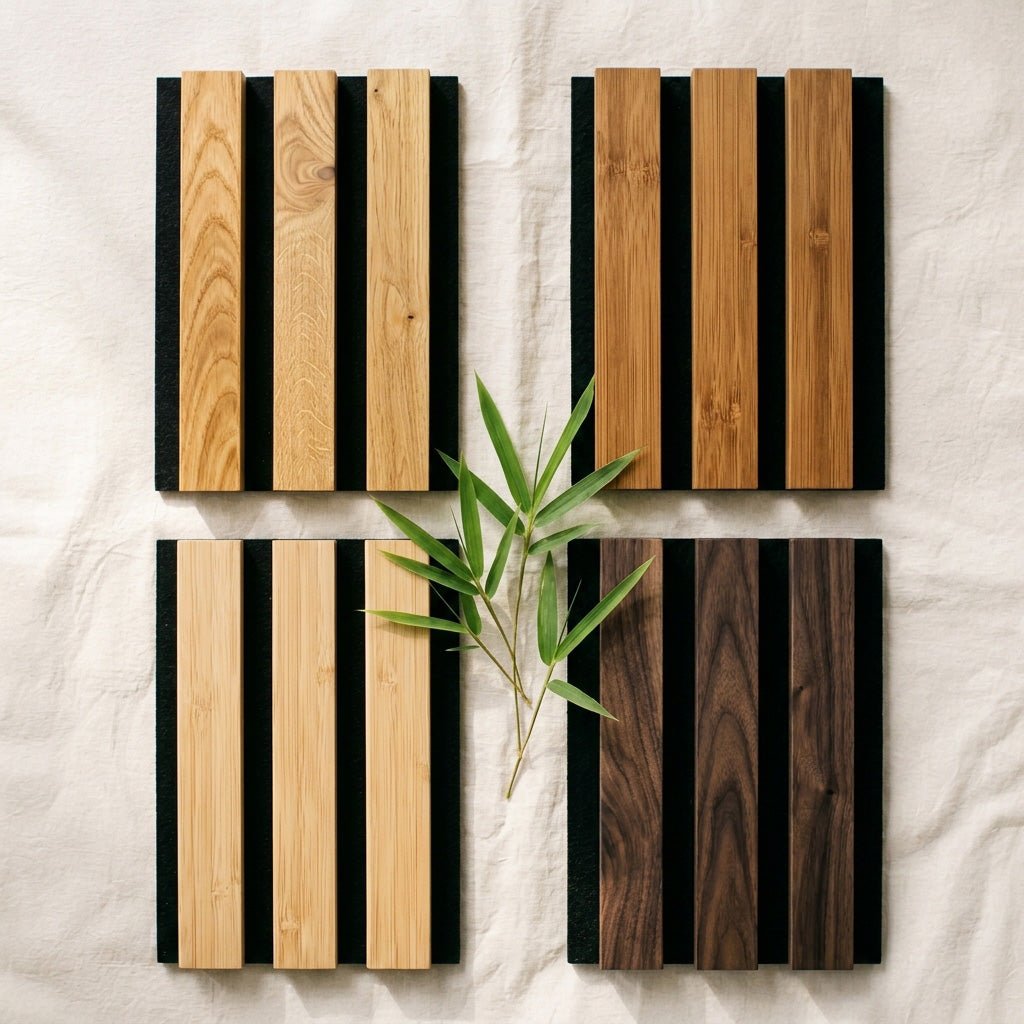
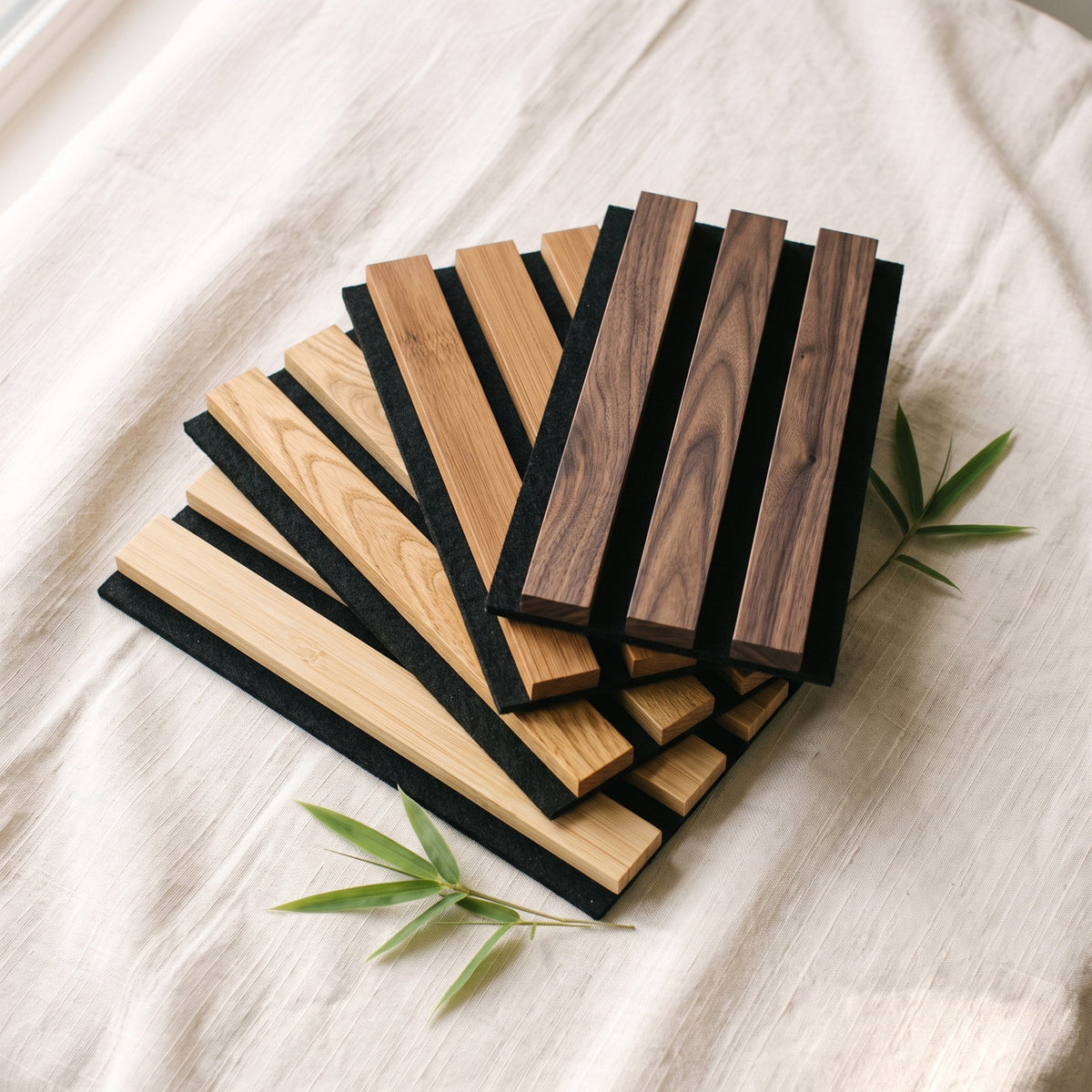
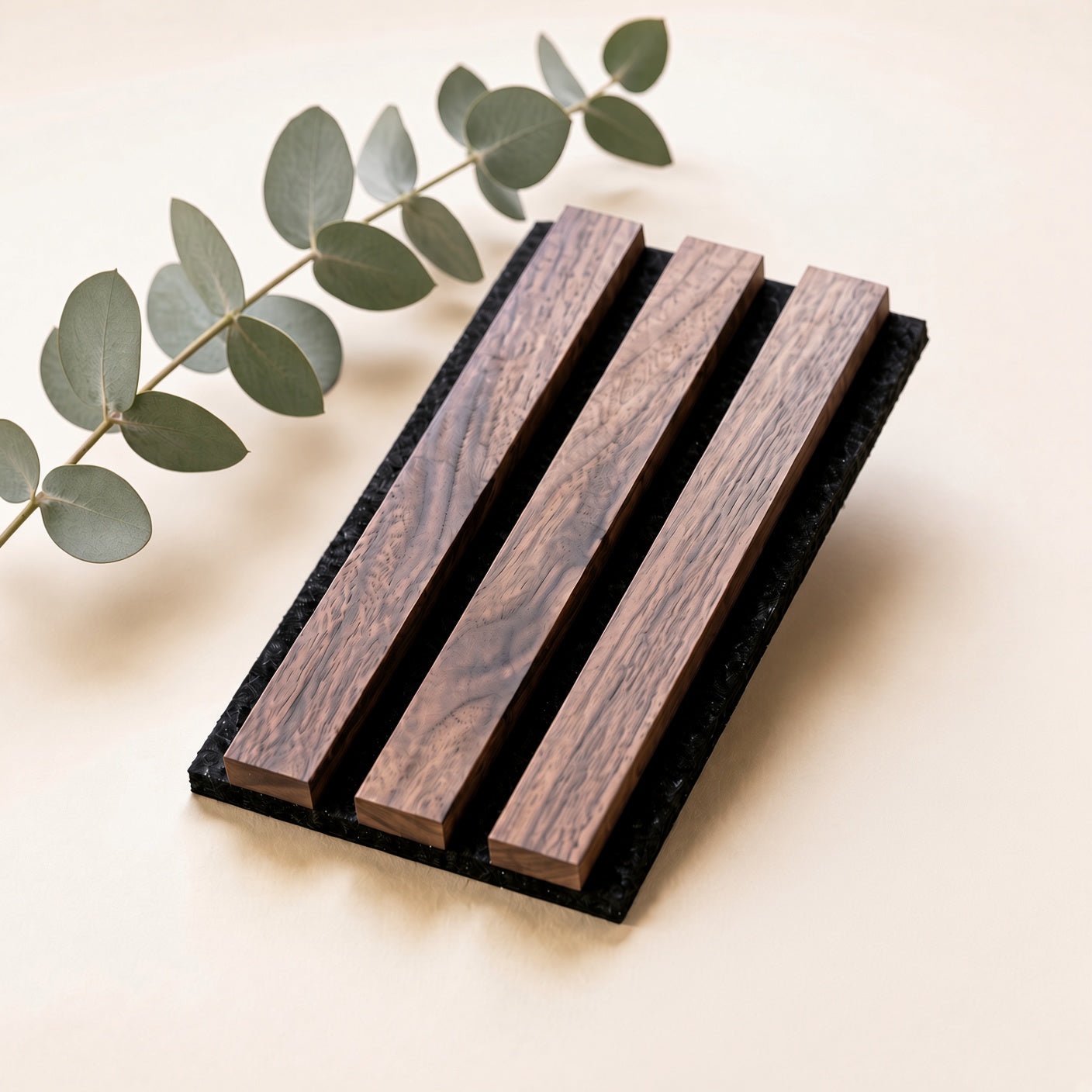
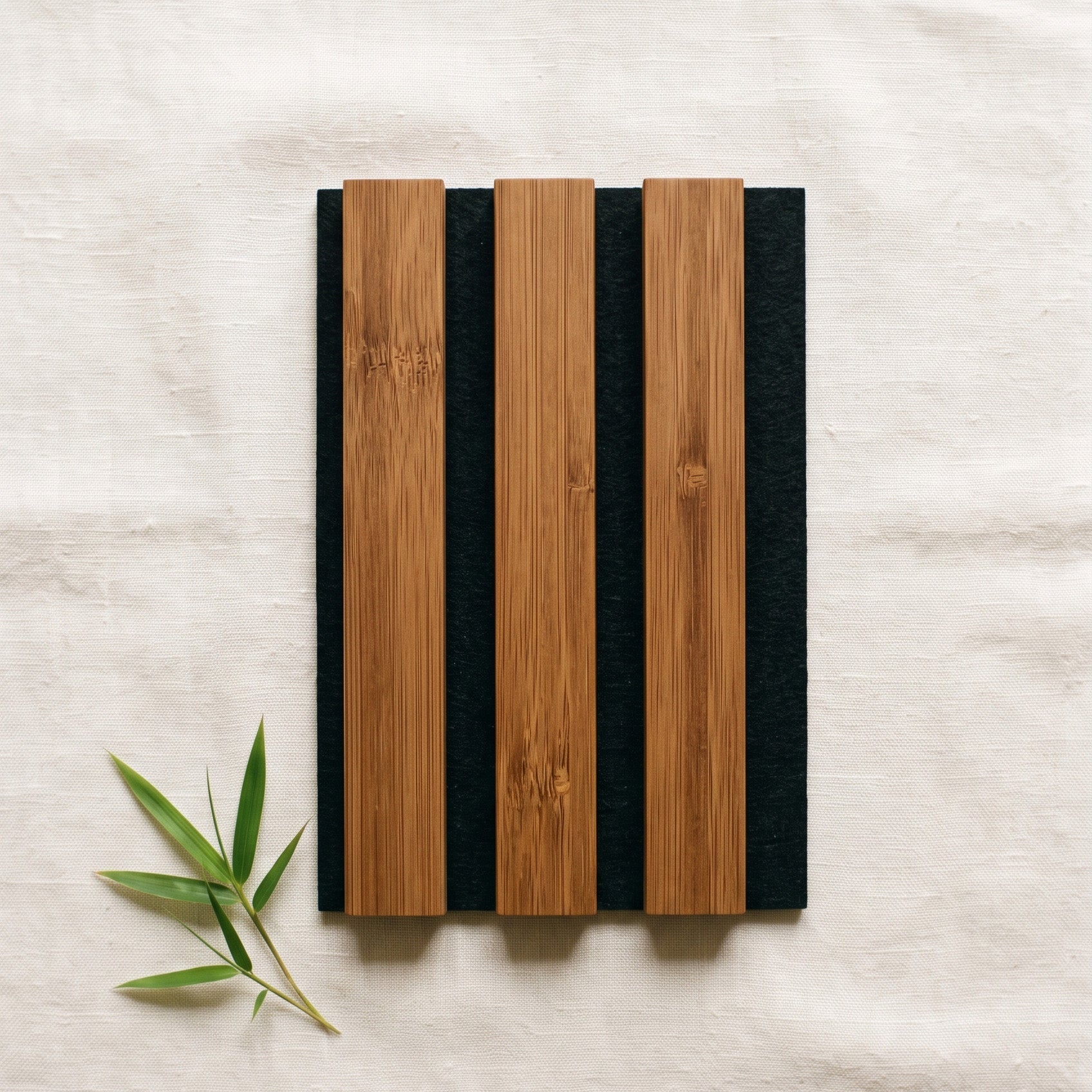
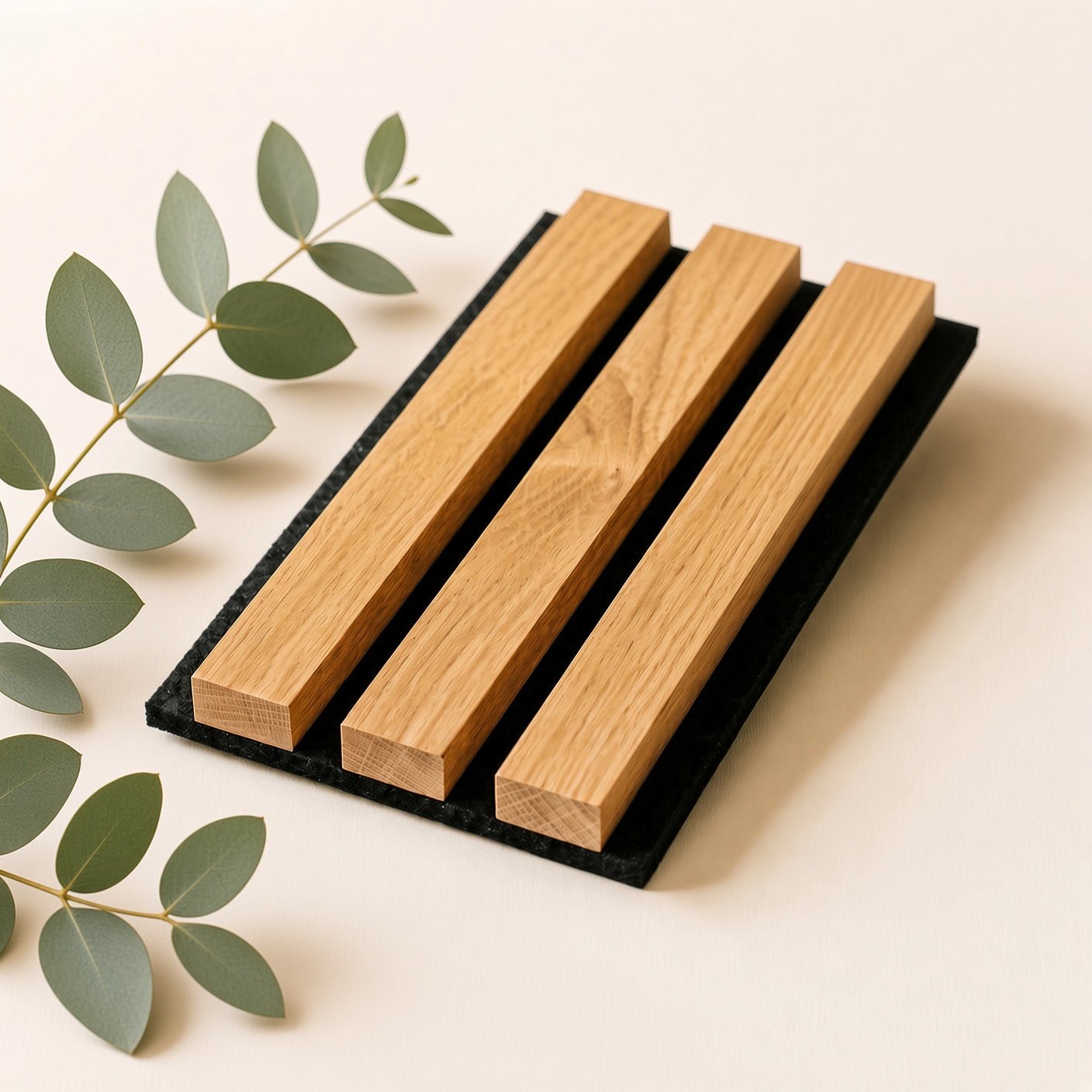
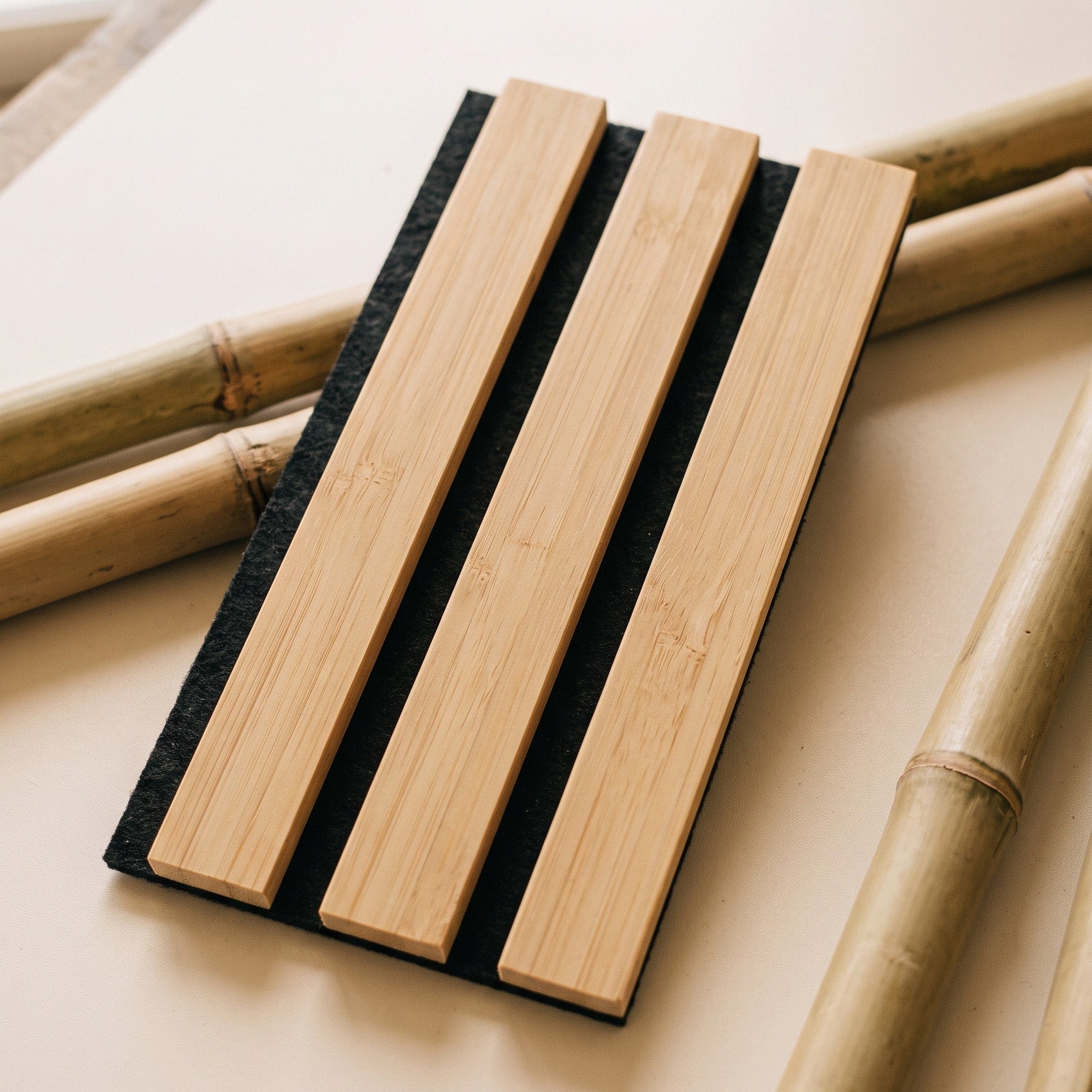
Feel the difference solid makes. The Solid Slat Panel Sample Kit is a hands-on introduction to our top-tier line — panels milled from solid material all the way through, with no veneer, no composite core, and nothing wrapped or faked. Each sample is a real piece of a full-size panel, mounted on the same recycled acoustic felt backing, so you can see the grain, feel the weight, and run a thumb along the square-cut edge before you commit.
The kit includes Solid Oak, Solid Walnut, and both Solid Bamboo colorways — Natural and Medium Brown — so you can compare tone and character side by side in your own light. The real thing, all the way through.
 Features & Benefits
 Features & Benefits
- Solid all the way through. Every slat in the Solid series is one piece of real material, 13mm deep, milled front to back — no veneer skin, no pine core, no MDF underneath. Trim a slat to fit around a switch plate and the cut edge is the same as the face.
- Depth you can read from across the room. Half-inch slats standing proud of the felt cast a real shadow line beside every slat, and that line moves as the light changes through the day. It’s the one thing a printed or laminated surface can’t fake.
- Mounted on acoustic felt. Each panel is bonded to 9mm black acoustic felt, which takes some of the hard edge off rooms with a lot of bare surfaces.
- Three finishes, one construction. American Walnut, American Oak and Bamboo are built the same way — eight solid slats to a panel, two panels to a box. What changes is the material, the tone and the character.
 Materials & Construction
 Materials & Construction
- The slats. 13mm deep, eight to a panel, milled from solid material rather than wrapped over a core. Cut one anywhere along its length and it’s the same right through. The slats are square-cut, so the top face meets the sides at a sharp corner — that’s what keeps the shadow line crisp.
- The backing. Each panel is bonded to 9mm black acoustic felt. It’s a rigid pressed board rather than a soft fabric — it holds the slats in alignment and gives the panel its structure. Being black and matte, it recedes, so the space between slats reads as shadow instead of as a visible backing.
- The joint. Panels overlap where they meet rather than butting edge to edge, so the join closes up instead of leaving an open line with felt showing through it.
- The finish. Every Solid panel arrives sealed and ready to install. The exact finish varies by material — the finish for each is listed on its own product page.
 Installation & Care
 Installation & Care
- Before you start. Work out your box count first. One box covers 23.62″ of wall width in the hardwoods and 25.20″ in bamboo — divide your wall width in inches by the figure for your finish and round up. Order the whole wall at once: these are real materials, and later production runs won’t necessarily match the tone of the first.
- Mounting. Solid panels aren’t peel-and-stick. They fix to the wall with screws or construction adhesive, straight onto drywall or into studs. Work across the wall in one direction so each panel laps over the one before it. Indoor use only.
- Cutting. Trim them like timber, not like a laminate board. A fine-tooth blade gives the cleanest edge, and because the slat is solid all the way through, a cut edge looks finished rather than exposing a pale core.
- Care. Dust with a soft cloth or vacuum with a brush attachment; for anything more, a barely damp cloth is enough. Avoid solvent cleaners, abrasive pads and silicone polishes.
Solid. Solid Difference.
What Changes When It’s Solid
Solid construction isn’t just a materials claim — it shows up in how the wall looks, how it cuts, and how it holds up in a real room.
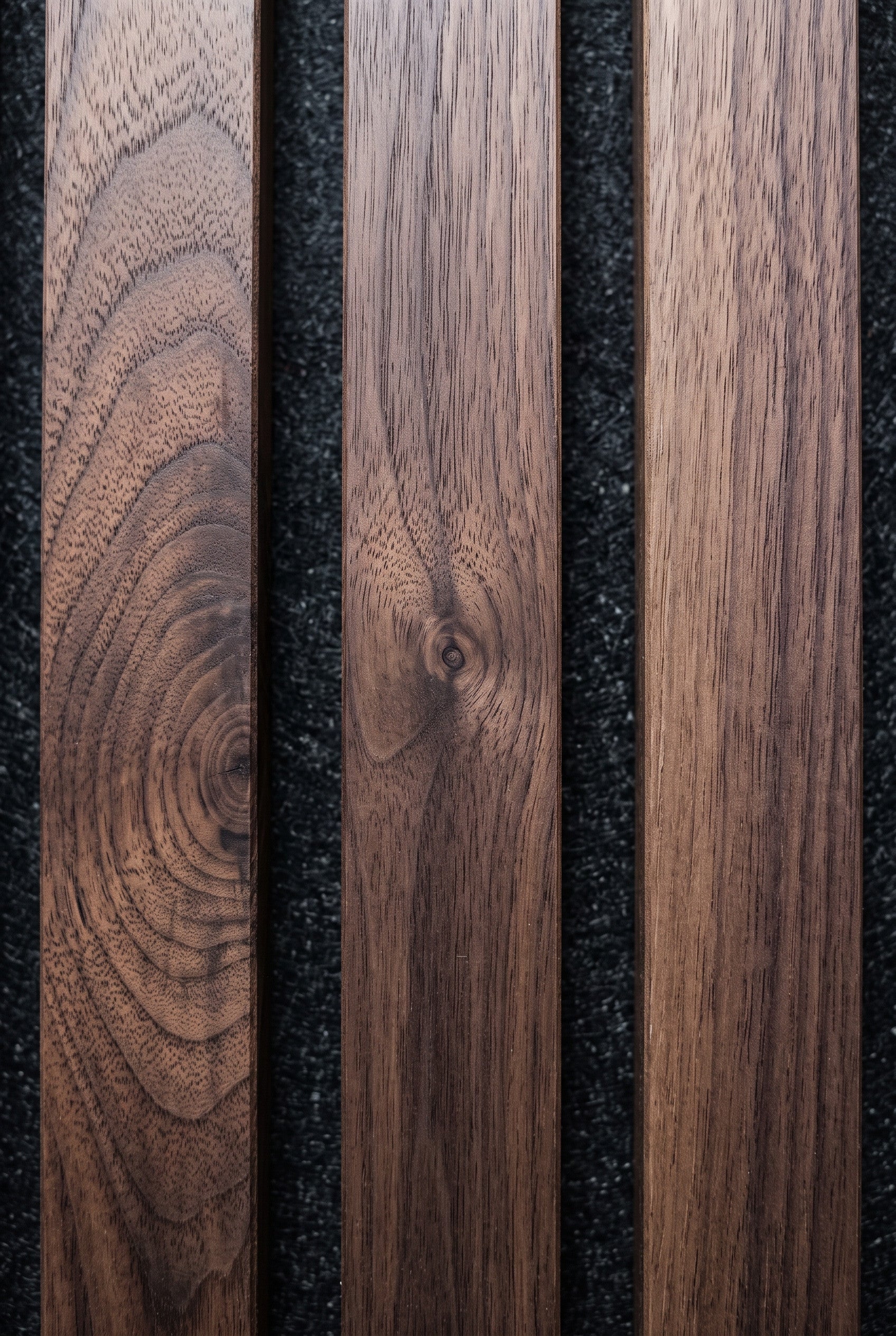
Solid All The Way Through.
No veneer skin, no MDF core, nothing wrapped or faked. Every slat is one piece of real material, milled front to back — which is why a cut edge looks like the face and not like a secret.
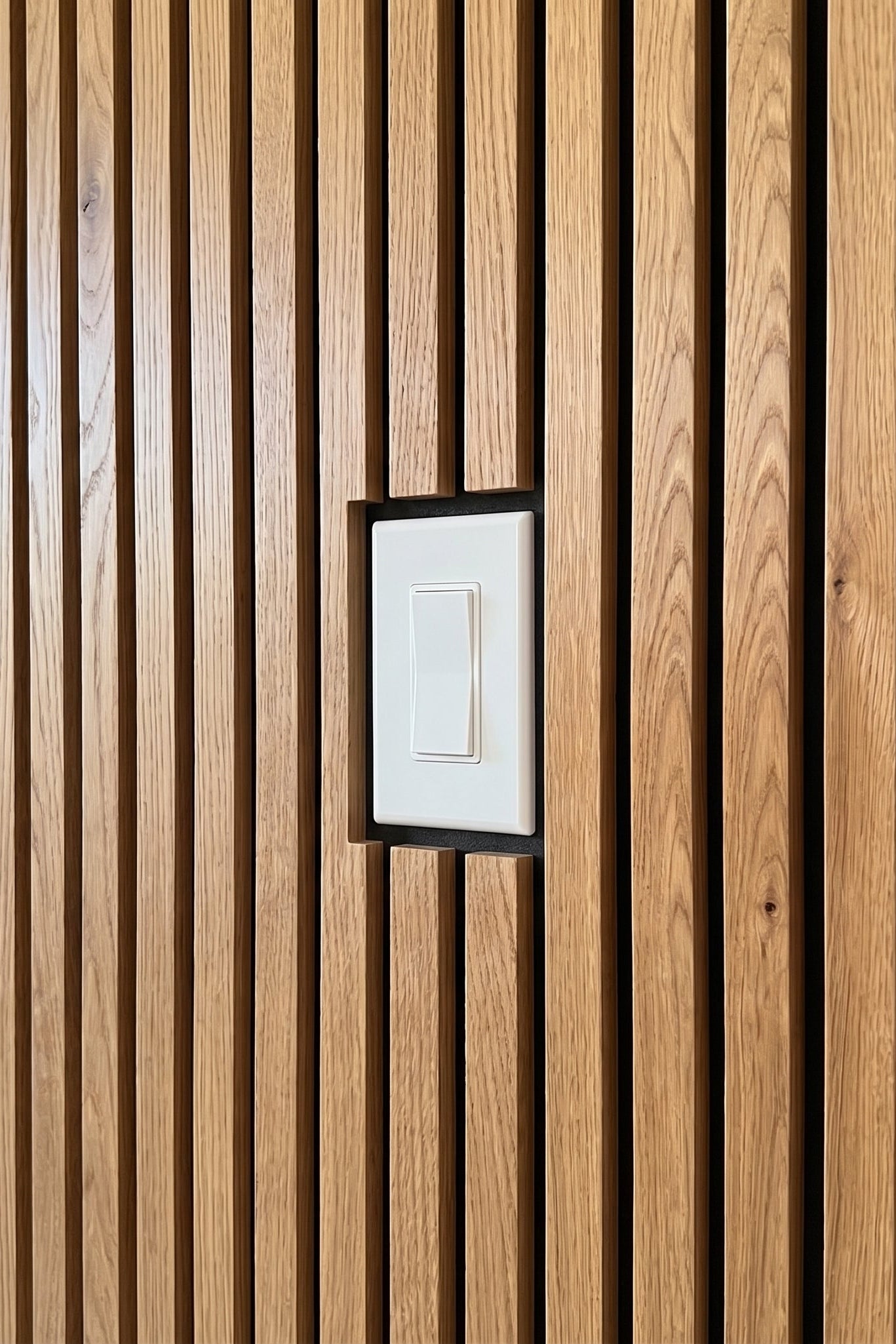
Cut It. It’s Still Solid.
Trimming around a switch, an outlet or a door frame is where veneered panels give themselves away — the blade goes through the skin and exposes whatever’s underneath. Cut a Solid panel and you get more of the same material. Clean edges, no color change, nothing to cover with trim.
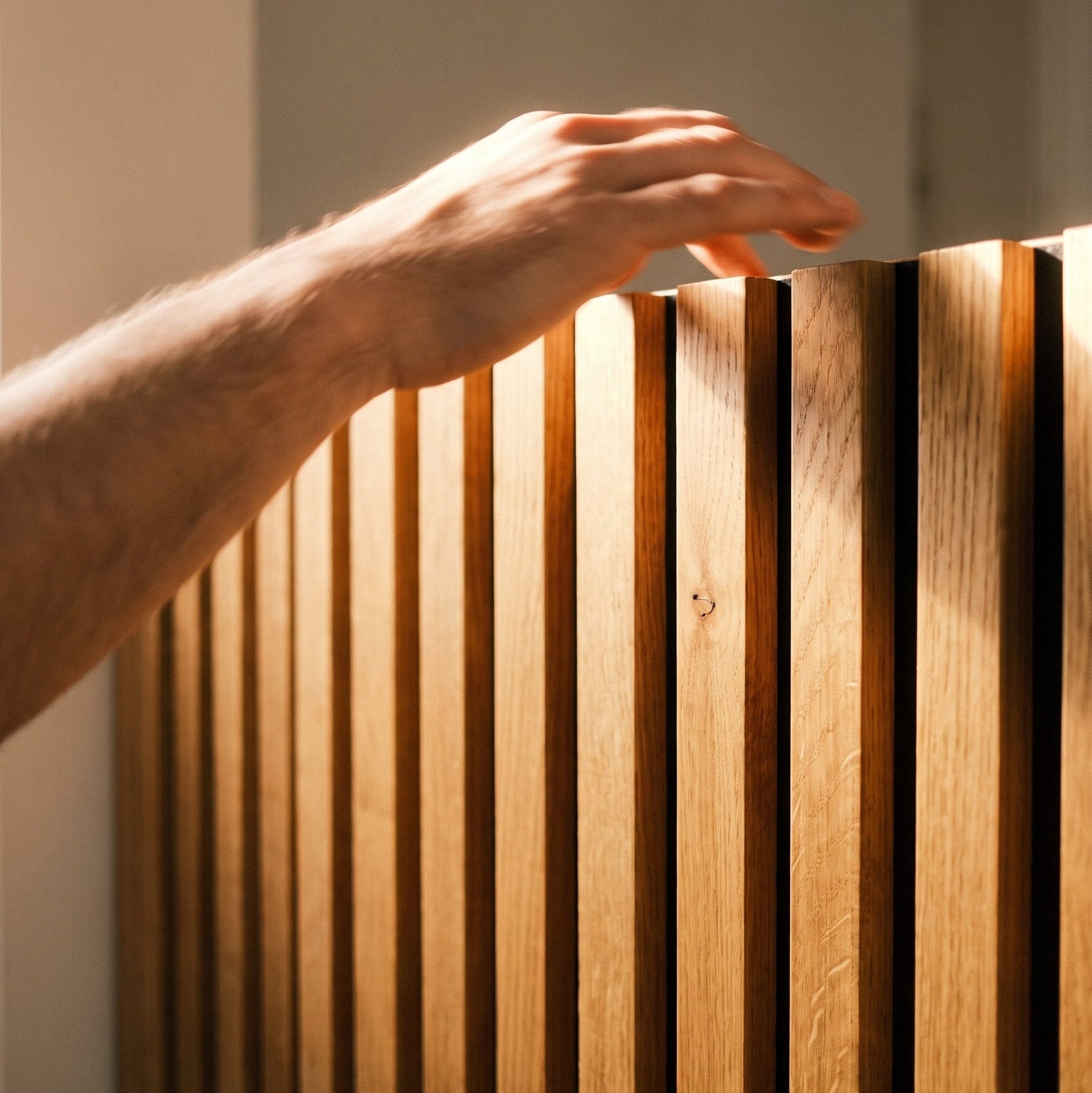
Depth You Can See.
Half-inch slats standing proud of 9mm acoustic felt throw a real shadow line beside every slat — and it moves as the light changes through the day. It’s the one thing a printed or laminated surface can’t fake.
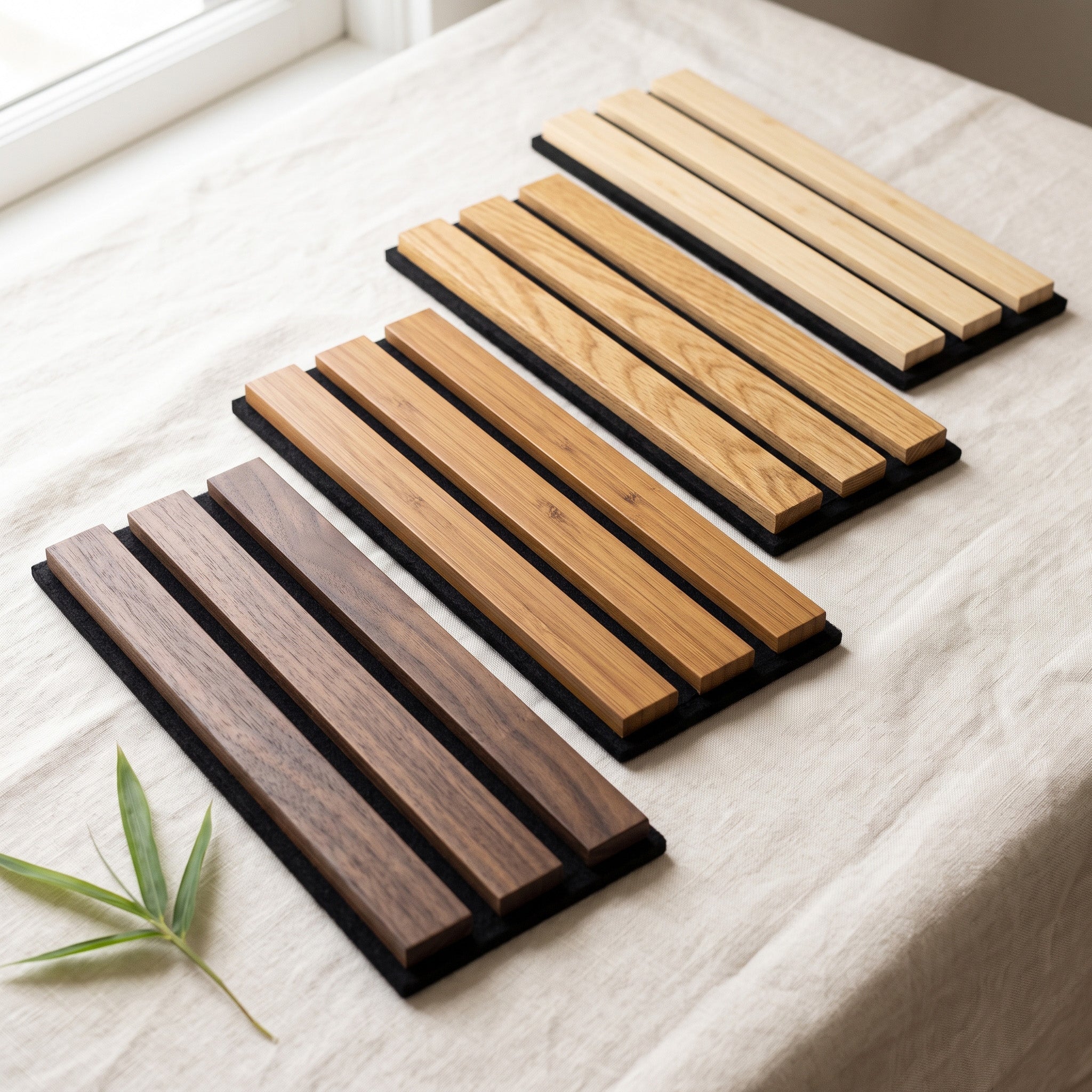
Four Finishes. One Build.
American Walnut, American Oak and Bamboo are made the same way: eight solid slats on acoustic felt, two panels to a box. Sample all three and choose on tone and character rather than on construction.
By the numbers
Solid series specification
These are the specs every Solid panel shares. Slat width, gap and finish vary by material — those are listed on each finish’s own page.
100% solid — milled all the way through, no veneer or composite core
Solid American Walnut · Solid American Oak · Solid Bamboo
13mm (0.51″)
Slat Size
27mm W × 13mm D hardwood · 25.4mm W × 13mm D bamboo
Gap Width
10.5mm (0.41″) hardwood · 13mm (0.51″) bamboo
Panel width
305mm (12.01″) hardwood · 319.6mm (12.6″) bamboo
Finish
Three coats polyurethane on hardwood · protective lacquer on bamboo
22mm (0.87″) — 13mm slat on 9mm felt
9mm (0.35″) black acoustic felt
8 slats
2 panels
23.62″ hardwood · 25.20″ bamboo
Indoor only
Solid hardwood — walnut & oak
Solid bamboo
FAQ
Why should I order a sample first?
Because wood tone reads differently in your room than it does on a screen. North-facing light, warm bulbs and the color of your existing floor all shift how a finish looks — and Solid panels are a considered purchase you'll live with for years. Holding the real material against your wall settles it in about ten seconds.
Are the samples the same as the actual panels?
Yes — samples are cut from the same production material as the full panels. Same slats, same depth, same felt backing, same finish. The only difference is the size.
Which Solid finishes can I sample?
The Solid series is Solid American Walnut, Solid American Oak and Solid Bamboo. Walnut is the darkest — deep chocolate with sweeping grain. Oak is the lightest and warmest, golden with open grain. Bamboo sits between them in tone and is by far the most uniform, with very little variation slat to slat.
What's the difference between the three finishes?
Construction is identical: eight solid 13mm slats on 9mm acoustic felt, two panels to a box, no veneer or core in any of them.
What differs is character. The hardwoods carry real grain variation — cathedral figure on one slat, quiet straight grain on the next — which is the point of them. Bamboo is dimensionally consistent and visually uniform, which is the point of that. It's also the most sustainable of the three: bamboo matures in years where hardwood takes decades.
Are Solid panels fire-rated?
No — none of the Solid panels carry a fire rating. If fire performance is a requirement for your project, check with your contractor or your local building code before ordering.
Do Solid panels help with sound?
Every Solid panel is backed with 9mm acoustic felt, which softens echo and takes the hard edge off rooms with a lot of bare surfaces — much like a rug does on a hard floor. None of the three carries a formal acoustic rating.
To be clear about what none of them do: this is sound absorption, not soundproofing. Slat panels won't stop noise coming through a shared wall, and no wall covering will.
How many boxes will I need for my wall?
It depends which finish you choose, because the two run to slightly different widths. One box covers 23.62 inches of wall width in Solid American Walnut or Oak, and 25.20 inches in Solid Bamboo. Each box holds two panels.
Measure your wall width in inches, divide by the figure for your finish, and round up. A 10-foot wall is 120 inches — six boxes in hardwood, five in bamboo.
Is Solid really solid all the way through?
Yes. Every slat in the Solid series is one piece of real material, 13mm (about half an inch) deep, milled front to back — not a thin veneer skin wrapped over a pine or MDF core. Cut a slat anywhere along its length and the cut face is the same as the front face. It's the whole reason the range exists.
Can I cut and install these myself?
Yes. Solid panels cut like timber — a fine-tooth blade on a circular saw, track saw, jigsaw or handsaw all work — and because each slat is solid the whole way through, a trimmed edge looks finished rather than exposing a pale core.
They fix to the wall with screws or construction adhesive, straight onto drywall or into studs. They aren't peel-and-stick. Indoor use only.
How long will my sample take to arrive?
Samples ship within one business day when in stock, and typically arrive in 3 to 6 business days depending on where you are. You'll get tracking by email as soon as it leaves us.
Where are you located?
Slats.co is a family-owned business based in Southern California, and everything ships directly from our SoCal headquarters.
Customer Satisfaction
4.94
out of 5 stars
200+
Customer reviews
20k+
Panels shipped
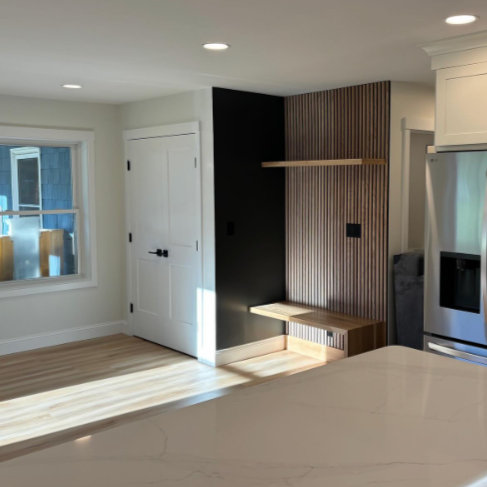
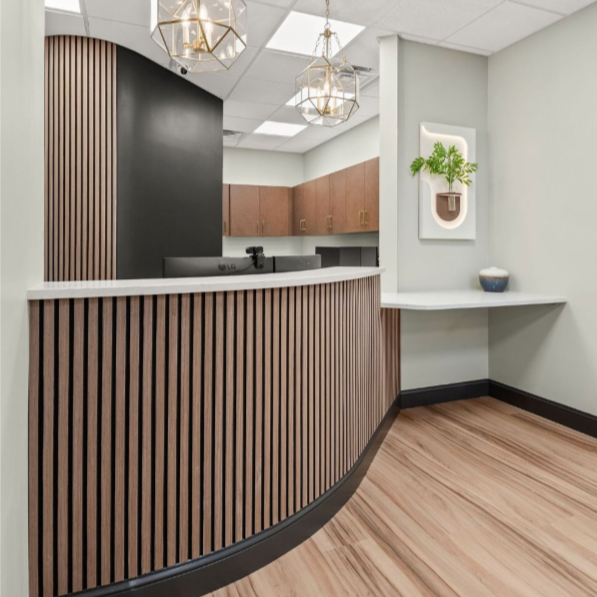
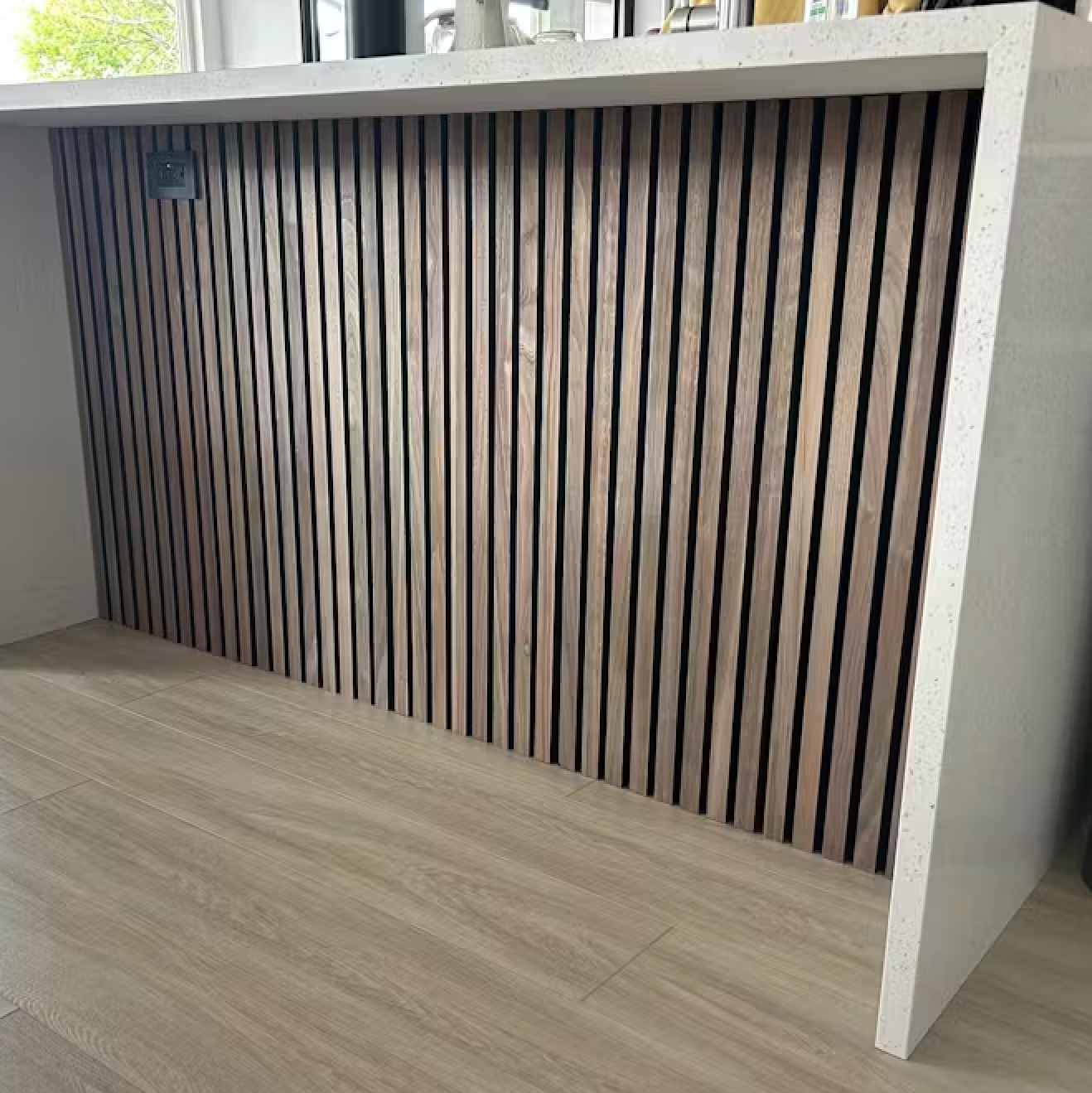
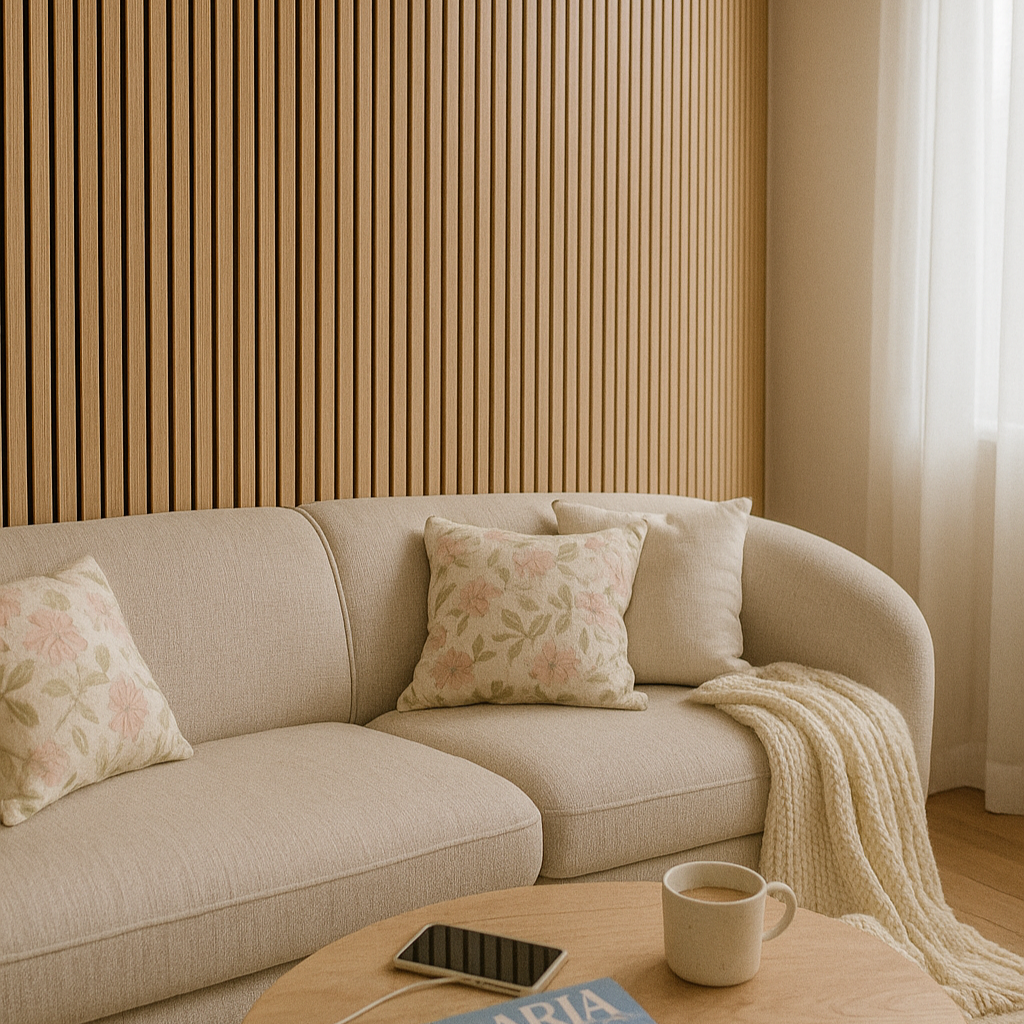
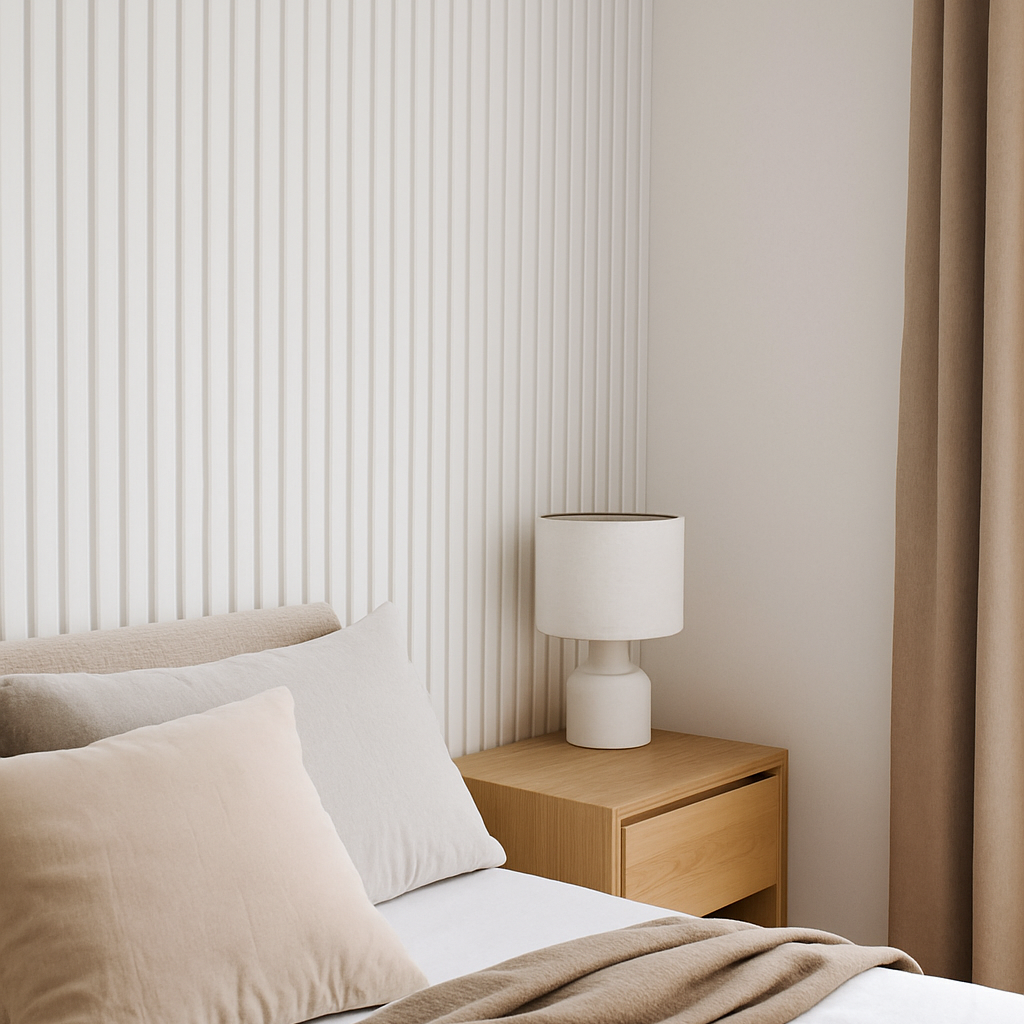
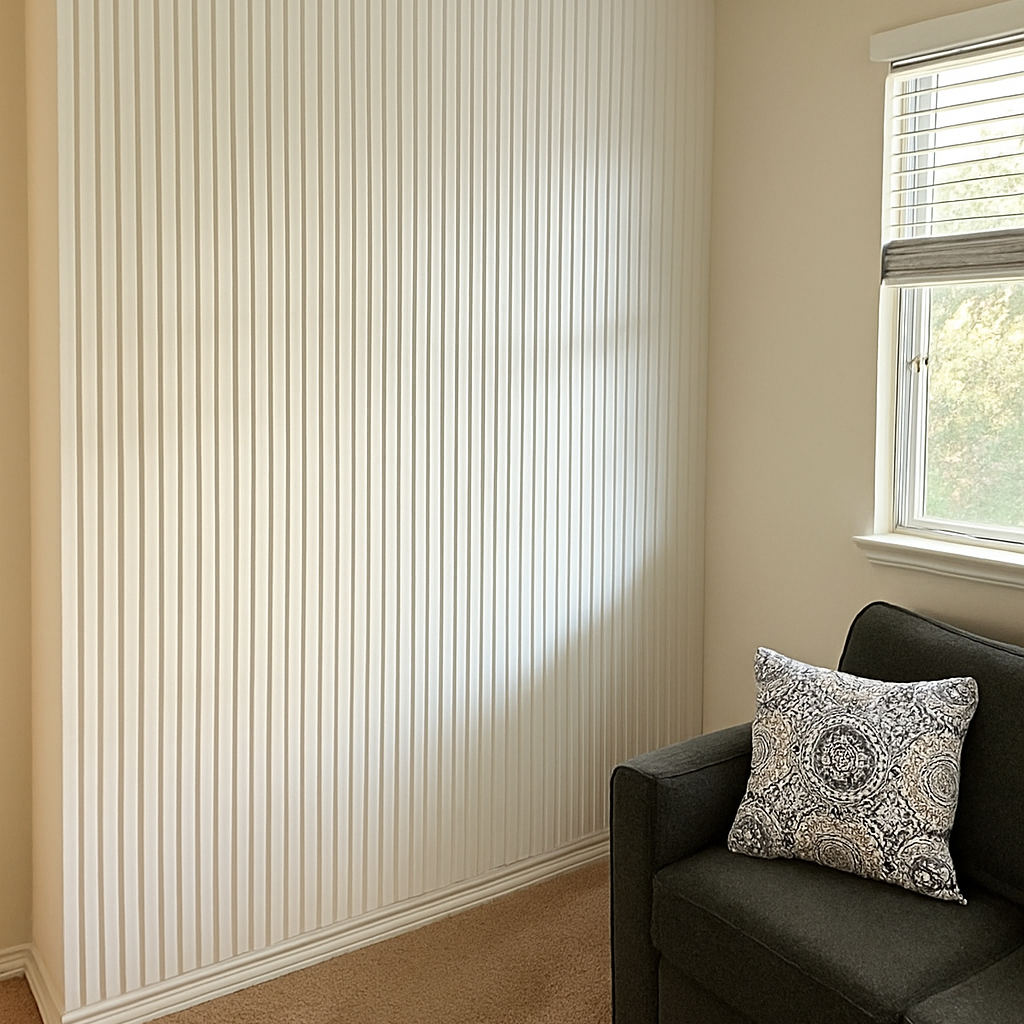
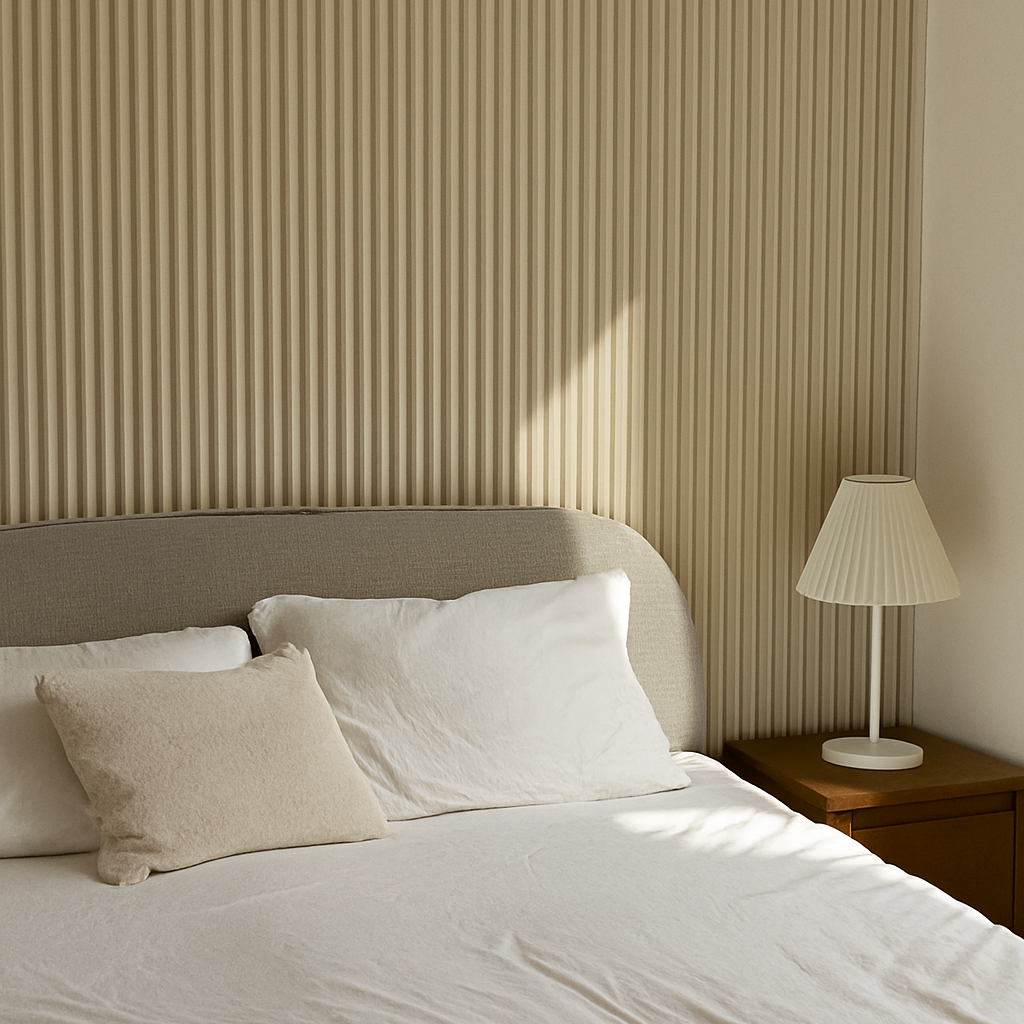
Covered the full bedroom wall with a light (oak and beige) ultralight slat. Easy to install and very pleased with the result.
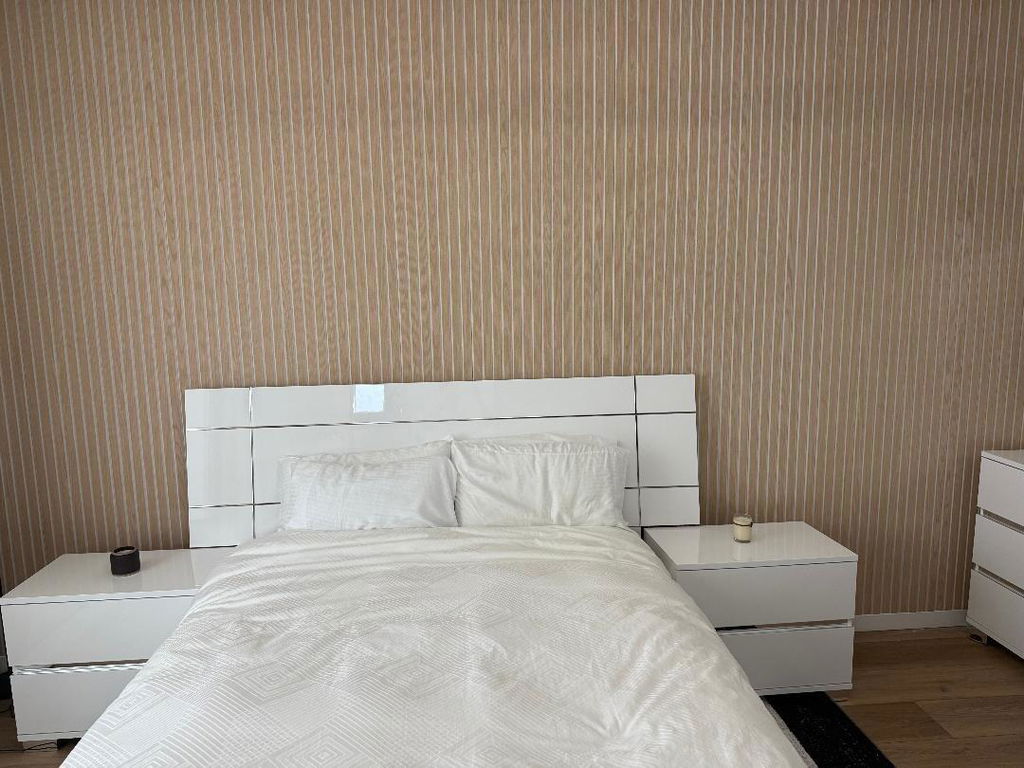
The sample was beautiful very well made and I received it quickly.
loved it but it's too expensive for my project
Solid wood. Beautiful color. Well made.
This kit was invaluable in deciding what panel to buy. Simplified the process big-time.
I look at loads of these acoustic slat panels. But new when I found this company these were the best by a long stretch. Just beautiful. And customer service is incredible. Will definitely be buying from them again.
Like it very much
I ordered a sample and looks great!
We plan to install these on a ceiling. Cherrywood is not an easy color to match, but these look great. Very light material should also reduce the installers efforts.
Client services rendered as called for.
We have ordered samples from a few companies to compare colors, price and quality. So far the Slats.Co walnut tops our list.
n/a
We had an issue with one of the panels and they were really good to refund the cost of that one pannel. Great quality product. Will definitely use again
There is nothing wrong with the color. We were simply looking for something a bit browner. We were hoping this product would work because the flexibility and weight work well for our need.
TrueWood 3-Sided Veneer Acoustic Slat Panel Sample Kit
We received multiple samples of acoustic wall panels. They are high quality and a good way to see different options for our project.
Samples arrived fast but we're hard to see full design. The designs I wanted were not in stock so had to go another direction.
I like that the samples arrived quickly and most are well made but some of the wooden pieces are crooked and dont give me a great impression
Edit: The company refunded me unprompted which I appreciate. Thank you for the customer service.
ULTRALIGHT Wood Slat Acoustic Panel Sample in Walnut, Black Felt
Grey flat panel looks great for my wall design, along with Grey slat panels.
ULTRALIGHT Wood Slat Wall Panel Sample Kit
The sample kit is fantastic ... it gives you an excellent hands-on example to decide which one of the samples to use for your renovation.
High quality and value. I’ve ordered sample ls and compared 7 different manufactures. SLATS at the top for cost, quality and value.
Very happy with product and samples. High quality
Quite easy to install and we love the accent look they provided. I would recommend your product to anyone!
ULTRALIGHT Accent Wall Panel Sample in Walnut, Black Felt
Product sample pack was delivered in a timely manner and gave us a good idea of what would work for us.
Good quality but not the look we wanted
Not exactly what i was looking for.
I will order the white panels when the longer lengths are available
I like the product but, I need to know/learn how to cut it? How to handle corners and so on..
The Sample Kit is a great option to see the different colors actually in the room!