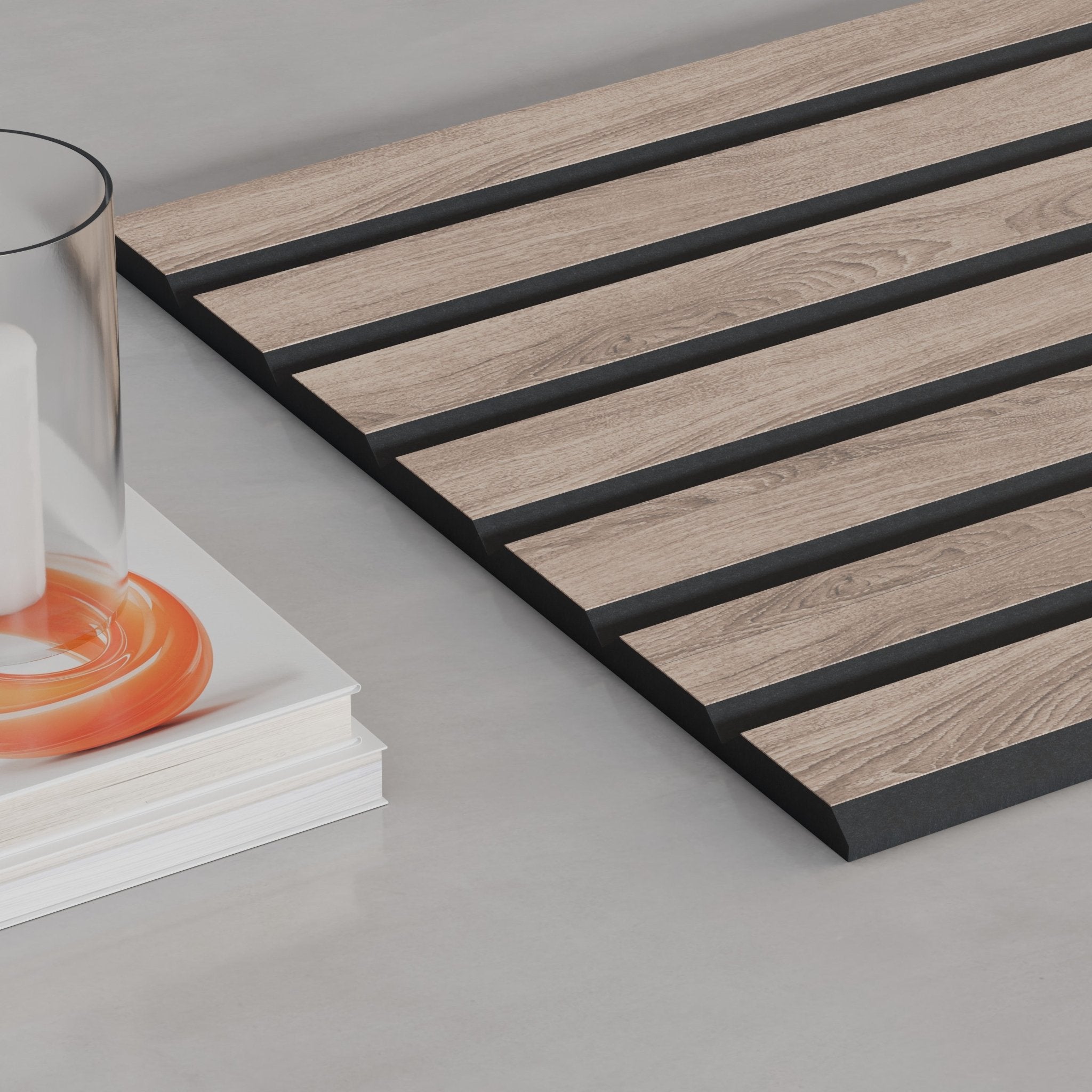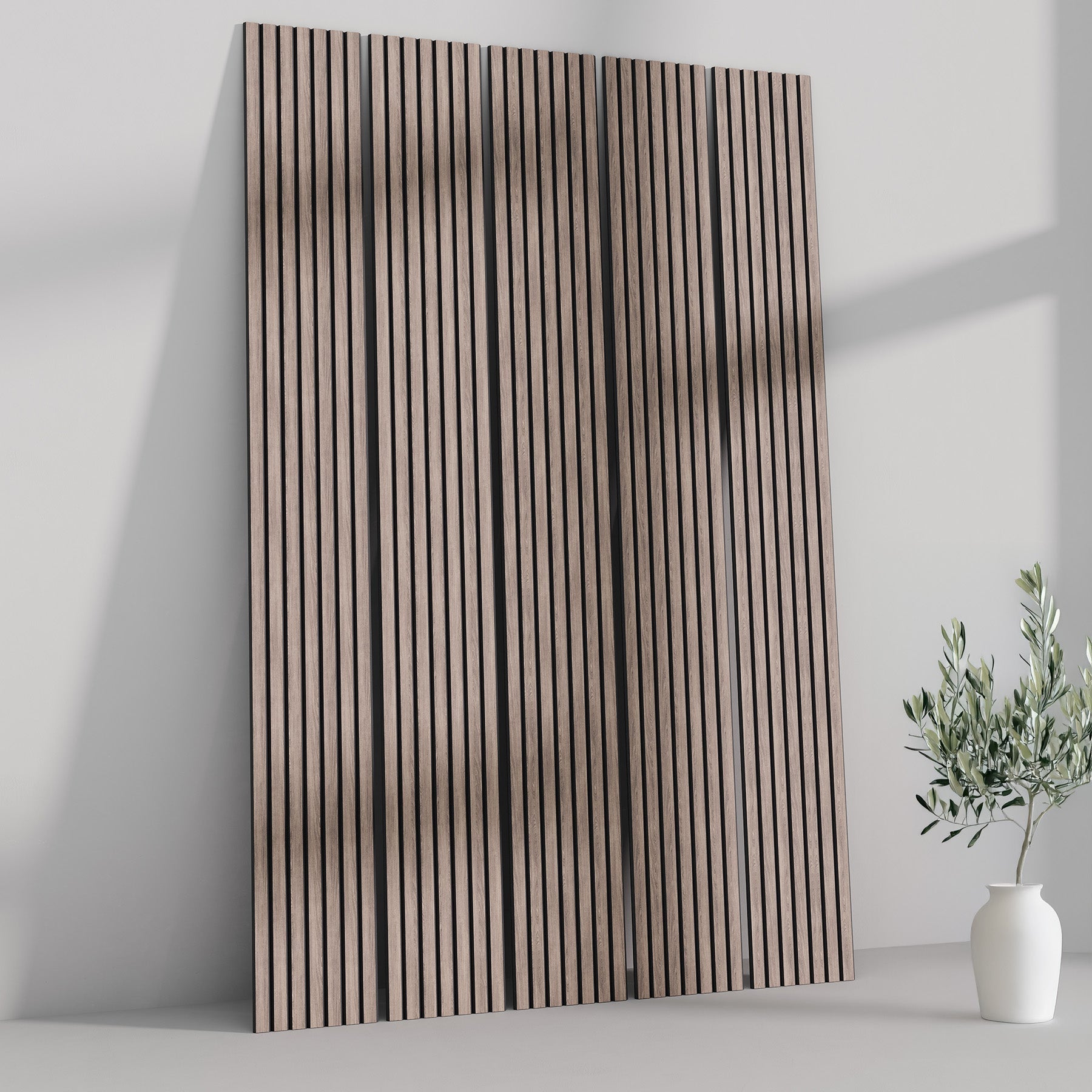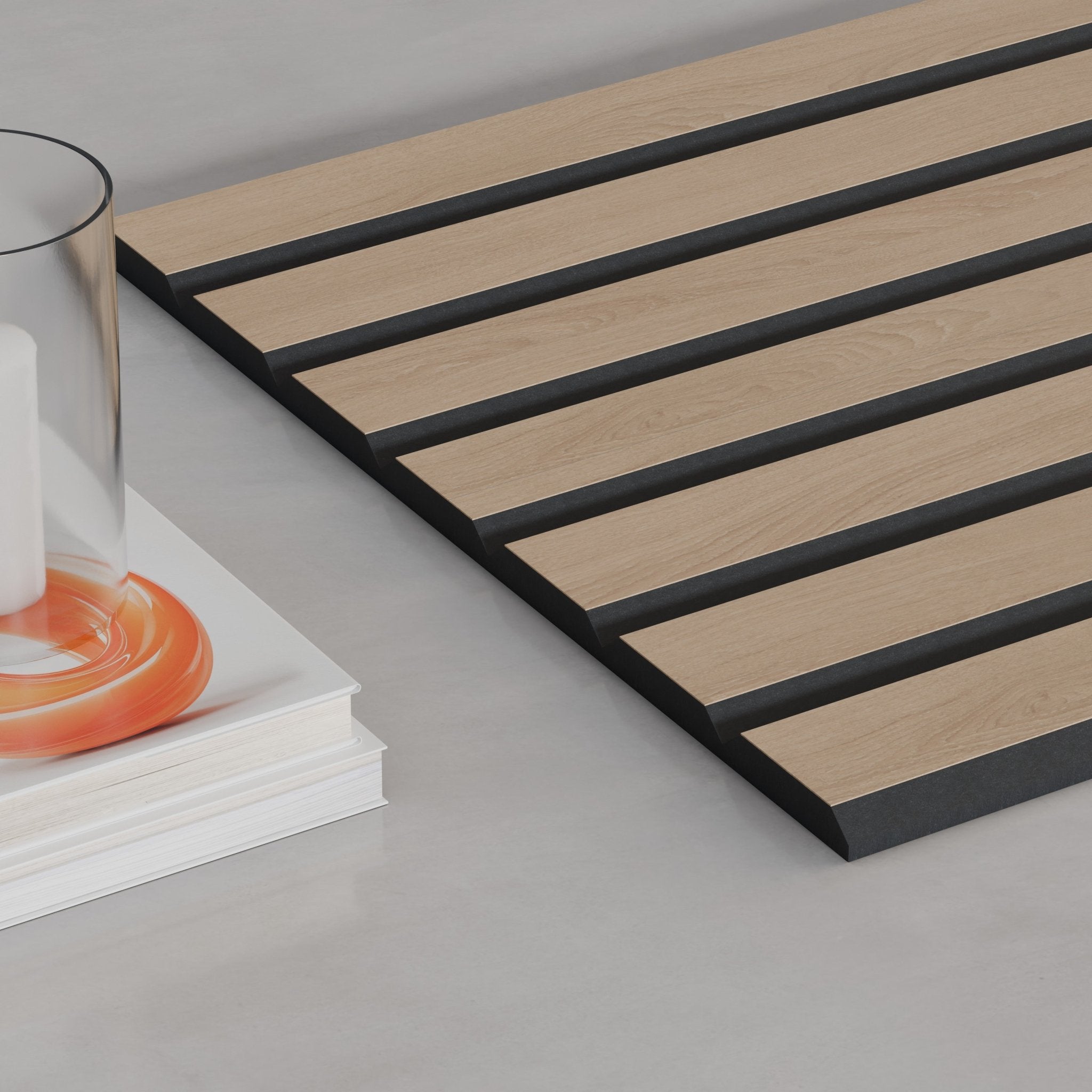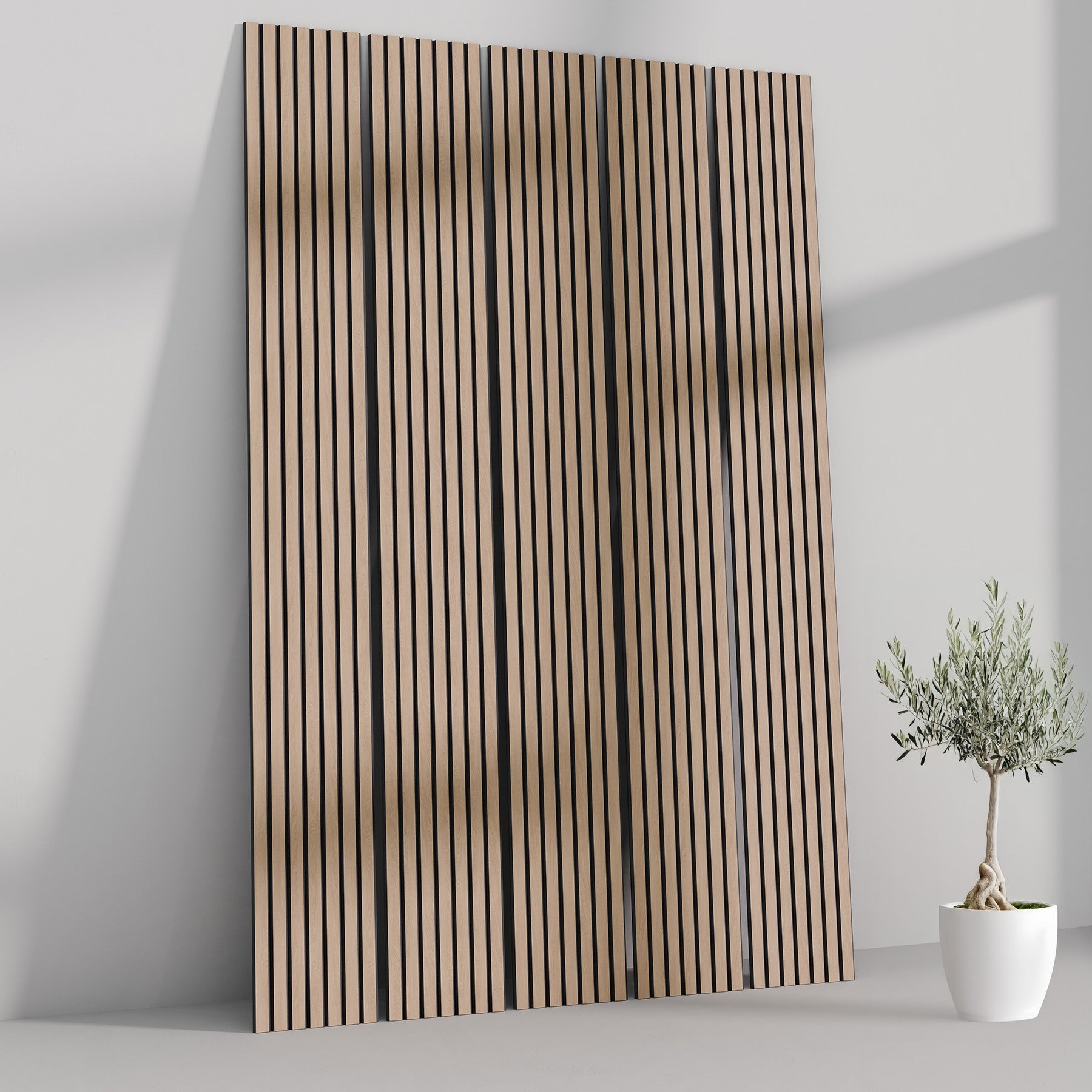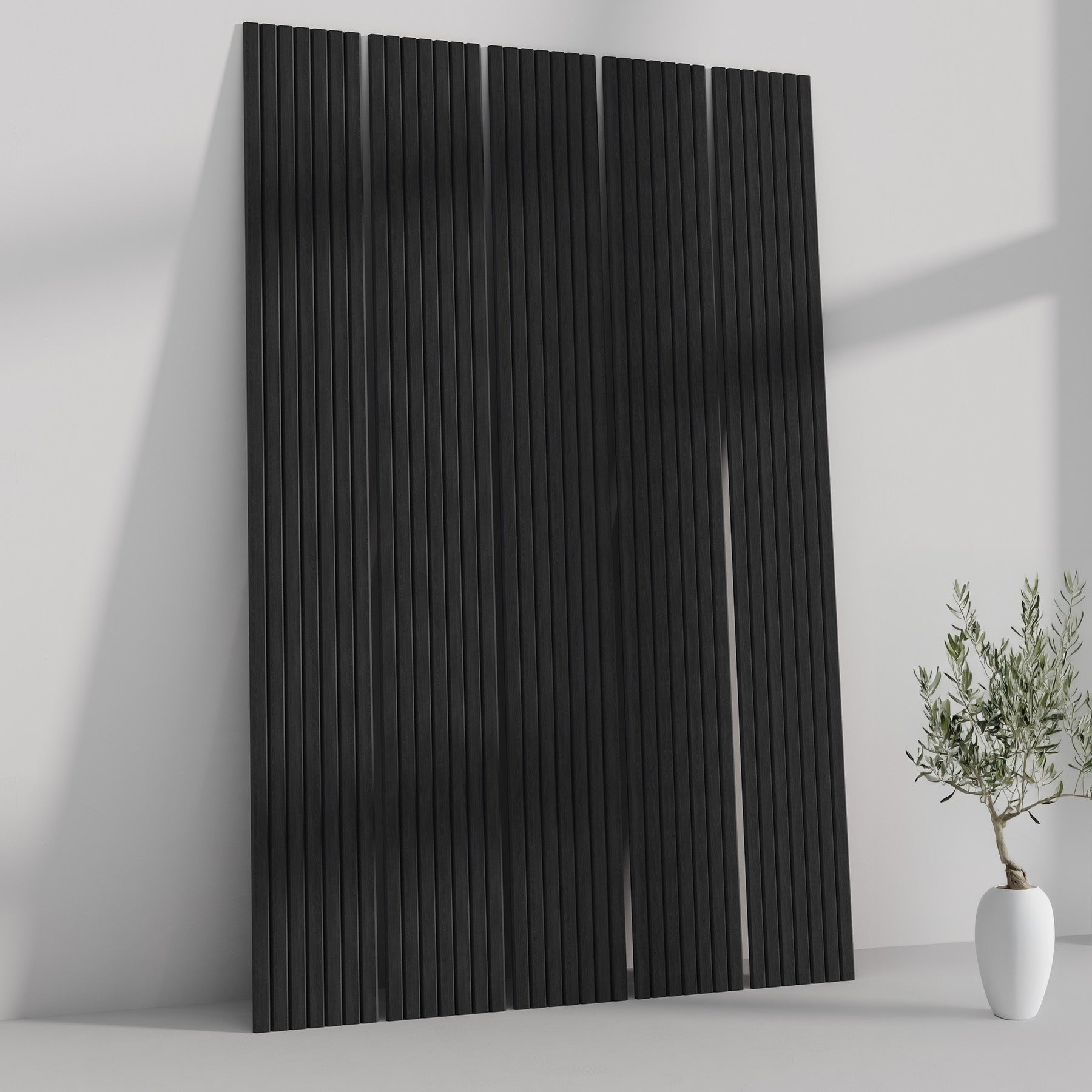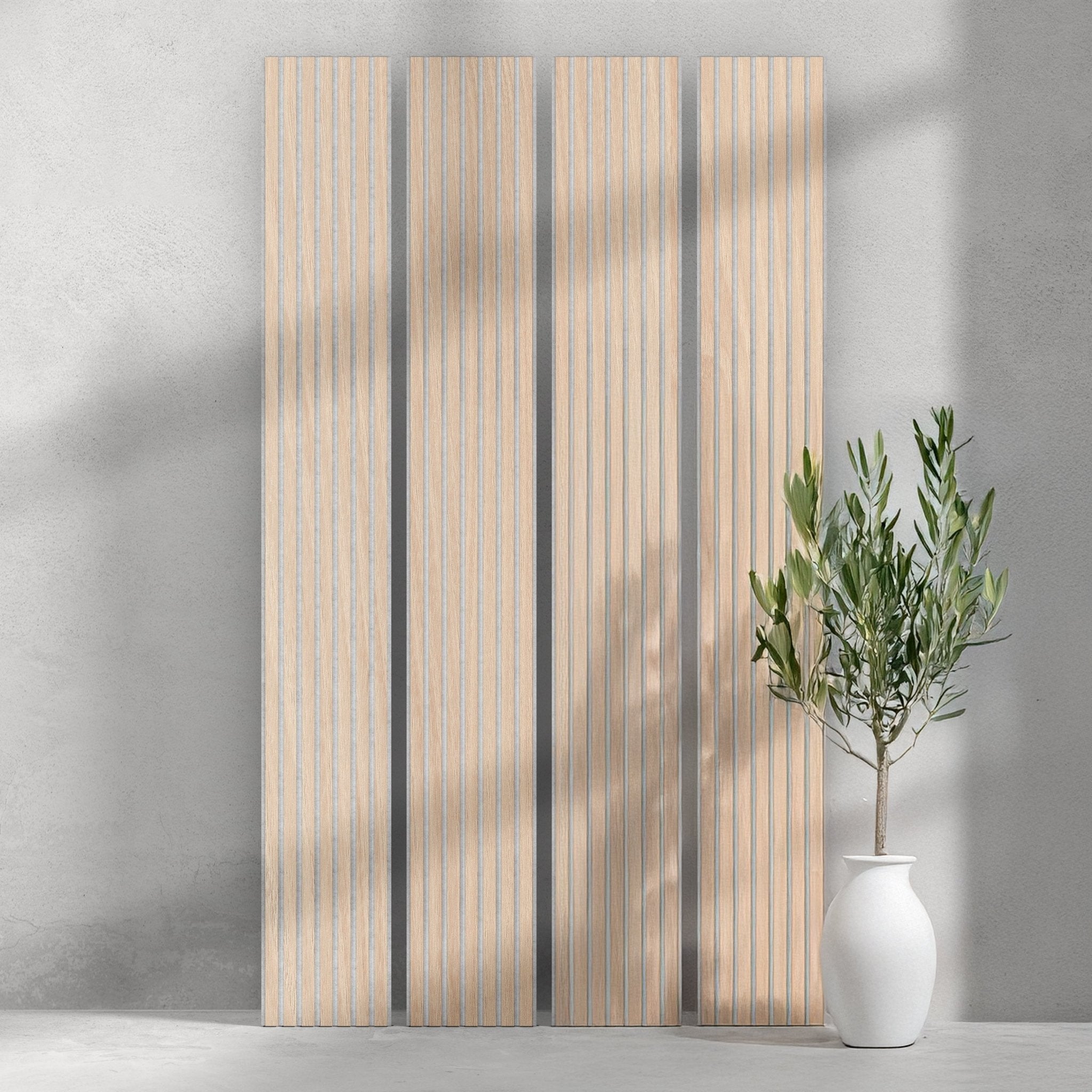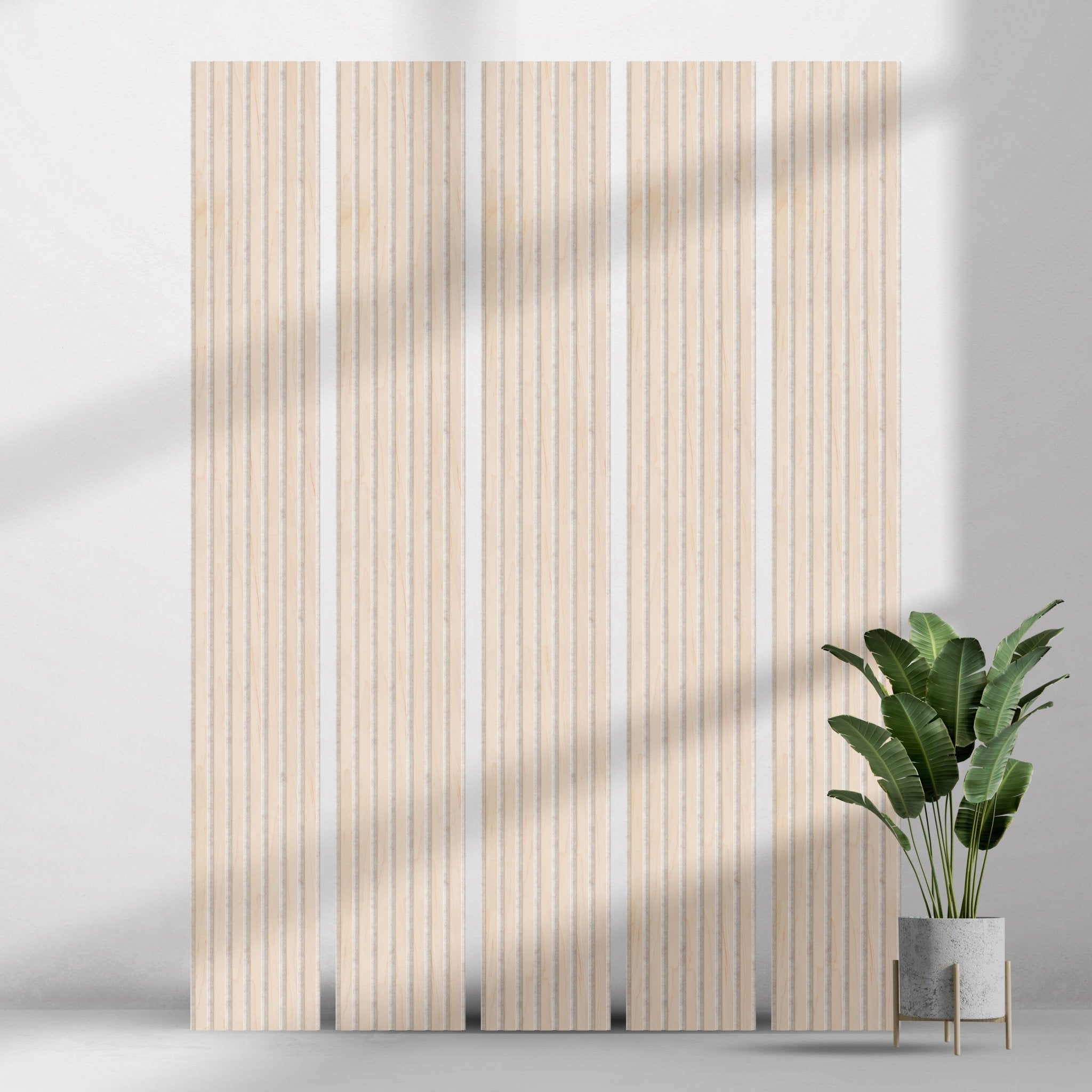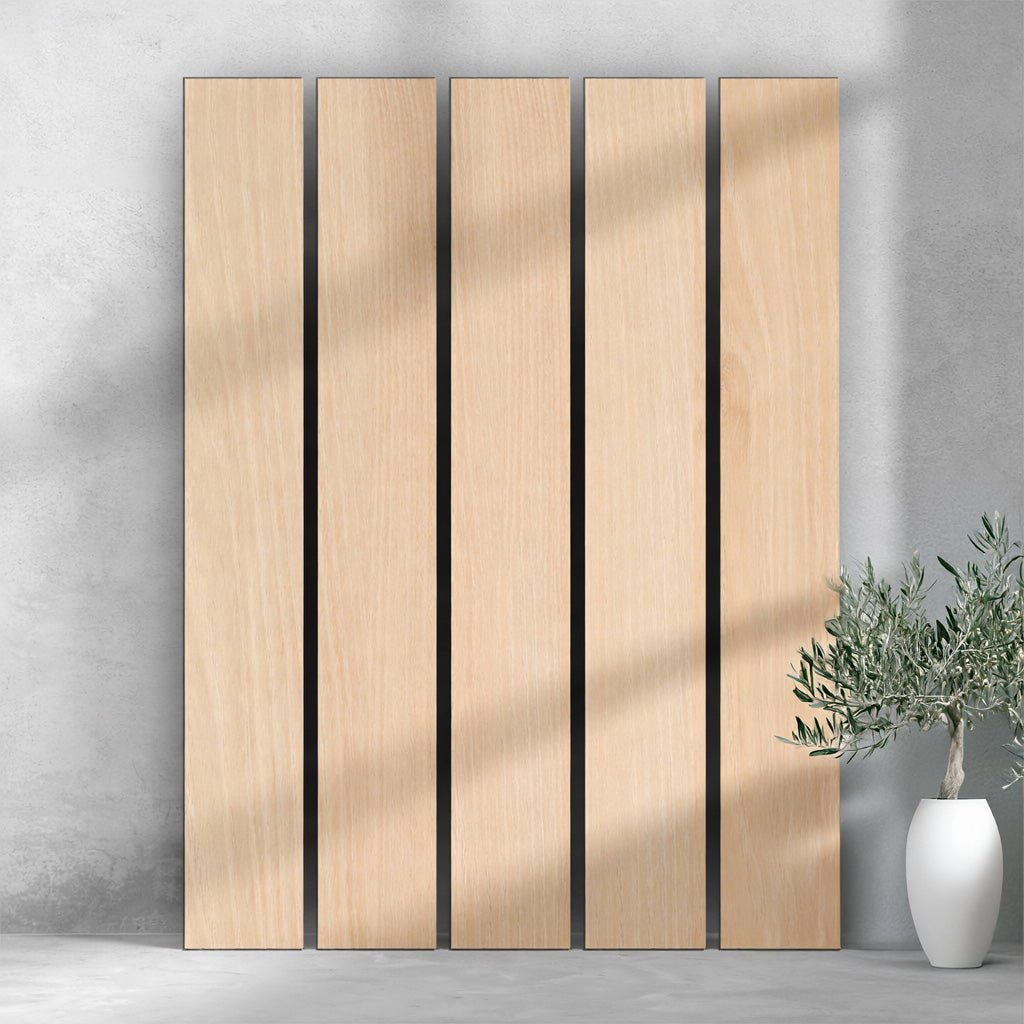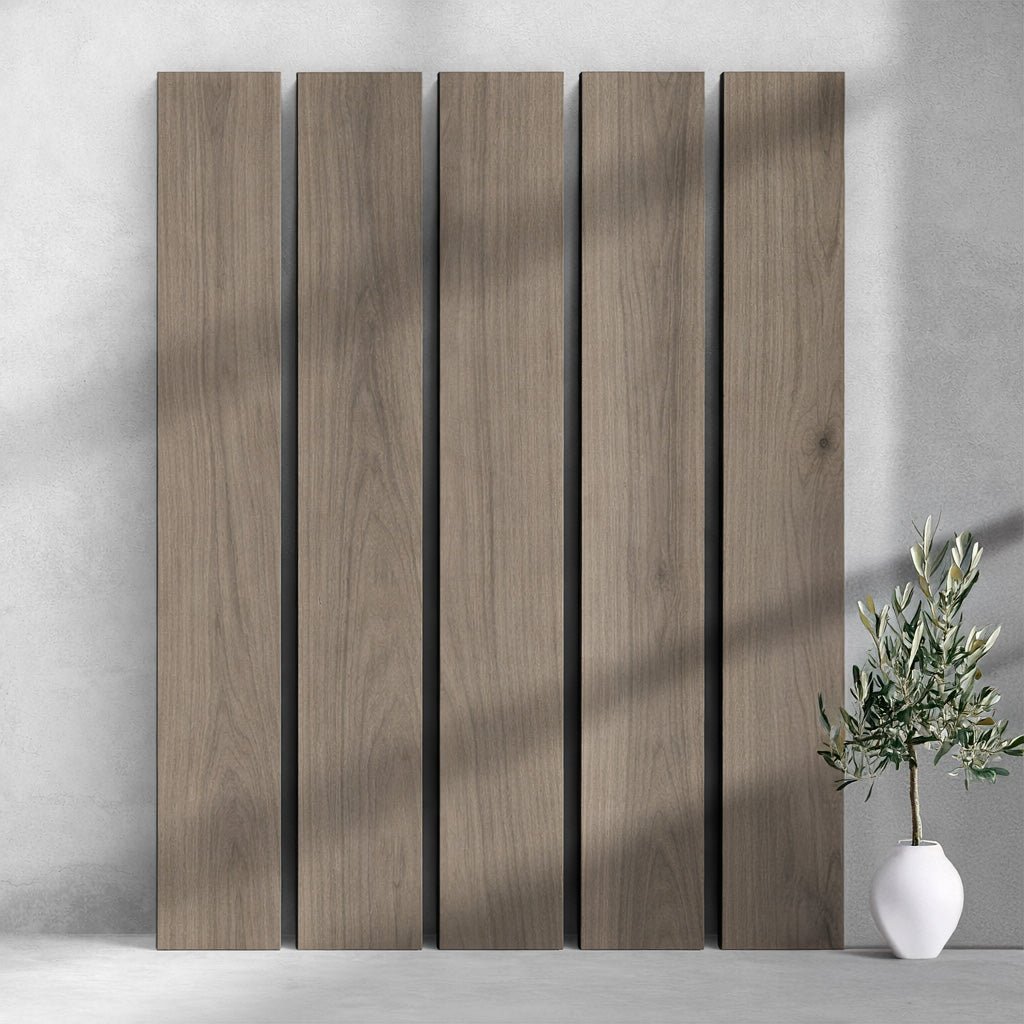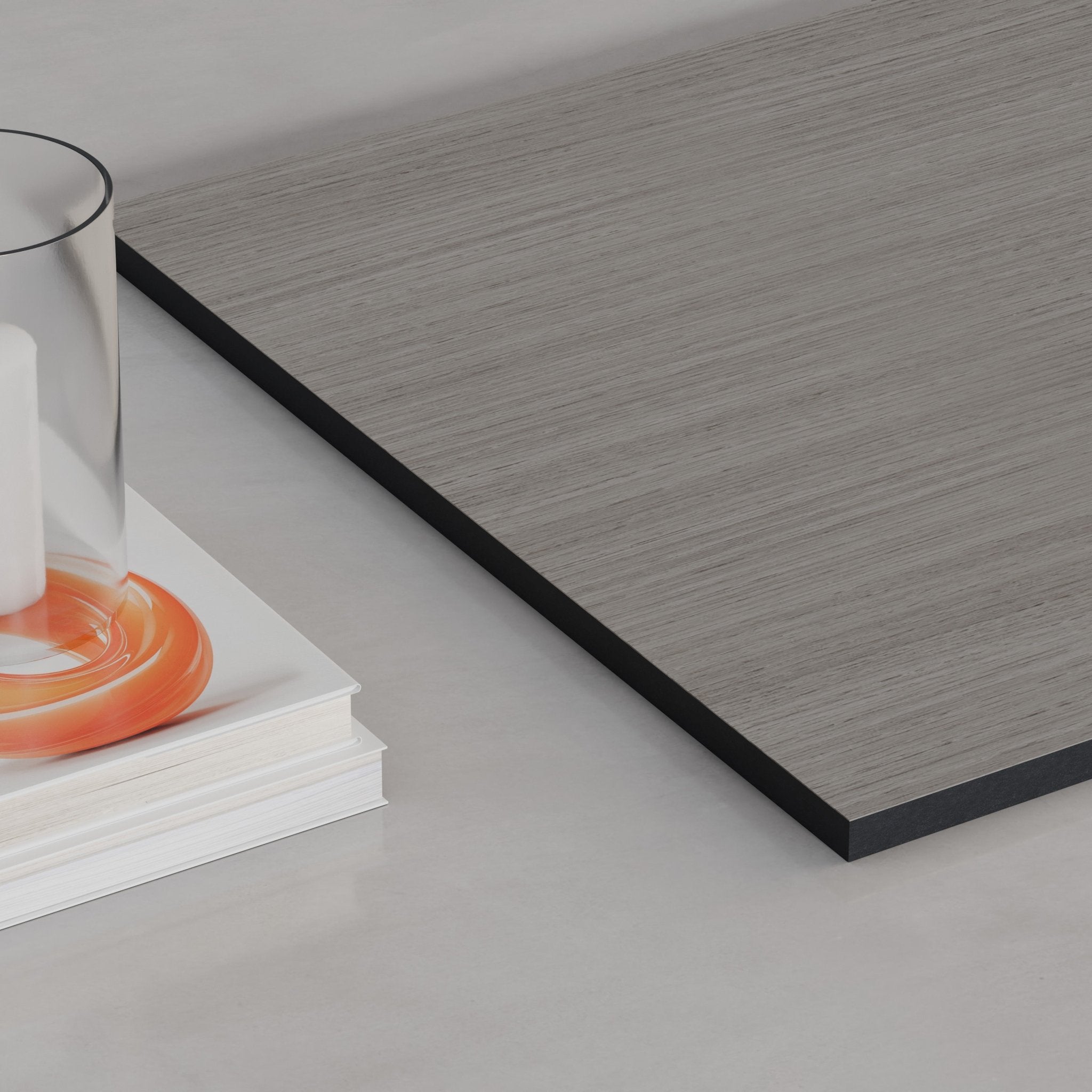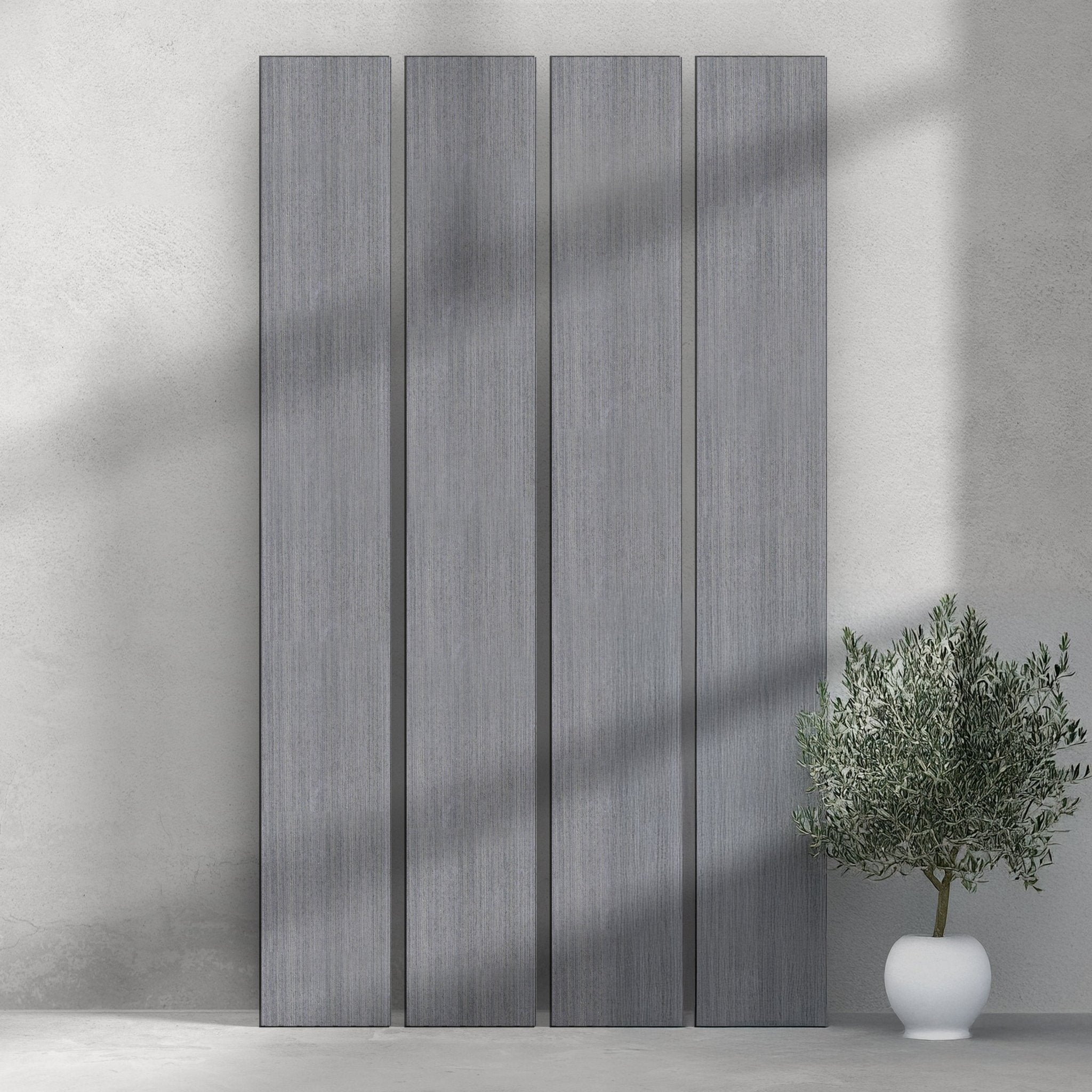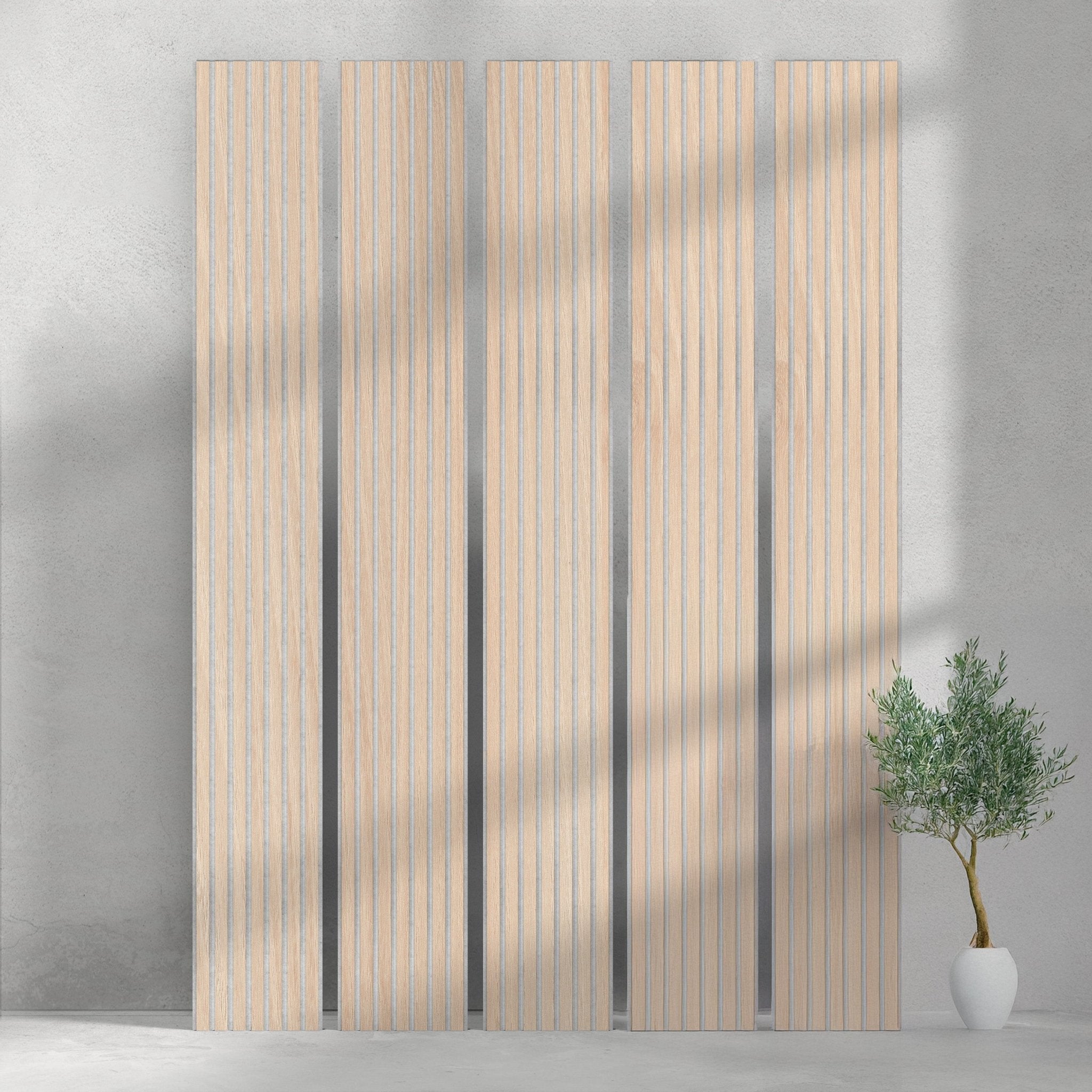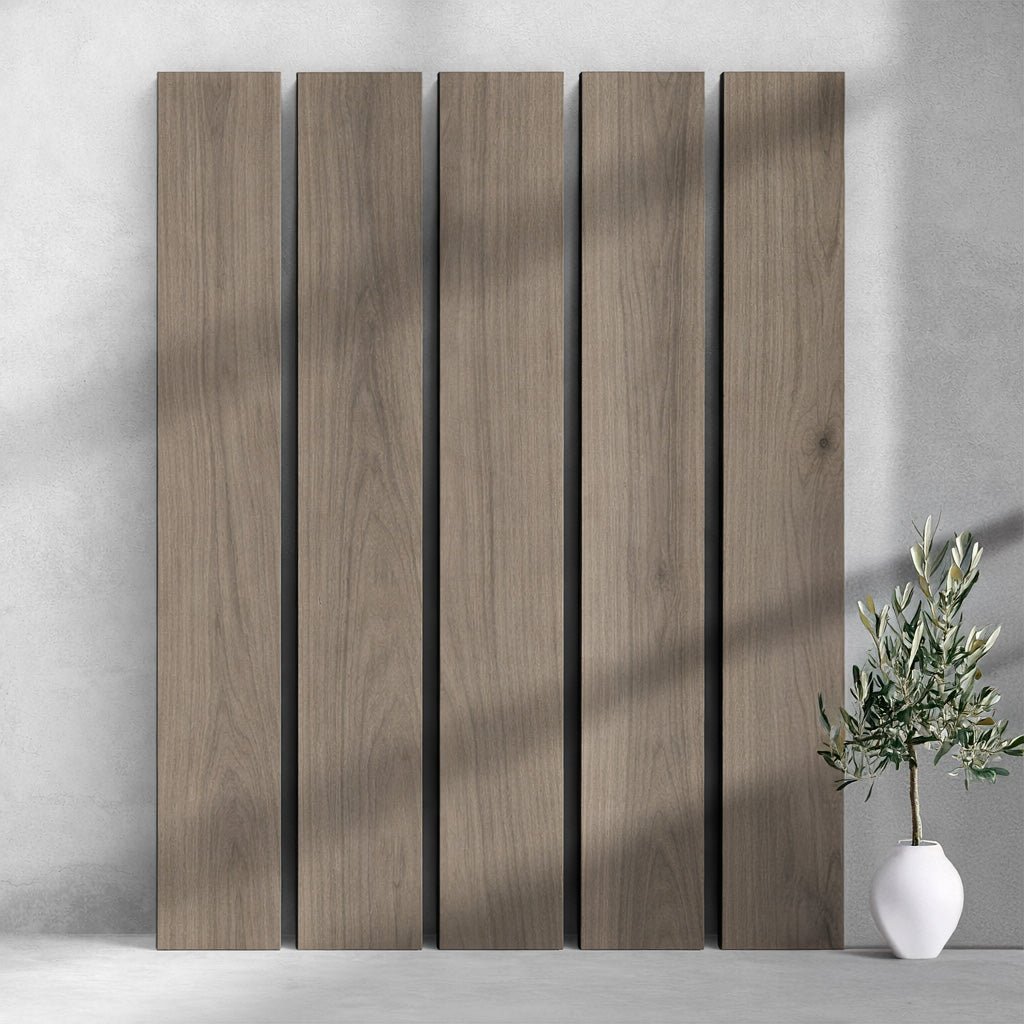
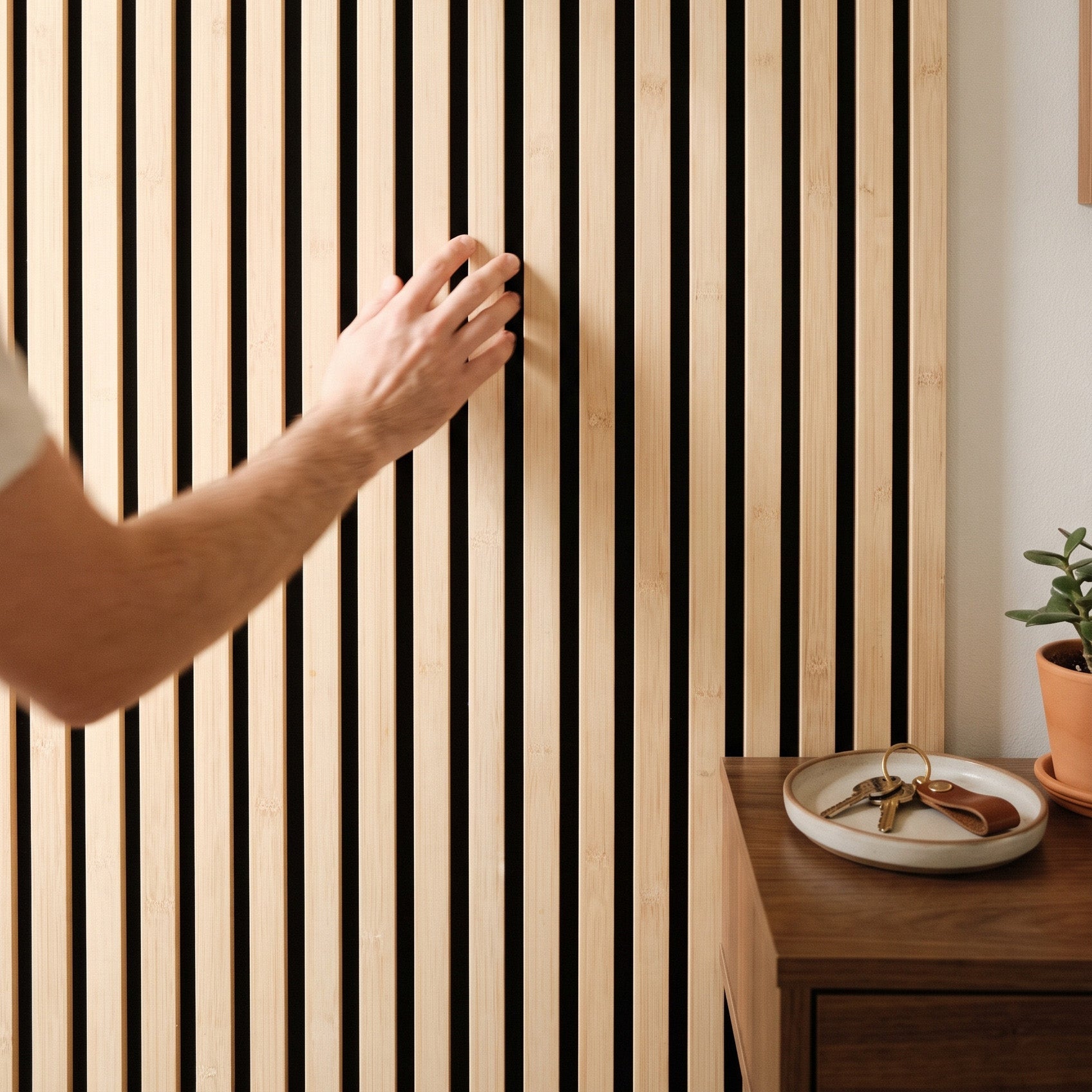
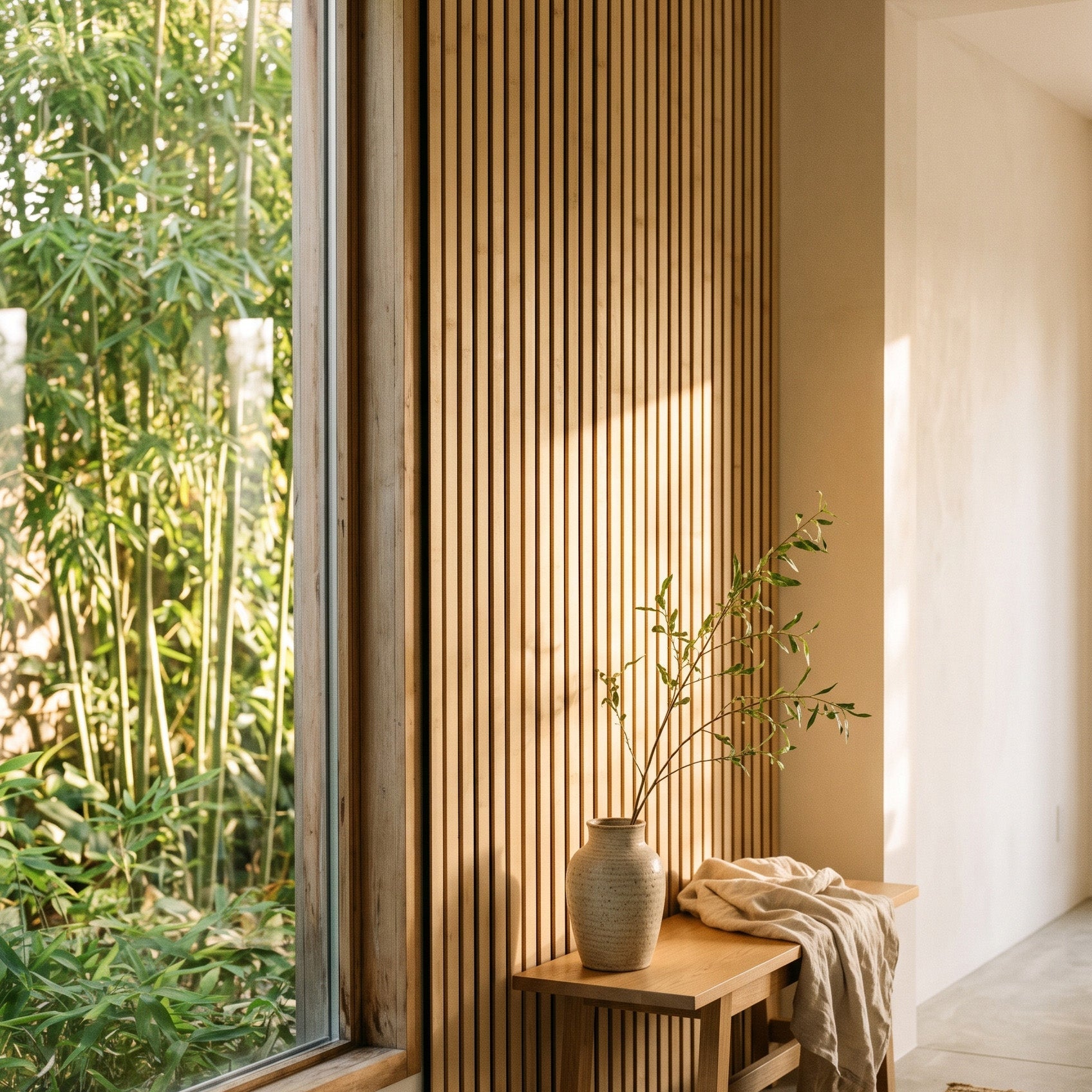
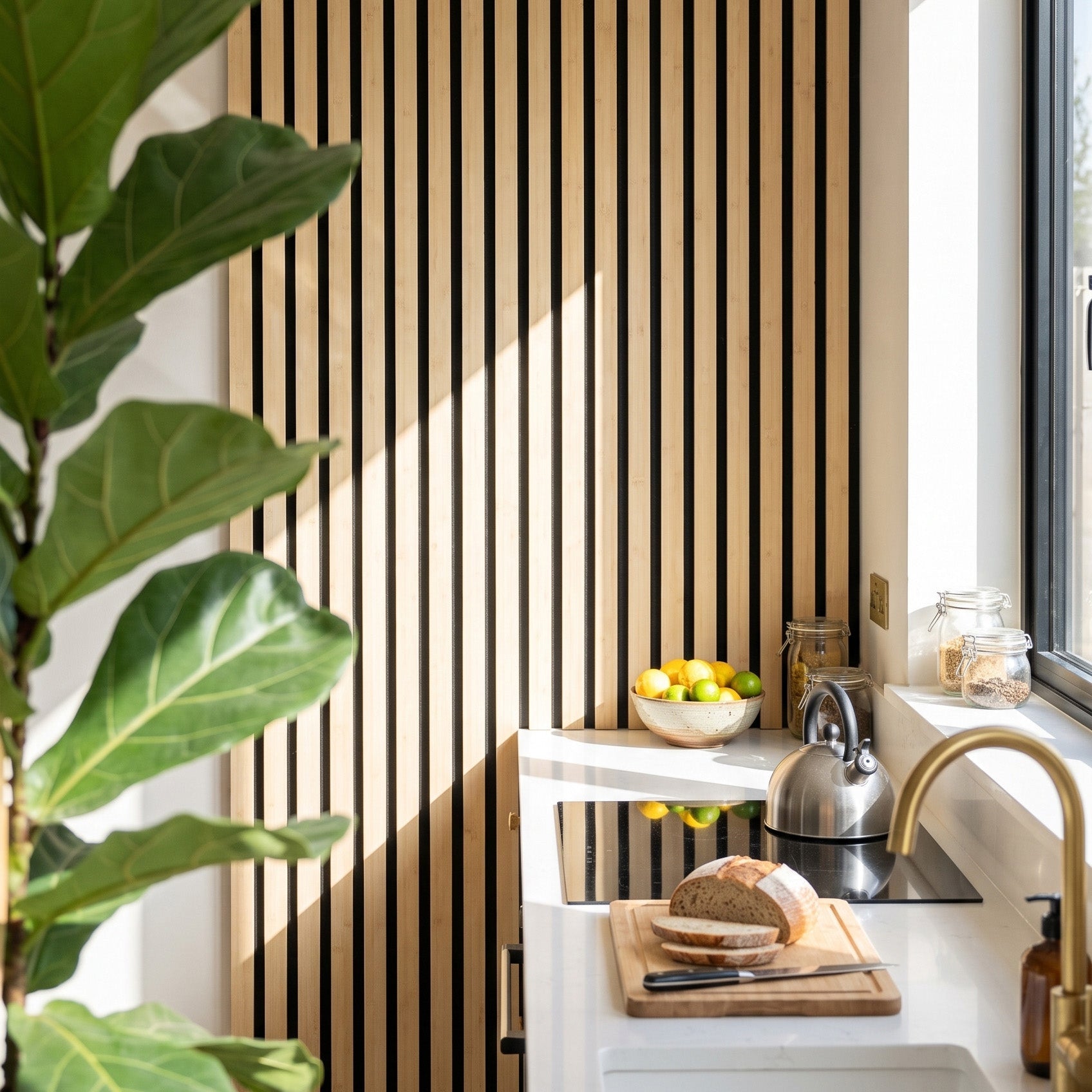
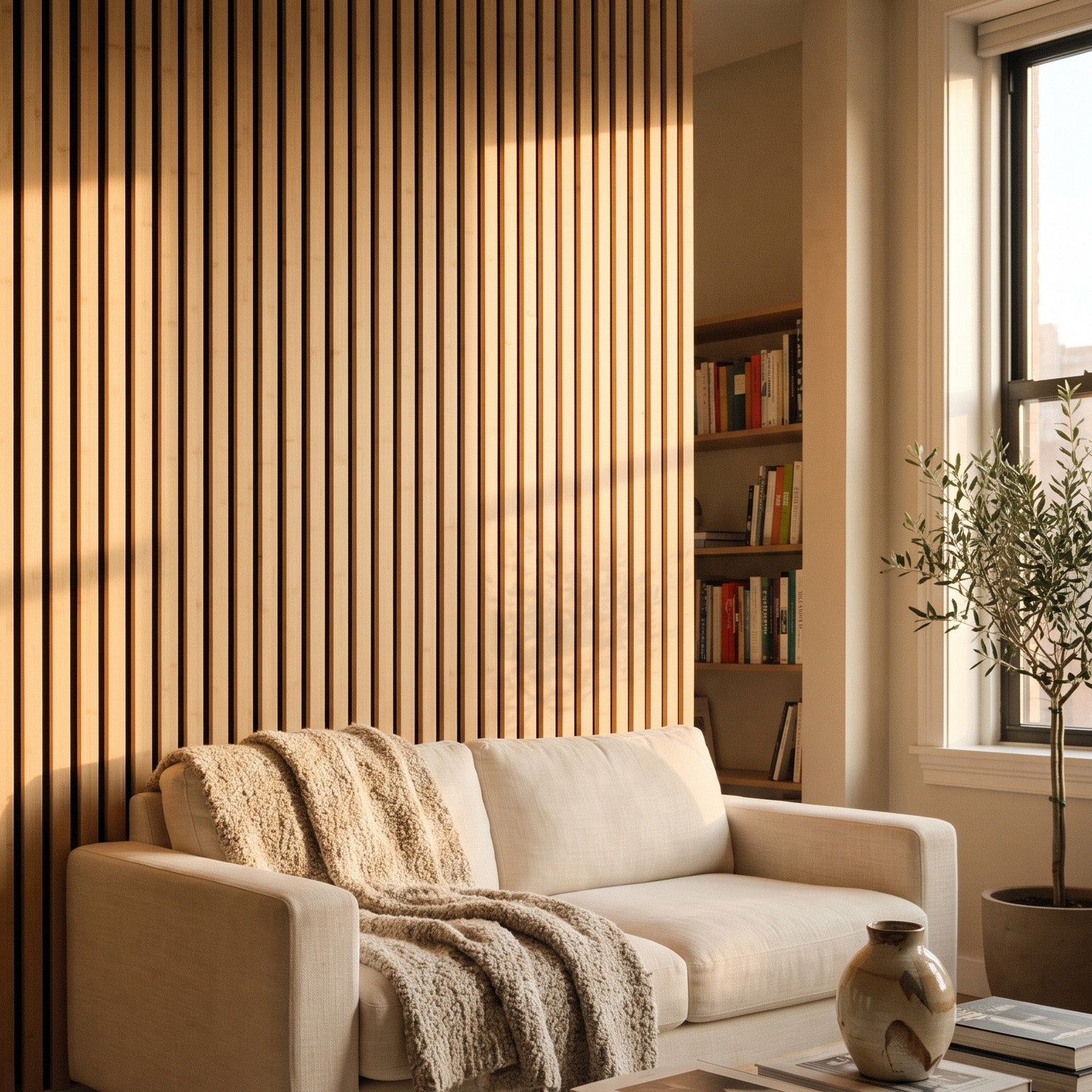
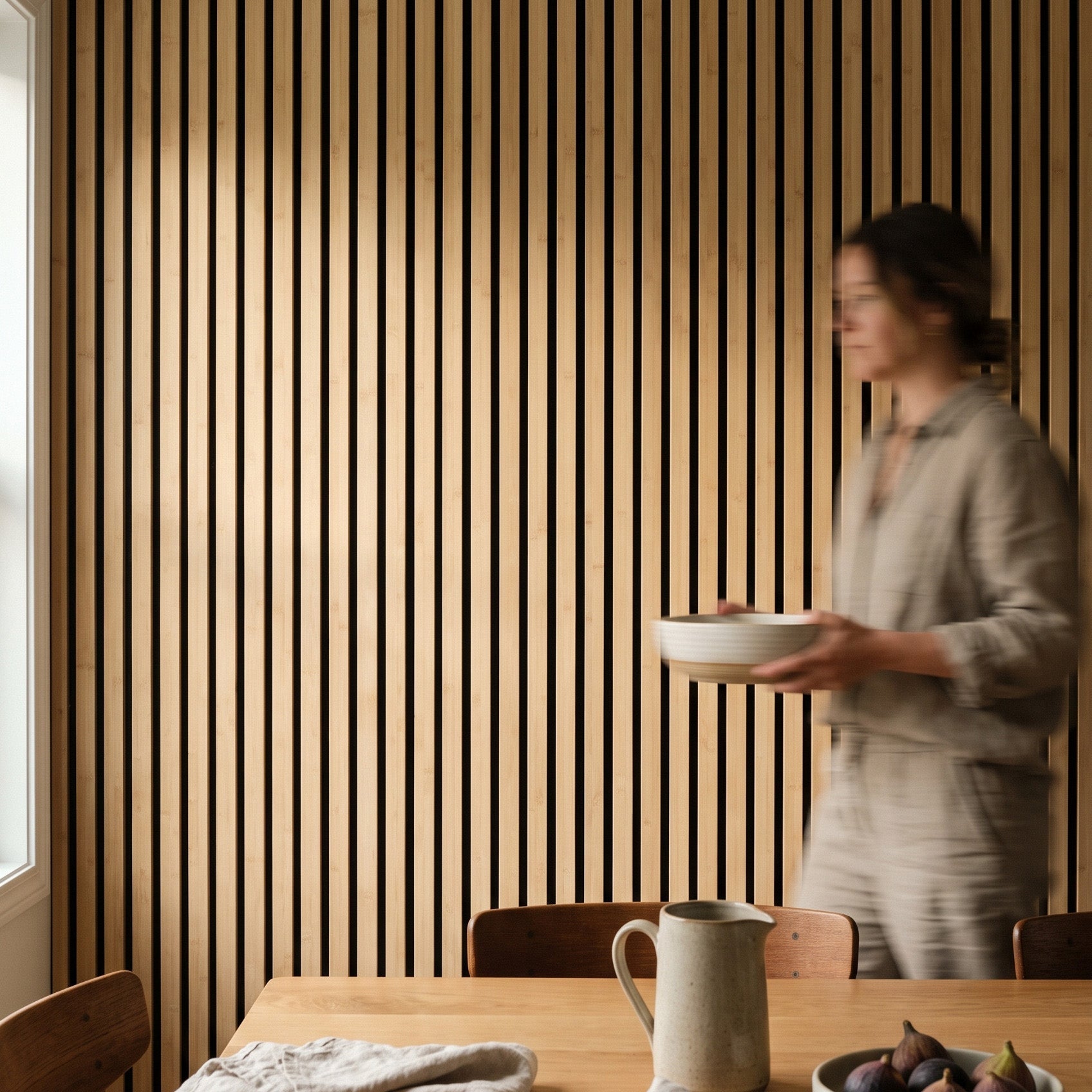
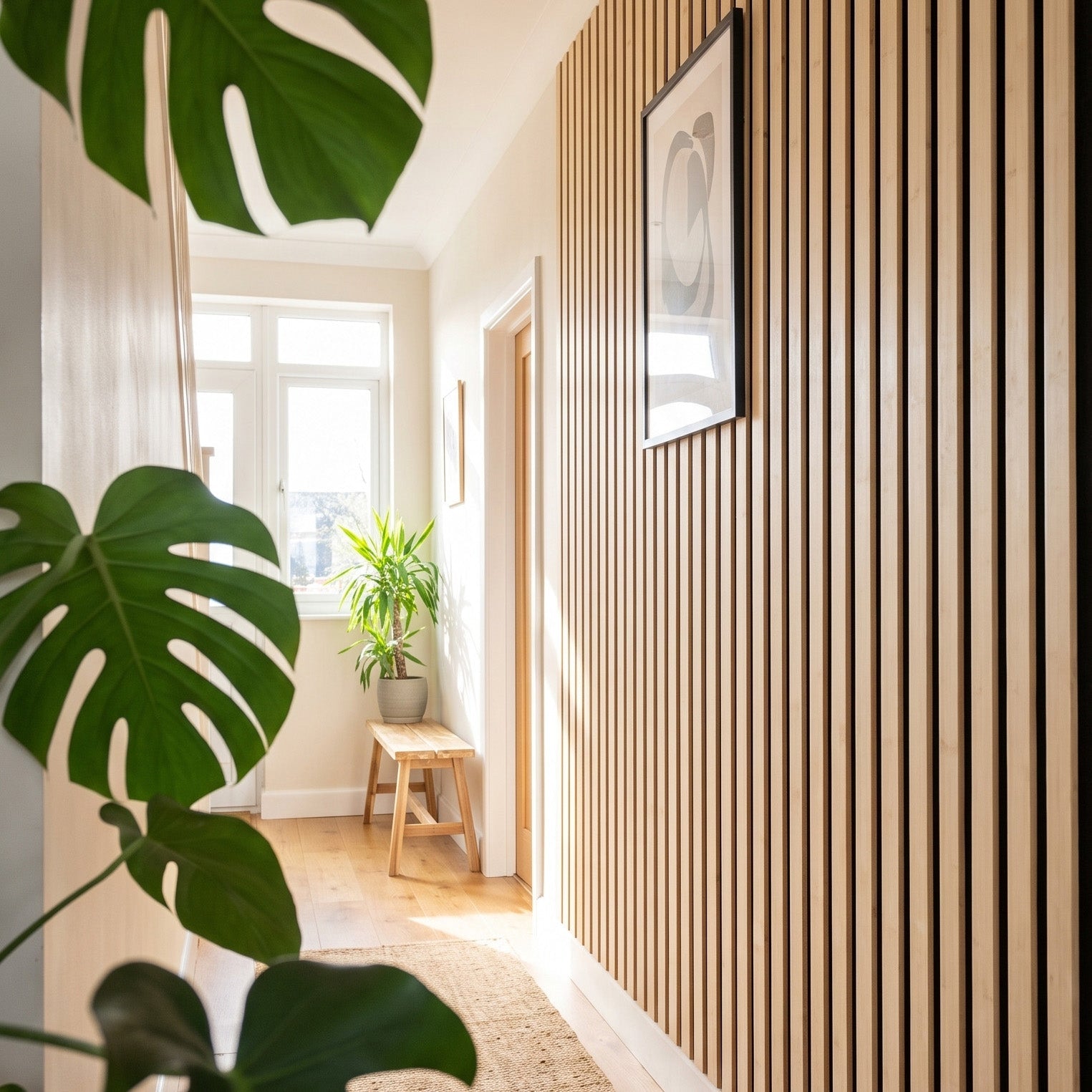
Natural Solid Bamboo Acoustic Slat Panel
Built for people who read the spec sheet. Every slat solid bamboo, all the way through.
- 100% Solid Bamboo — no veneer, no MDF
- 9mm recycled acoustic felt — softens echo in the room
- Protective lacquer finish — sealed, matte, never glossy
- Our most sustainable panel — harvest-ready in years, not decades
In stock — Delivery soon
Solid Bamboo is milled from solid bamboo, all the way through — no veneer, no composite core, nothing wrapped or faked. Every slat is the real material, with warm grain and a quiet, sound-softening texture, sealed with a protective lacquer for everyday indoor life. It's also our most sustainable slat panel ever: bamboo is one of the fastest-growing materials on earth, ready to harvest in years where hardwoods take decades and regrowing without replanting, so you get a dense, durable, premium slat with a far gentler cost to the planet.
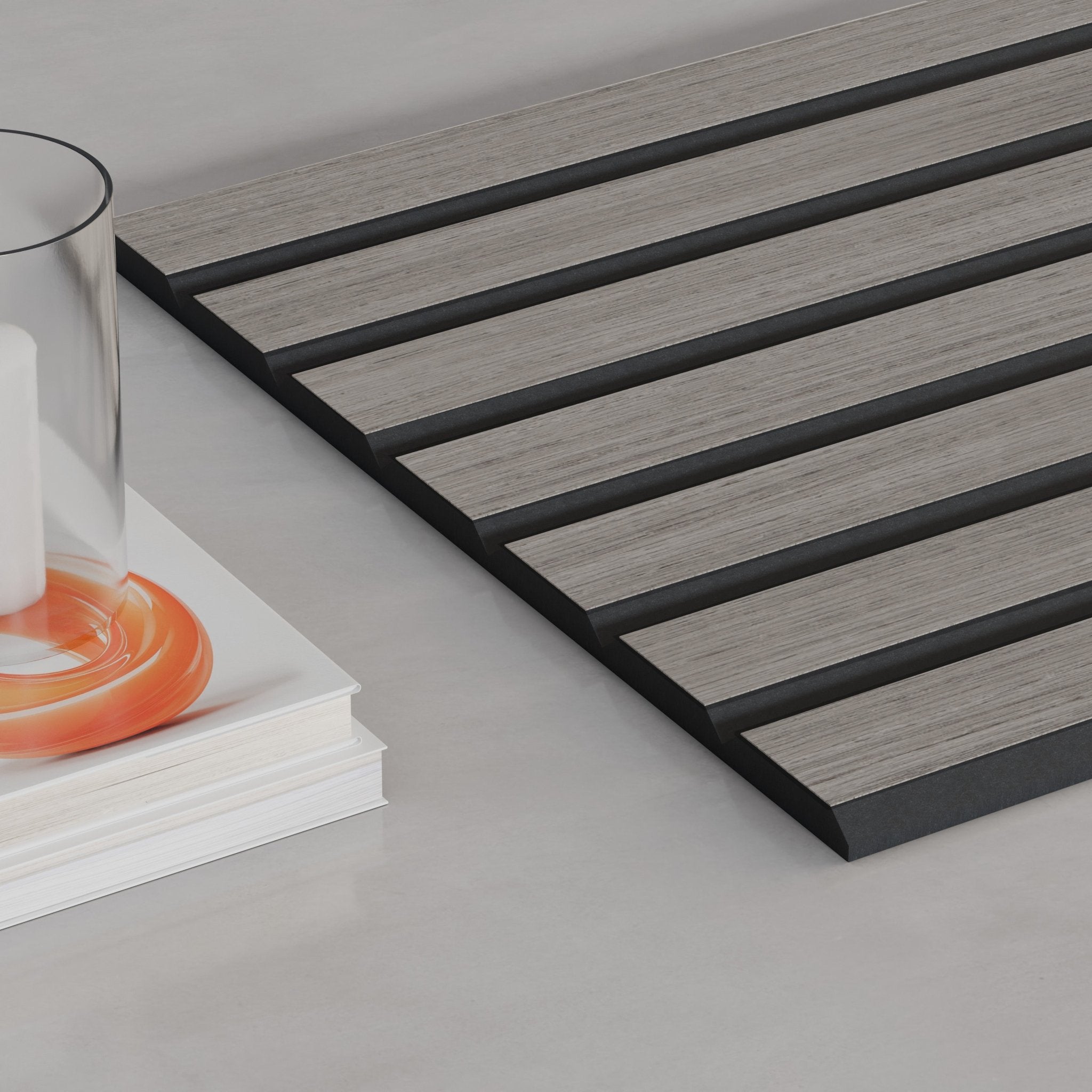
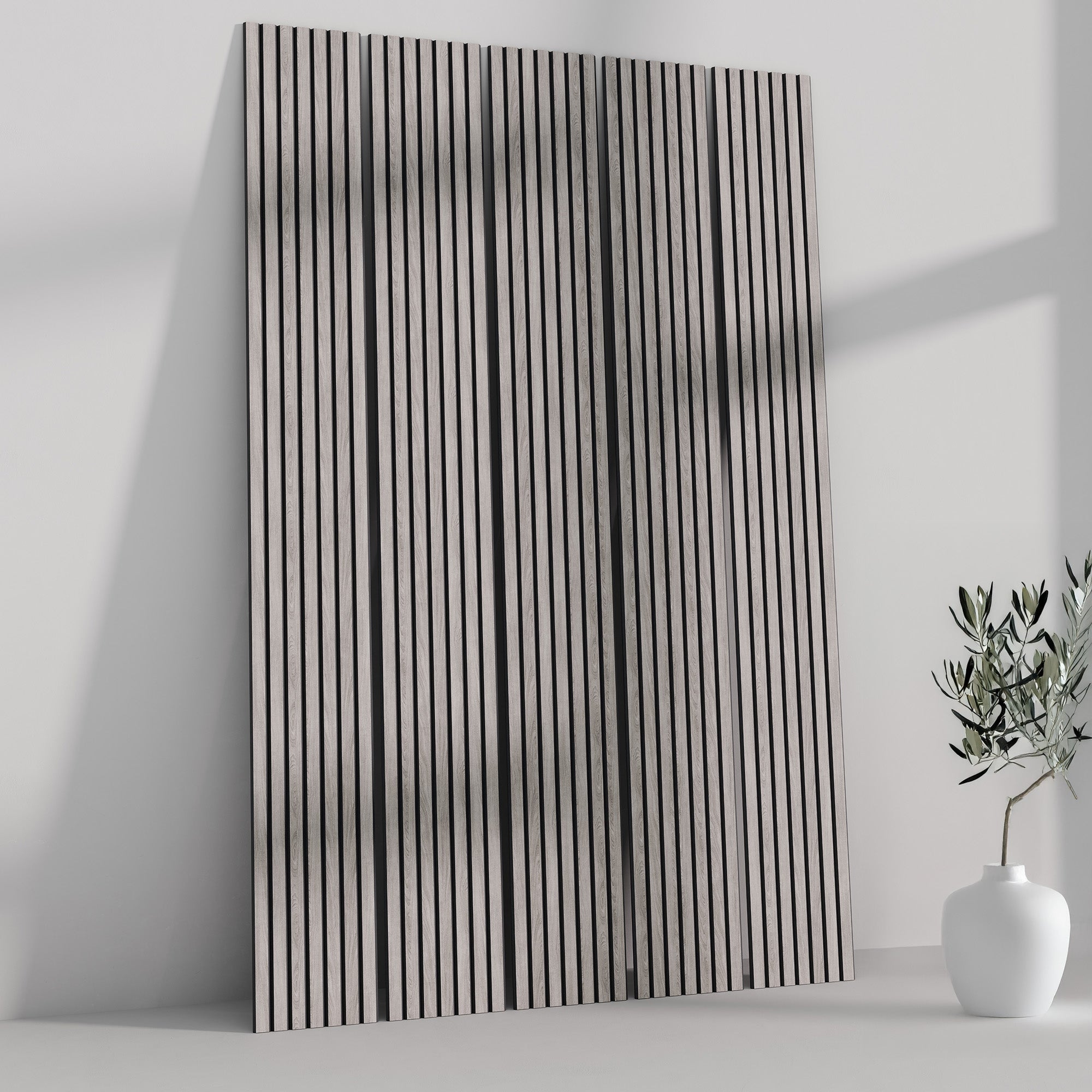
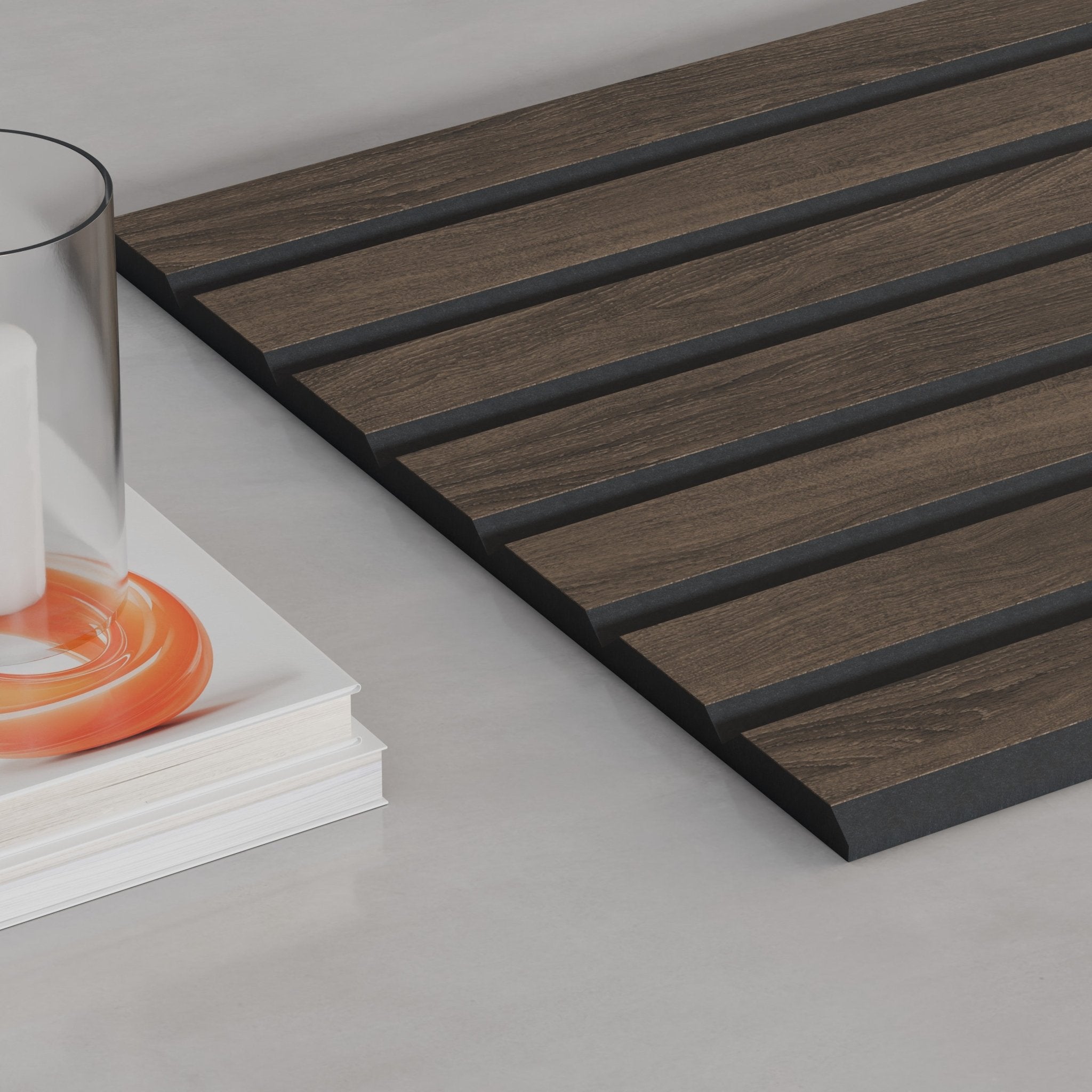
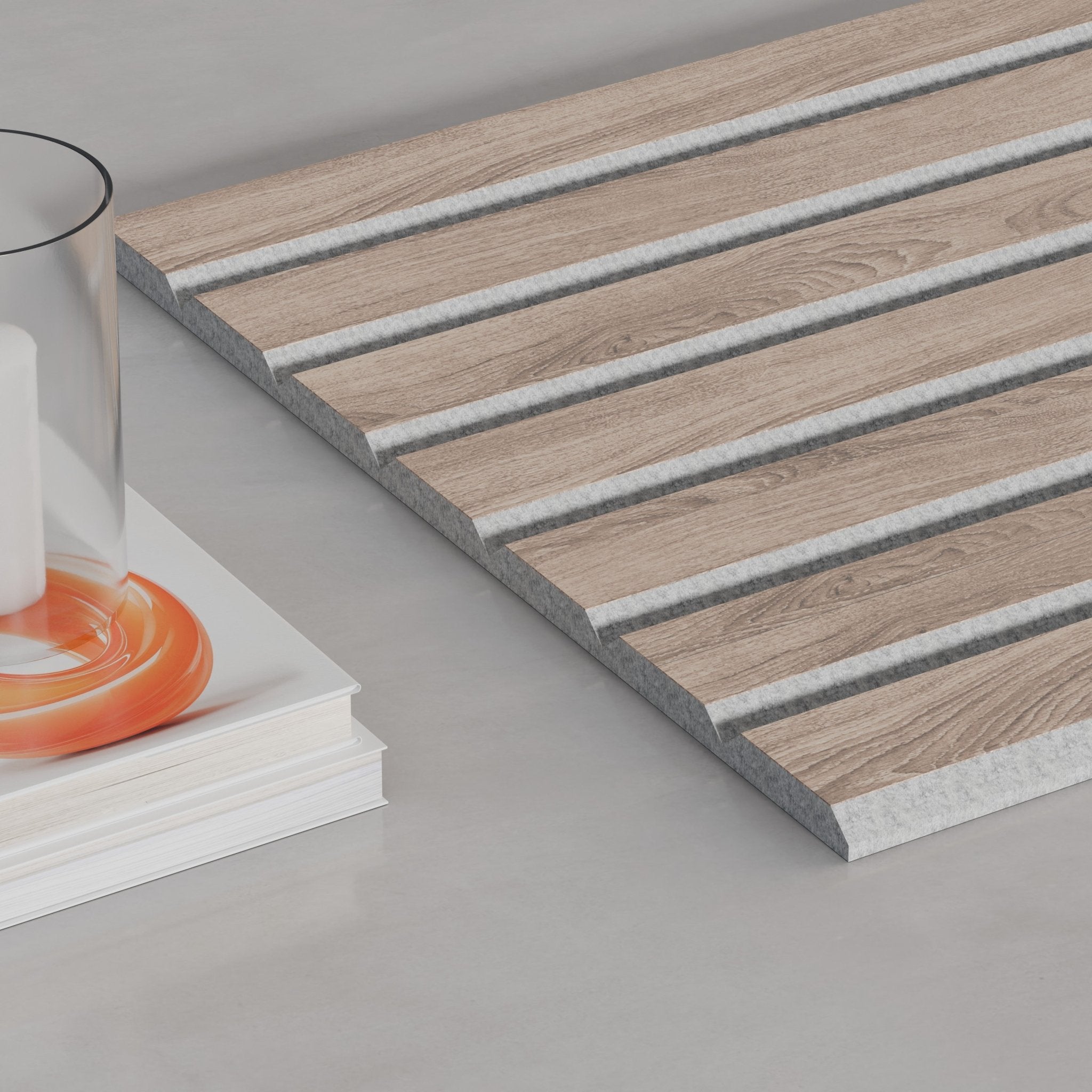
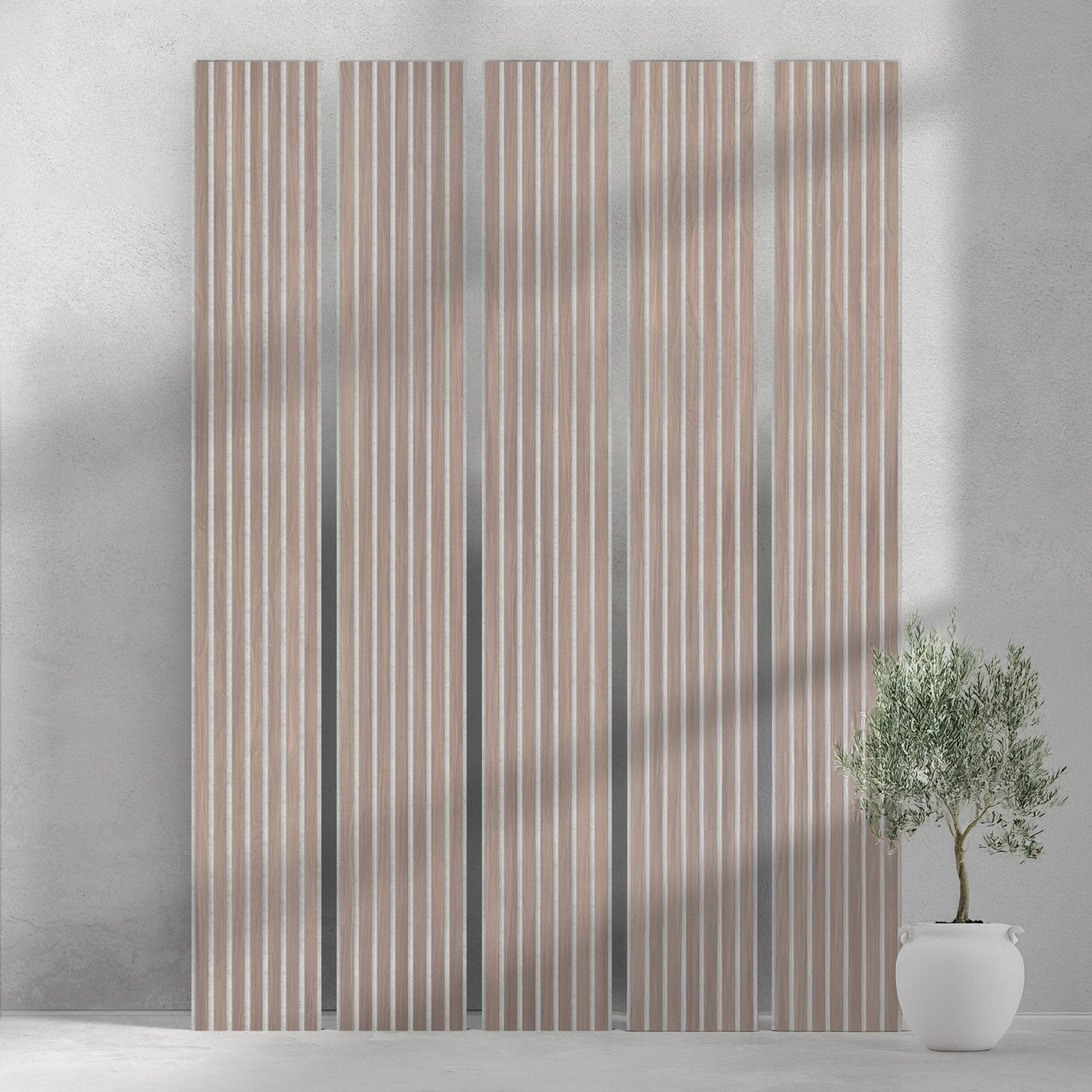
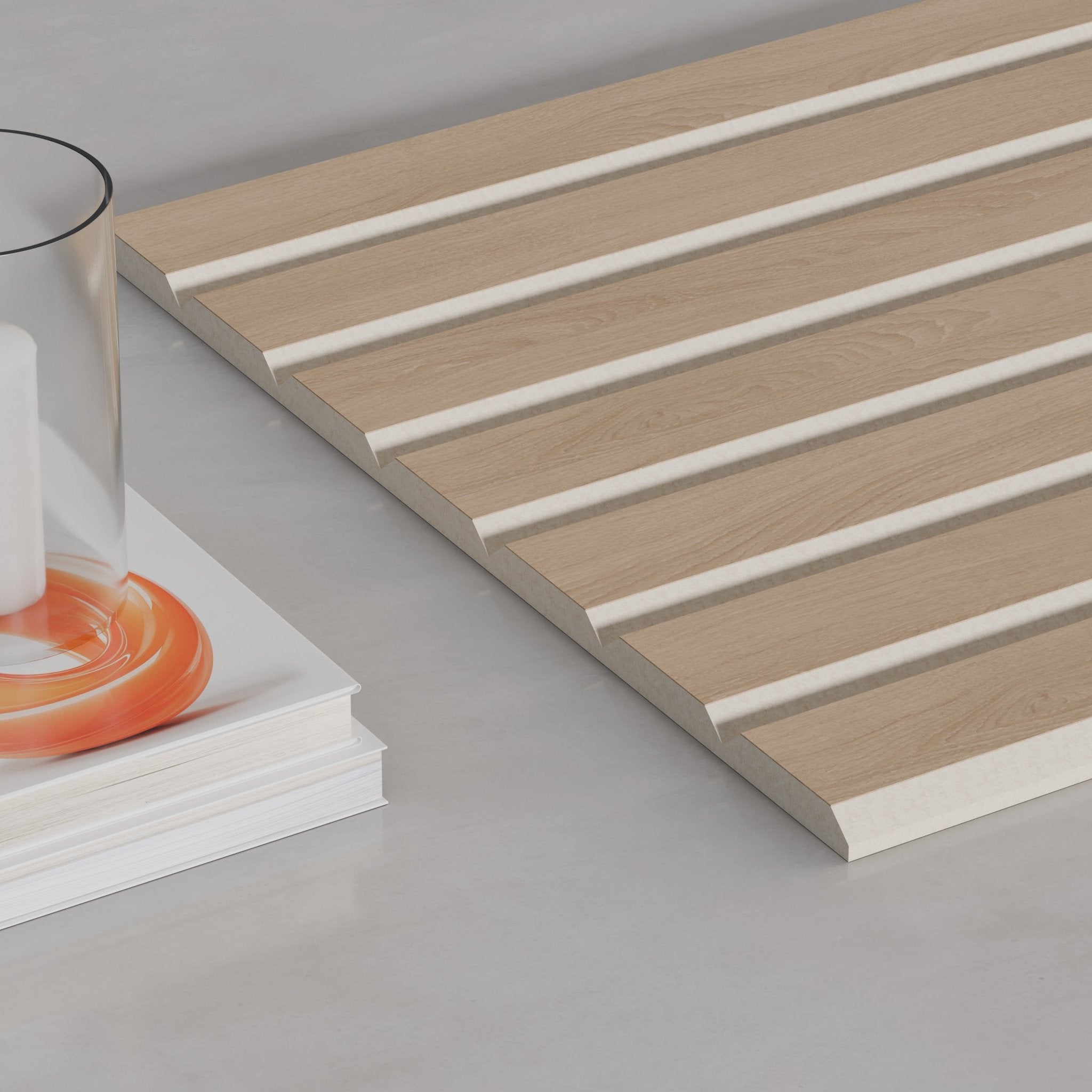
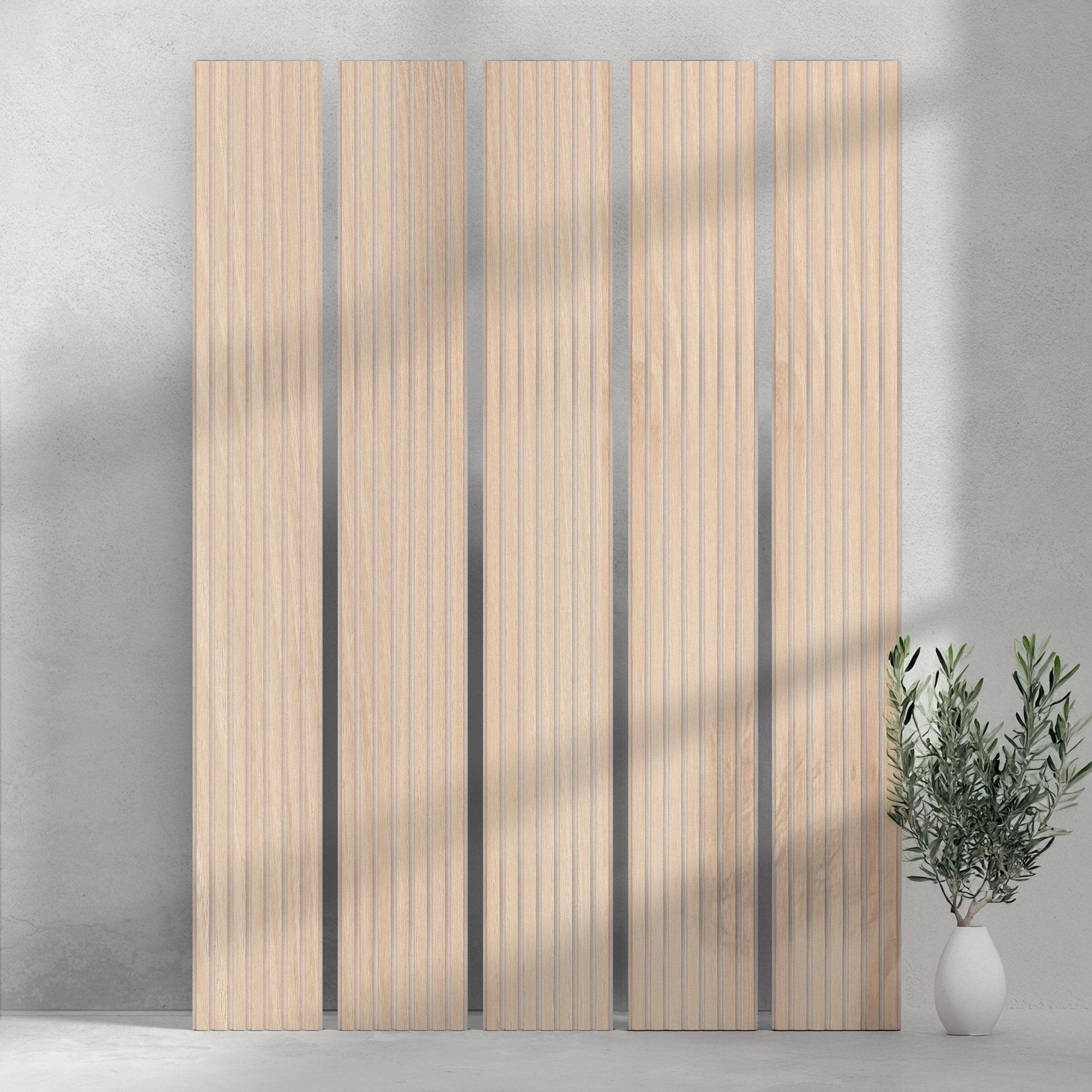
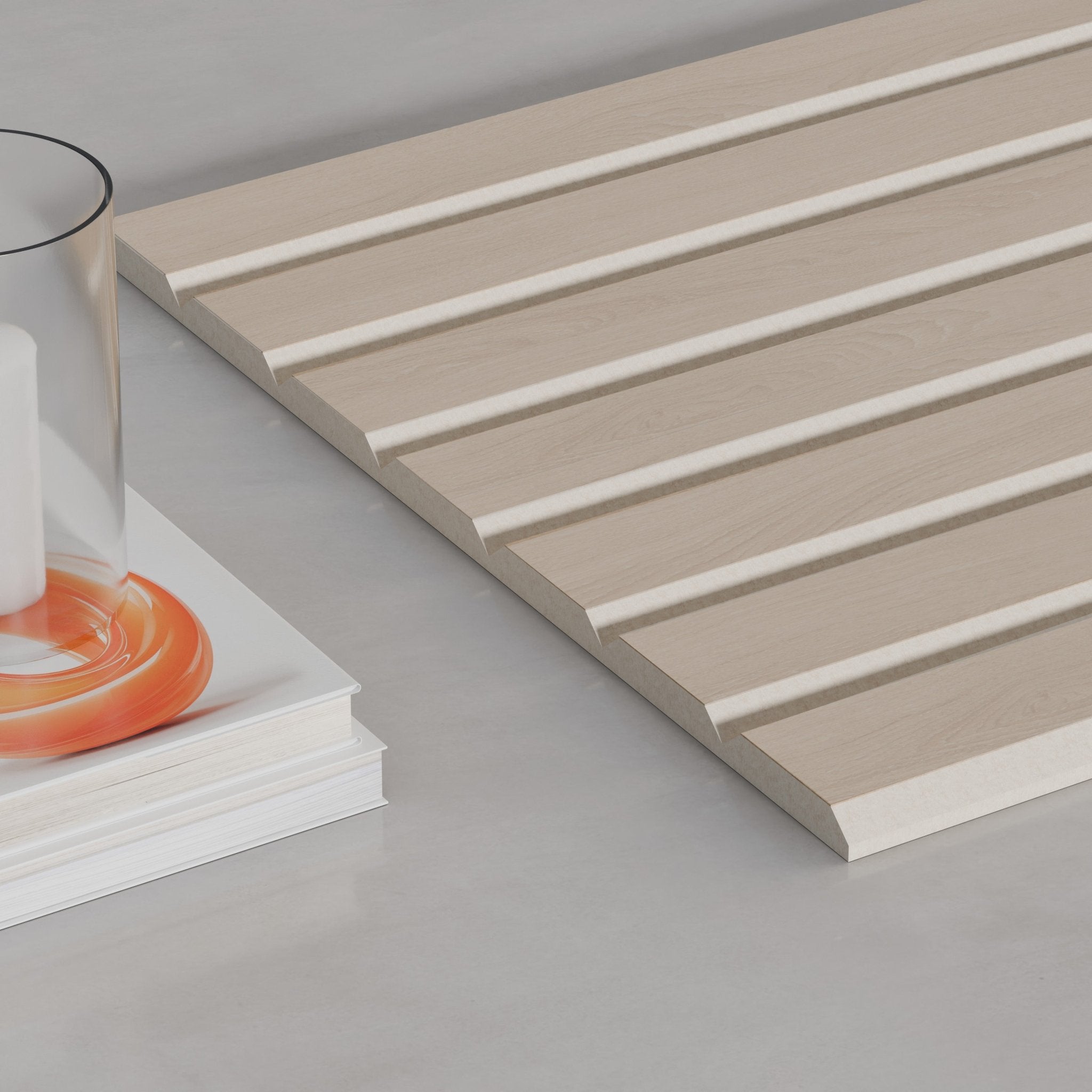
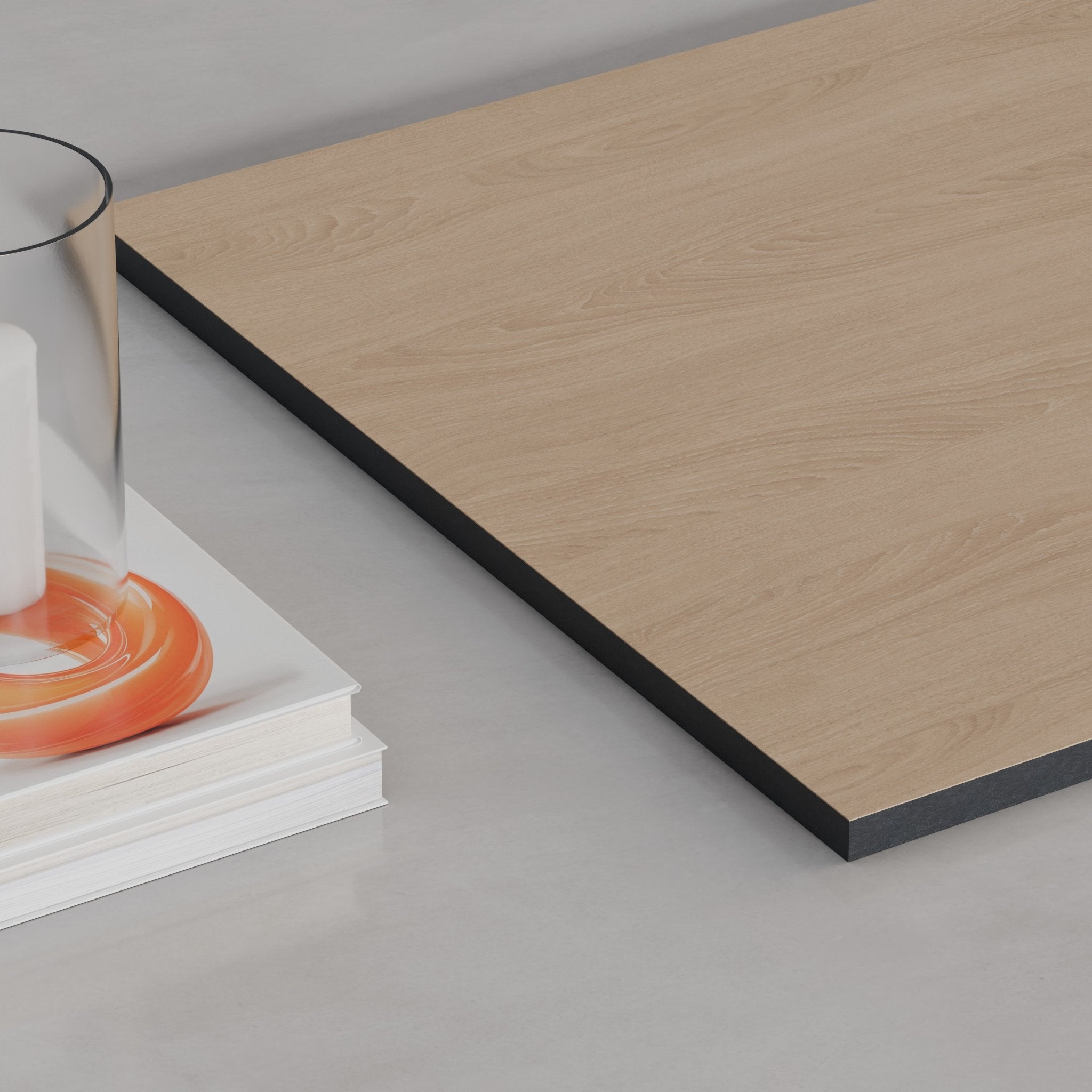
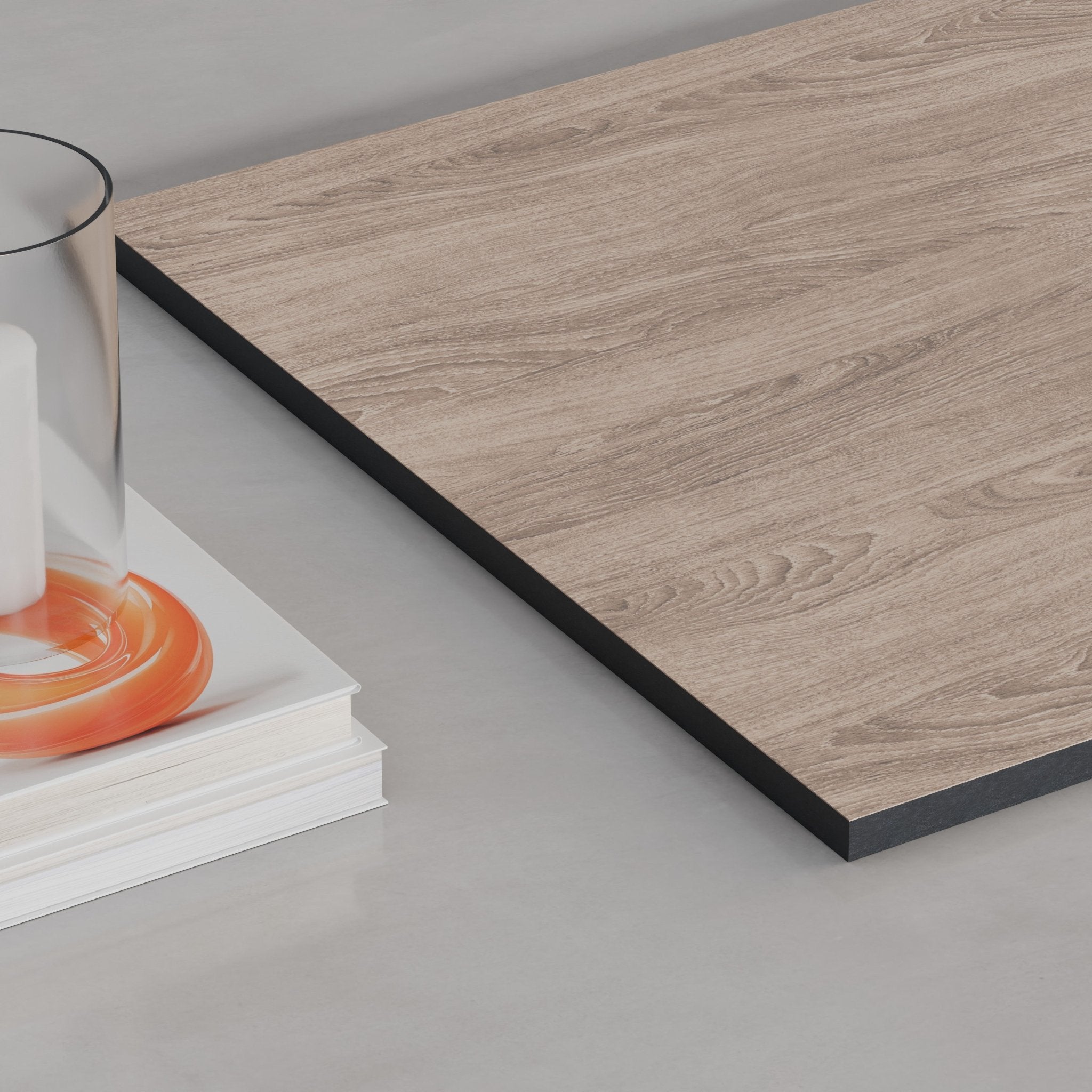
Choose Natural Bamboo for a soft, blonde tone close to white oak that brightens and opens up a room, or Medium Brown Bamboo for a richer, warm brown that grounds and warms it. Indoor use only; installs with screws or construction adhesive.
 Features & Benefits
 Features & Benefits
Solid bamboo, all the way through. Every slat is one piece of bamboo, 13mm deep, milled from the real material — no veneer skin, no pine core, no MDF underneath. Trim a slat to fit around a switch plate and the cut edge is bamboo too.
A grass, not a tree. Bamboo reaches full height in a single growing season and is harvested in years where a hardwood takes decades. Cut it and the same root system sends up new culms on its own, without replanting. It is the most sustainable panel we make, and it is also the one we are proudest of.
Calm, even grain. Bamboo's figure is fine and consistent, so a run reads as one quiet surface rather than a patchwork. If you want dramatic, no-two-alike character, that is what our Solid hardwoods are for — bamboo's appeal is the opposite.
A protective lacquer, in a matte sheen. Enough film to shrug off fingerprints, splashes and a wipe-down, without the plastic shine that gives away MDF pretending to be wood.
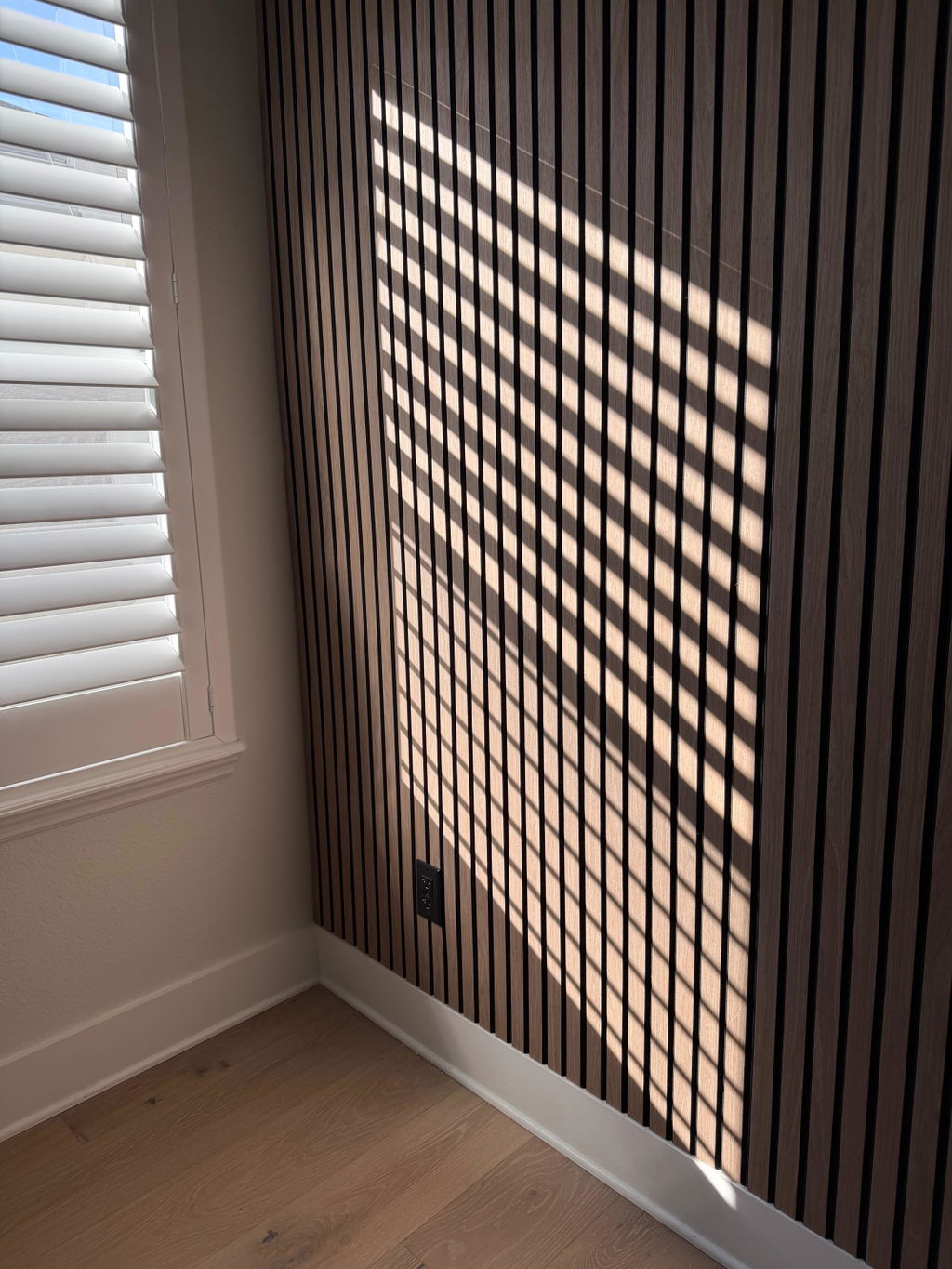
Depth you can read from across the room. Half-inch slats standing proud of the felt cast a real shadow line beside every slat — and that line moves as the light changes through the day. It's the one thing a printed or laminated surface can't fake.
Mounted on recycled acoustic felt. Each panel is bonded to 9mm black PET acoustic felt made from recycled material, which takes some of the hard edge off rooms with a lot of bare surfaces.
 Materials & Construction
 Materials & Construction
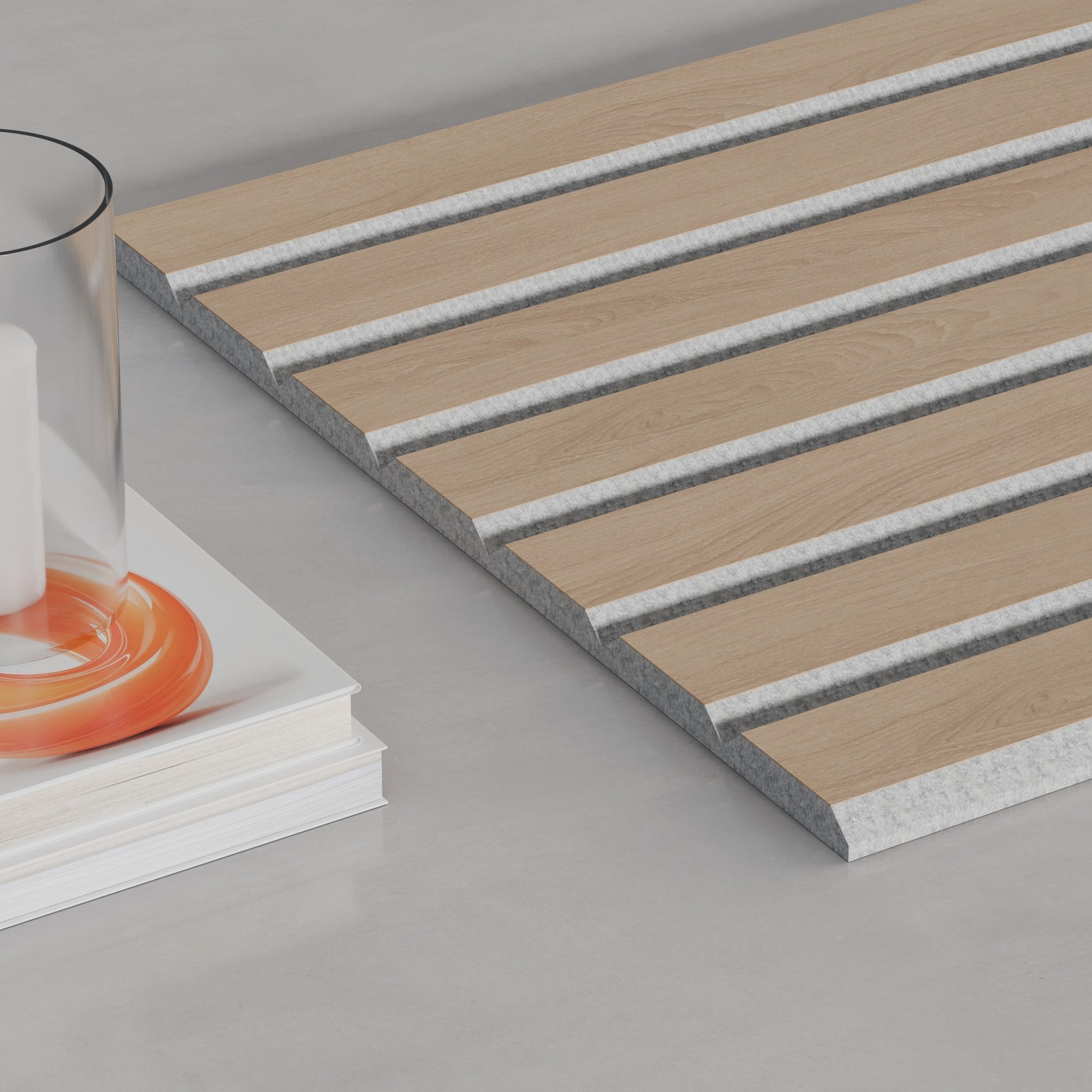
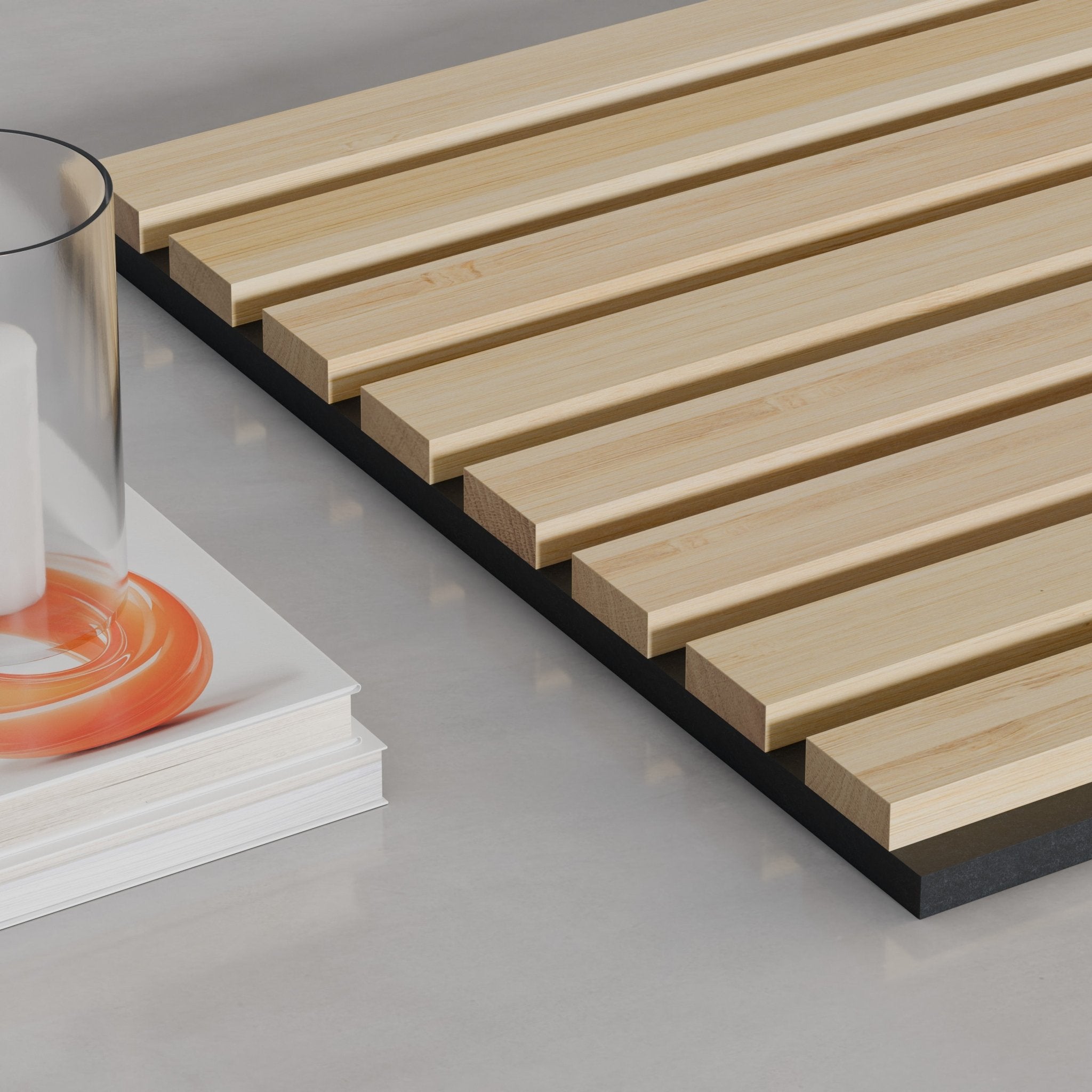
The material. Solid bamboo, milled 1 inch wide and 13mm deep, eight slats to a panel. Each slat is one continuous piece — cut it anywhere along its length and it's the same material right through. The slats are square-cut, so the top face meets the sides at a sharp corner rather than a softened roundover, which is what keeps the shadow line crisp.
The finish. A protective lacquer in a matte sheen. It sits flat across the face of each slat — enough protection to wipe clean, without the wet-looking gloss that reads as laminate.
The backing. Each panel is bonded to 9mm black PET acoustic felt, made from recycled material. It's a rigid pressed board rather than a soft fabric — it holds the slats in alignment and gives the panel its structure. Being black and matte, it recedes, so the space between slats reads as shadow instead of as a visible backing.
The layout. Eight slats and nine half-inch gaps make a panel 12.5 inches wide, and two panels to a box cover 25 inches of wall. The gap either side of a panel is the same half inch as the gaps within it, so when panels are set at even spacing the join falls into the rhythm of the slats rather than reading as a line.
 Sizing & Coverage
 Sizing & Coverage
| Panel height | Wall width per box | Coverage per box |
|---|---|---|
| 94.49″2400mm | 24.18″ 614mm | 15.87 sq ft |
| 106″2693mm | 24.18″ 614mm | 17.80 sq ft |
| 141.6″3596mm | 24.18″ 614mm | 23.78 sq ft |
Only the height changes — every box covers 24.18″ of wall. To work out how many you need, divide your wall width in inches by 24.18 and round up: a 10-foot wall (120″) takes five boxes. A panel measures 12.6″ on its own, but the felt lip on one edge tucks under the overhanging slat of the panel beside it, so each panel covers 12.09″ of wall once installed. The figures above are the installed width, not the raw panel width.
 Installation & Care
 Installation & Care
Before you start. Work out your box count first: each panel covers about 12.1″ of wall width once installed, so divide your wall width in inches by 12 and round up for your panel count, then halve that for boxes — a ten-foot wall takes ten panels, or five boxes. Order it all at once so every panel comes from the same production run.
Mounting. There is no adhesive tape involved. Panels fix to the wall with screws or construction adhesive, straight onto drywall or into studs. Use #6 or #8 wood screws 1.5 to 2 inches long, driven through the felt in the gap between slats. Start at one end of the run and work across in the same direction, keeping the spacing at each join equal to the gaps within the panel.
Cutting. Trim them like timber, not like a laminate board. A fine-tooth blade gives the cleanest edge, and because the slat is solid bamboo all the way through, a cut edge looks finished rather than exposing a pale core — so notching around a switch plate or outlet doesn't need a cover strip.
Care. Dust as you would any wood furniture, and wipe up spills with a barely damp cloth. Skip solvent cleaners and silicone polishes — the lacquer doesn't need them and they'll dull the matte sheen over time. Indoor use only.
Solid Bamboo. Solid Difference.
What Changes When It's Solid Bamboo
Solid construction isn't just a materials claim — it shows up in how the wall looks, how it cuts, how it handles a splash, and how tall it can go.
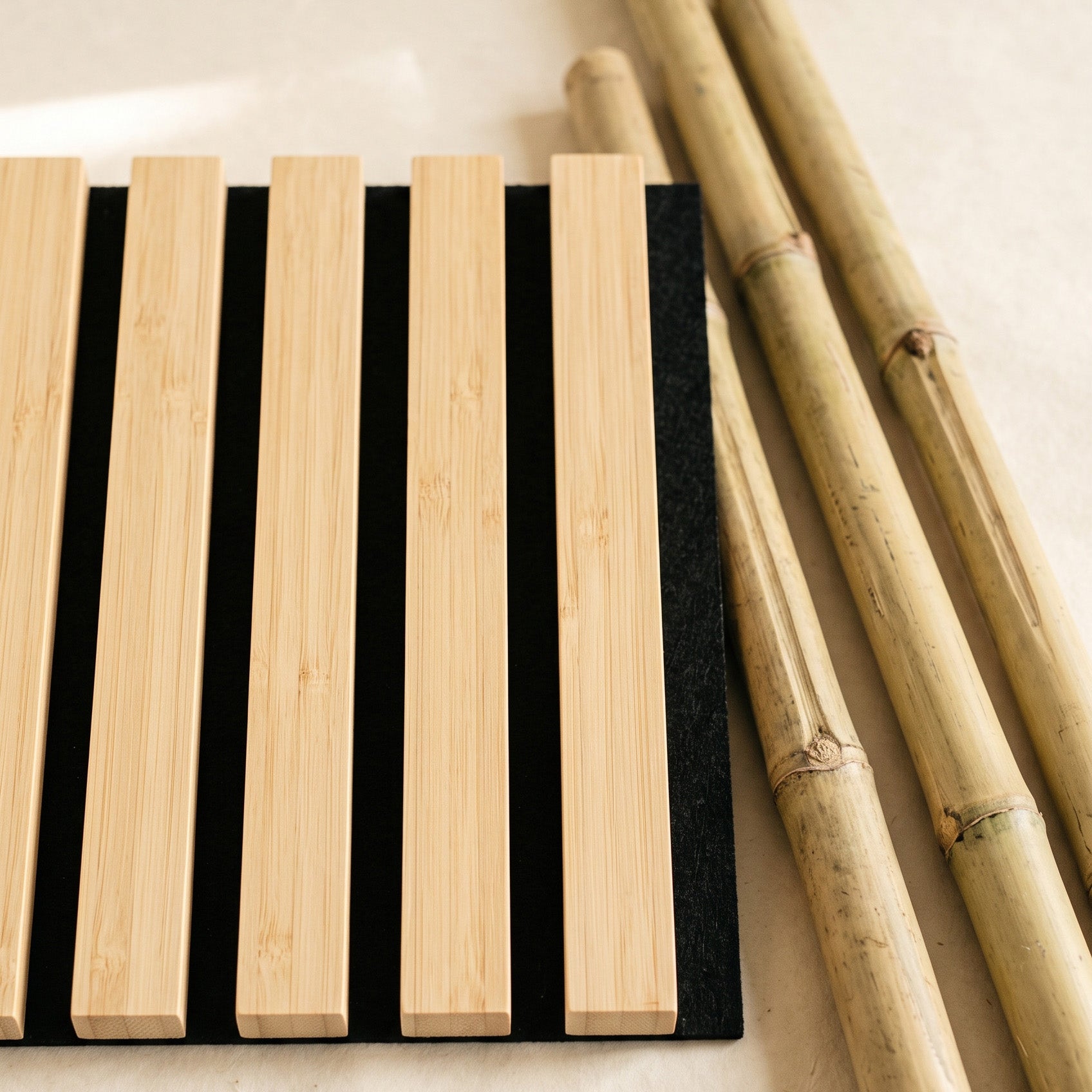
Grows Back in Years, Not Decades.
A hardwood wall is a fifty-year tree. Bamboo is a grass — full height in a single season, harvested in years, and the same root system sends up new culms without being replanted. The one panel where the premium choice is also the lighter one.
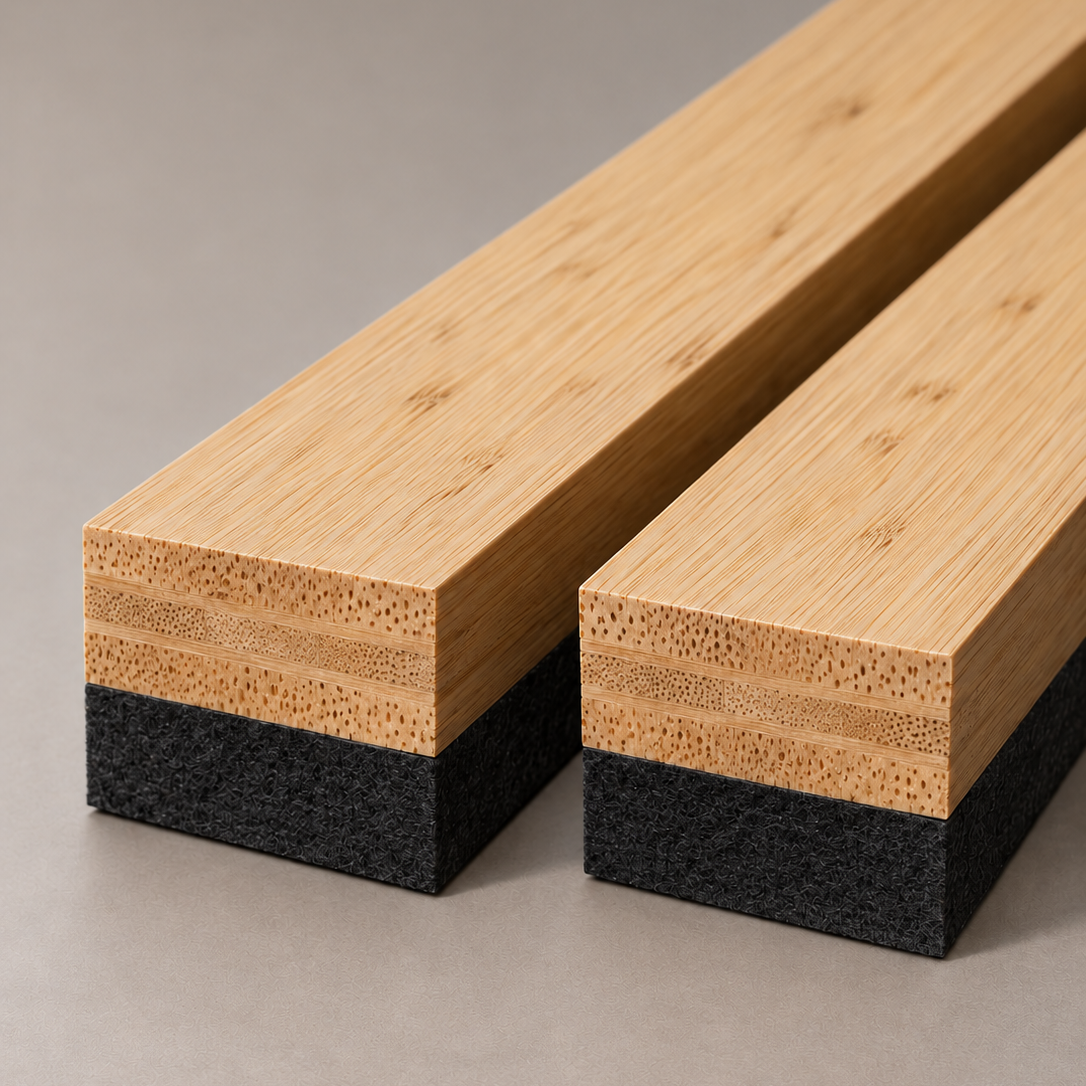
Cut It. It's Still Bamboo.
Trimming around a switch, an outlet or a door frame is where veneered panels give themselves away — the cut chips the face and exposes whatever's underneath. Cut solid bamboo and you get more bamboo. Clean edges, no colour change, nothing to cover with trim.

Sealed for Real Rooms.
A protective lacquer seals the surface, so dust wipes off and the steam and splashes of everyday cooking don't faze it. Behind a coffee bar, along a dining wall, across a kitchen. Indoor use only.
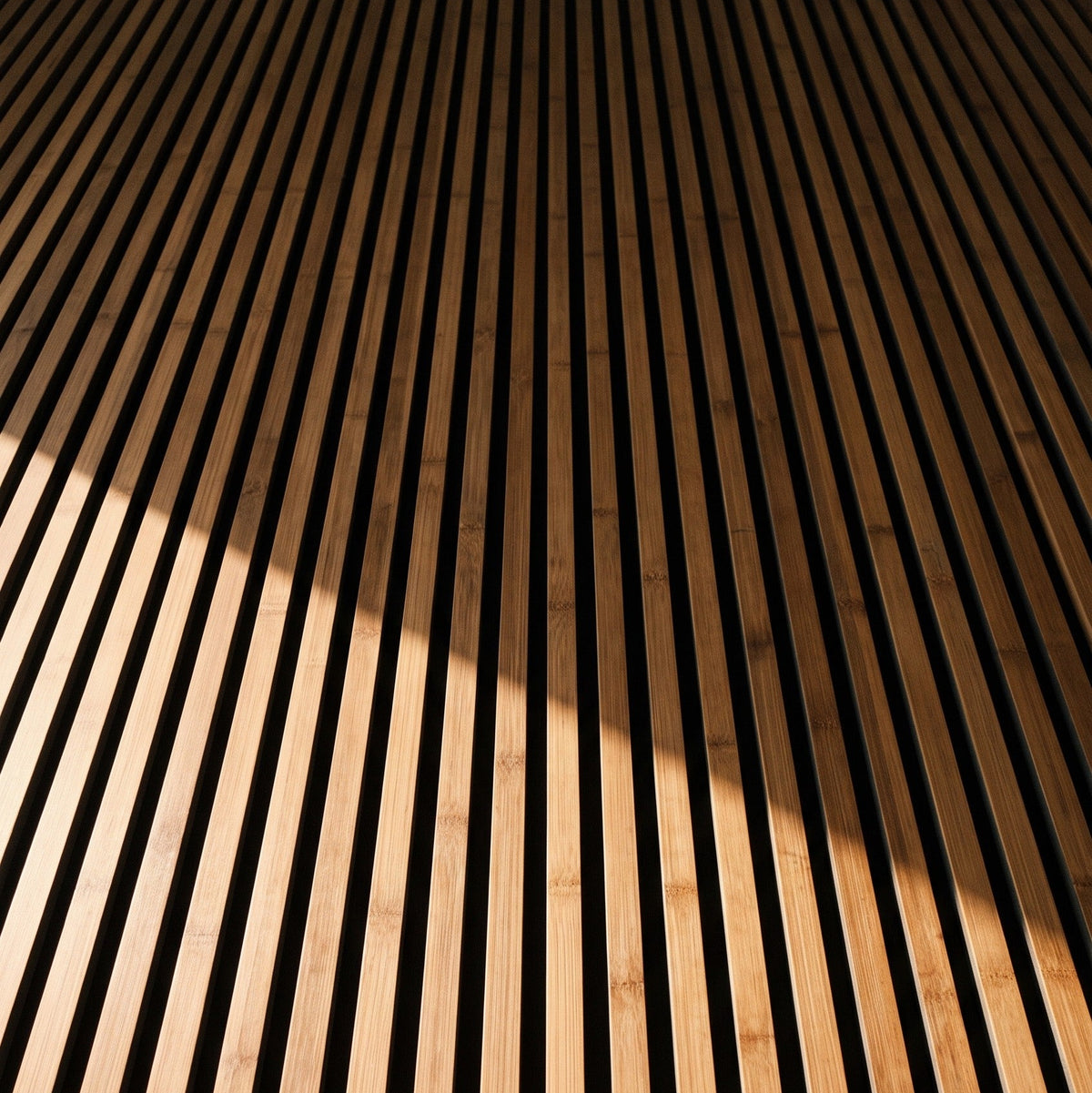
Three Sizes. Up to Nearly Twelve Feet.
94.49″, 106″ and 141.6″ — nearly twelve feet in a single piece. High walls and vaulted ceilings run floor to ceiling with no horizontal seam partway up.
By the numbers
Product specification
These are actual milled dimensions, not nominal ones. Each box holds two panels and covers 24.18″ of wall width once installed — so a ten-foot wall takes five.
100% solid bamboo, milled all the way through
25.4mm W × 13mm D (1.00″ W × 0.51″ D)
13mm (0.51″)
22mm (0.87″) — 13mm slat on 9mm felt
9mm (0.35″) recycled acoustic felt, black
2400mm (94.49″) · 2693mm (106″) · 3596mm (141.6″)
15.87 / 17.80 / 23.78 sq ft by height
Protective lacquer, matte
8 slats
319.6mm (12.6″) — 8 slats, 7 gaps, 1″ felt lip
2 panels
614mm (24.18″) installed
Indoor only
Solid bamboo — no veneer, no MDF, no composite
FAQ
Are Solid Bamboo panels solid bamboo all the way through?
Yes — Solid Bamboo is solid bamboo all the way through. Every slat is one piece of bamboo, 13mm (about half an inch) deep, milled from the real material — not a thin veneer skin wrapped over a pine or MDF core. Cut a slat anywhere along its length and the cut face is bamboo too.
What is the difference between solid bamboo and MDF slat wall panels?
Many slat wall panels are built on an MDF or composite core with a thin decorative surface over it. Solid Bamboo has no core at all — each slat is a single piece of bamboo, 13mm deep, the same material front to back.
The differences show up over time. A cut edge on solid bamboo is bamboo, so trimmed panels look finished instead of revealing a pale core. A scuff can be sanded out and re-finished, where a thin surface layer can't be sanded at all without going through it. And MDF swells permanently if it ever gets wet, while solid bamboo doesn't.
The honest tradeoff: MDF is very dimensionally stable and costs less. Solid bamboo costs more, gives you real material on every face, and can be repaired rather than replaced.
How many Solid Bamboo panels do I need for my wall?
Each panel covers about 12.1 inches of wall once installed, and a box holds two panels. Measure your wall width in inches, divide by 12, and round up to get your panel count — then halve that for boxes. A 10-foot wall is 120 inches, so ten panels, or five boxes.
A panel is 12.6 inches wide on its own, but each joint overlaps by half an inch, so the installed repeat is a little narrower. Dividing by 12 keeps you on the safe side.
Height doesn't change how many boxes you need — it only decides which panel length you order. We do recommend buying the whole wall in one order, so every panel comes from the same production run.
Can Solid Bamboo panels be cut to size?
Yes. Solid Bamboo panels cut like timber — a fine-tooth blade on a circular saw, track saw, jigsaw or handsaw all work. Because each slat is solid bamboo the whole way through, a trimmed edge shows the same material rather than exposing a pale core, so cuts look finished without an edge strip or trim to hide them.
Are Solid Bamboo panels really more sustainable than hardwood?
It comes down to how fast it grows back. Bamboo is a grass, not a tree — it reaches full height in a single growing season and is harvested in years where a hardwood takes decades. Cut it and the same root system sends up new culms on its own, so a harvested stand regrows without being replanted.
The felt backing is made from recycled material, and as with every Slats order, a tree is planted when you buy.
What we won't claim is a carbon figure — we don't have a certified one, and a number without a certificate behind it isn't worth much.
Will Solid Bamboo warp or open up gaps over time?
Solid Bamboo panels are built so that material movement stays invisible. Each slat is only 1 inch wide, so seasonal movement across a single slat is a fraction of a millimeter — and the half-inch gap beside it absorbs that easily. The slats sit on a felt backing that is dimensionally stable and keeps each slat independent, so movement never accumulates across a panel the way it would on one wide glued-up board.
Where you install them matters more than the panels do. Interior, climate-controlled rooms are what these are made for. Spaces that swing between extremes — an unheated cabin over winter, an unconditioned garage, a three-season porch — will move more than any solid wall covering should have to.
Can a scratched Solid Bamboo slat be repaired?
Yes, and this is one of the real advantages of solid material. Each slat is 13mm of bamboo all the way through, so a scratch or a dent can be sanded out and the spot re-finished — what's under the surface is the same as the surface. A thin veneer can't be sanded at all without going straight through the face.
For light marks, fine abrasive paper and a wipe of clear lacquer is usually enough. For anything deeper, or if a slat has taken a real knock, get in touch and we'll help you sort it out.
How long do Solid Bamboo panels last?
Solid Bamboo is built to outlast the room it's in. There's no veneer to wear through and no composite core to swell or crumble, and because the slats are solid, a wall that's picked up scuffs after a decade can be sanded back and re-finished rather than replaced.
Treated the way you'd treat wood furniture, and kept in a normal interior environment, there's no wear-out point designed into them.
Will Solid Bamboo panels match each other in color?
Yes — and more consistently than a hardwood. Bamboo's grain is fine and even, so a run of Solid Bamboo reads as one continuous surface rather than panels in different shades. If you want a wall with dramatic, no-two-alike figure, that's what our Solid hardwoods are for; bamboo's appeal is the opposite — calm and uniform.
There's still a gentle variation in tone from slat to slat, because it's a natural material rather than a print. Ordering the whole wall in one go keeps that variation as tight as it can be.
What are the exact specifications of Solid Bamboo panels?
Each slat of Solid Bamboo is 1 inch wide and 13mm deep, milled from solid bamboo, with a half-inch gap beside it and eight slats to a panel. The backing is 9mm black acoustic felt made from recycled material.
A panel measures 12.6 inches wide. Panels come in three heights: 94.49 inches, 106 inches and 141.6 inches. Each box holds two panels and covers 24.18 inches of wall width once installed. The two panels measure 25.2 inches end to end, but each joint overlaps by half an inch.
The finish is a protective lacquer in a matte sheen. Indoor use only.
Can I buy a single Solid Bamboo panel instead of a whole box?
Solid Bamboo is sold by the box — two panels per box, covering 24.18 inches of wall width once installed.
If your wall works out to an odd number of panels and you'd rather not buy a whole extra box for one, get in touch before you order and we'll see what we can do.
Can Solid Bamboo panels be stacked for a wall taller than one panel?
Yes, panels can be stacked to reach a taller wall, and the join is worth planning rather than trying to hide. Butting two panels end to end leaves a horizontal line that's very hard to make invisible.
Two approaches look intentional instead of accidental. Run a deliberate shadow gap, leaving a small even reveal between the upper and lower panels so the line reads as a design feature. Or break the wall with a horizontal trim piece at the transition. Both beat a butt joint fighting to disappear.
Our longest Solid Bamboo panel is 141.6 inches — 11 feet 9.6 inches — so walls up to that height can be covered in a single run with no horizontal join at all.
Can Solid Bamboo panels be installed on a curved wall, column or archway?
Partly — it depends on the curve. Solid Bamboo panels have some horizontal flex across the slats, thanks to the felt backing, so a gentle sweeping curve in a wall will work.
What they won't do is wrap a column or a tight archway. Each slat is 13mm of solid bamboo and doesn't bend along its own length, so anything with a tight radius is out.
If you're not sure whether your curve is gentle enough, send us a photo and a measurement before you order and we'll tell you straight. For columns, arches and tight radii, our ULTRALIGHT panels are built to flex and are the right choice for that.
How do you install Solid Bamboo slat wall panels?
Solid Bamboo panels install with screws or construction adhesive, straight onto drywall or into studs. There is no adhesive tape involved.
For screws, use #6 or #8 wood screws 1.5 to 2 inches long, driven through the felt in the gap between slats. Trim-head screws have a smaller head if you'd rather not see them. Work across the wall in one direction so the spacing stays consistent from panel to panel.
Indoor use only.
Do Solid Bamboo panels need to acclimate before installing?
Yes. Let the panels sit in the room where they'll be installed before you fix anything. Solid bamboo takes on and gives up moisture depending on the air around it, and installing panels straight out of a cold delivery truck into a warm dry room is what causes joints to open up weeks later.
Lay them flat in the room, out of their packaging, for 48 to 72 hours before installing, and keep them clear of direct sun and heat sources while they settle.
It's a weekend of patience that prevents the single most common complaint about any solid wall panel.
Can Solid Bamboo panels be installed horizontally?
Yes. Solid Bamboo panels run horizontally as well as vertically — the slats simply lie the other way.
Two things change. Your coverage math flips: each panel covers about 12.1 inches of wall height rather than width once installed, so work from your wall height instead. And getting the first panel dead level matters more than usual, because a small drift is far more visible along a long horizontal run than a vertical one.
Run horizontally, our 141.6-inch panel covers just under 12 feet of wall in one unbroken length.
Can Solid Bamboo panels be installed on a ceiling?
Yes, with one firm rule: fix into the joists. Solid Bamboo is heavier than a veneered panel, and construction adhesive on its own is not enough overhead. Use screws into structure, with adhesive only as a supplement if you want it.
Locate your joists first and plan the panel layout so every panel catches at least two of them. Work with a second pair of hands — the longer lengths are awkward to hold overhead alone.
Everything else is the same as a wall: the same cutting, the same indoor-only rule.
Will the seam show where two Solid Bamboo panels meet?
The trick is to treat the join as one more gap. Keep the spacing where two panels meet equal to the half-inch gaps inside the panel, and the seam disappears into the rhythm of the slats instead of reading as a line down the wall.
Two things make that easy. Work across the wall in one direction rather than starting at both ends and meeting in the middle. And check the spacing at the join before you drive the second screw, while you can still nudge the panel.
The black felt backing helps here too: the space between slats reads as shadow, so an evenly spaced join has nothing to catch the eye.
Can Solid Bamboo panels be used in a kitchen or bathroom?
A kitchen, yes. Solid Bamboo carries a protective lacquer that seals the surface against humidity, steam and the occasional splash — so a wall behind a dining table, across from a range, or behind a coffee bar works well.
A bathroom is a maybe, and it depends on the wall. A vanity wall or a powder room in a ventilated bathroom is fine. What to avoid is direct, repeated water contact: inside a shower surround, along a tub splash zone, or behind a sink where the wall gets wet daily.
Indoor use only — never outdoors.
How do I finish an outside corner or exposed edge with Solid Bamboo panels?
Where a run of panels ends mid-wall, the cut edge shows the ends of the slats and the edge of the felt. Because each slat is solid bamboo all the way through, that edge reads as real material rather than as an exposed core — plenty of people leave it exactly as it is and it looks deliberate.
If you want a finished return, here's what we'd recommend: take a slat off one of your panels and use it as your trim. Carefully release it from the felt backing, then fix it vertically against the exposed edge to close the end of the run. Because it came out of the same batch, the color, grain and finish match exactly — which is something no bought trim piece can promise.
The same idea handles an outside corner, with a slat fixed down each face of the corner.
Do Solid Bamboo panels absorb sound?
Solid Bamboo panels are backed with 9mm acoustic felt, which softens echo and takes the hard edge off rooms with a lot of bare surfaces — much like a rug does on a hard floor.
Worth being clear about the difference: that's sound absorption inside the room, not soundproofing between rooms. These panels will make a room sound calmer; they won't stop noise passing through the wall.
We don't publish an acoustic rating for these panels. If your project needs a certified figure, check with your contractor or specifier before ordering.
Are Solid Bamboo panels fire-rated?
Our panels are not fire rated. If a fire rating is required for your project, check with your contractor or your local building code before ordering.
Are Solid Bamboo panels renter-friendly?
That depends on your lease, but yes — Solid Bamboo panels can be installed and removed. Screws leave small holes in the drywall that patch and paint like any picture hook. Construction adhesive is much harder to remove cleanly and will usually take paint and some drywall paper with it.
If you rent, use screws. When you leave, unscrew the panels, fill the holes, touch up the paint, and take the wall with you.
How do I cut Solid Bamboo panels around outlets and light switches?
Solid Bamboo panels can be cut around outlets and switches with a jigsaw or handsaw — measure, mark, and cut. Because each slat is solid bamboo all the way through, the cut edge looks finished on its own, so you don't need a cover plate or trim piece to hide an exposed core.
Can Solid Bamboo panels be painted or stained?
We wouldn't recommend painting or staining Solid Bamboo panels. Each panel carries a protective lacquer, so paint or stain won't take without sanding that finish back first, which removes the protection you paid for. If you want a painted slat wall, our Paint-Ready panels are primed and made for exactly that.
Can I hang a TV or shelves on Solid Bamboo panels?
You can mount lightweight items directly to Solid Bamboo panels. For anything heavy — a TV, loaded shelving — locate the studs behind the panels and fix through into the framing.
How do I clean and care for Solid Bamboo panels?
Solid Bamboo panels need very little upkeep. Dust with a soft cloth, or vacuum with a brush attachment; for anything more, a barely damp cloth is enough. Avoid solvent cleaners, abrasive pads and silicone polishes — the lacquer doesn't need them and they'll dull the matte finish over time.
Can I take Solid Bamboo panels with me if I move?
Yes — Solid Bamboo panels can be removed and reinstalled, as long as you fixed them with screws. Unscrew the panels, patch the wall, and put them up in your next space.
Does Slats.co offer Solid Bamboo samples?
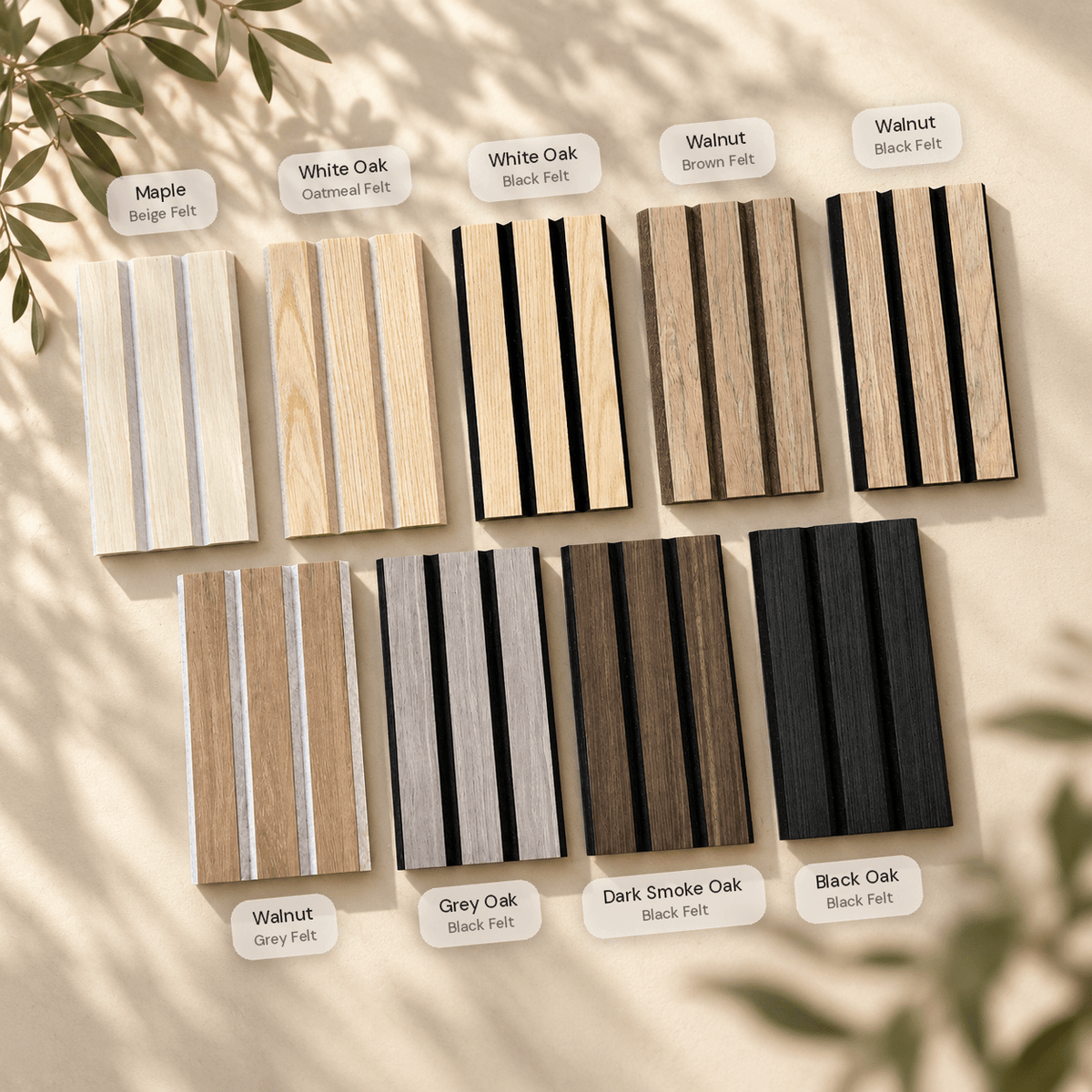
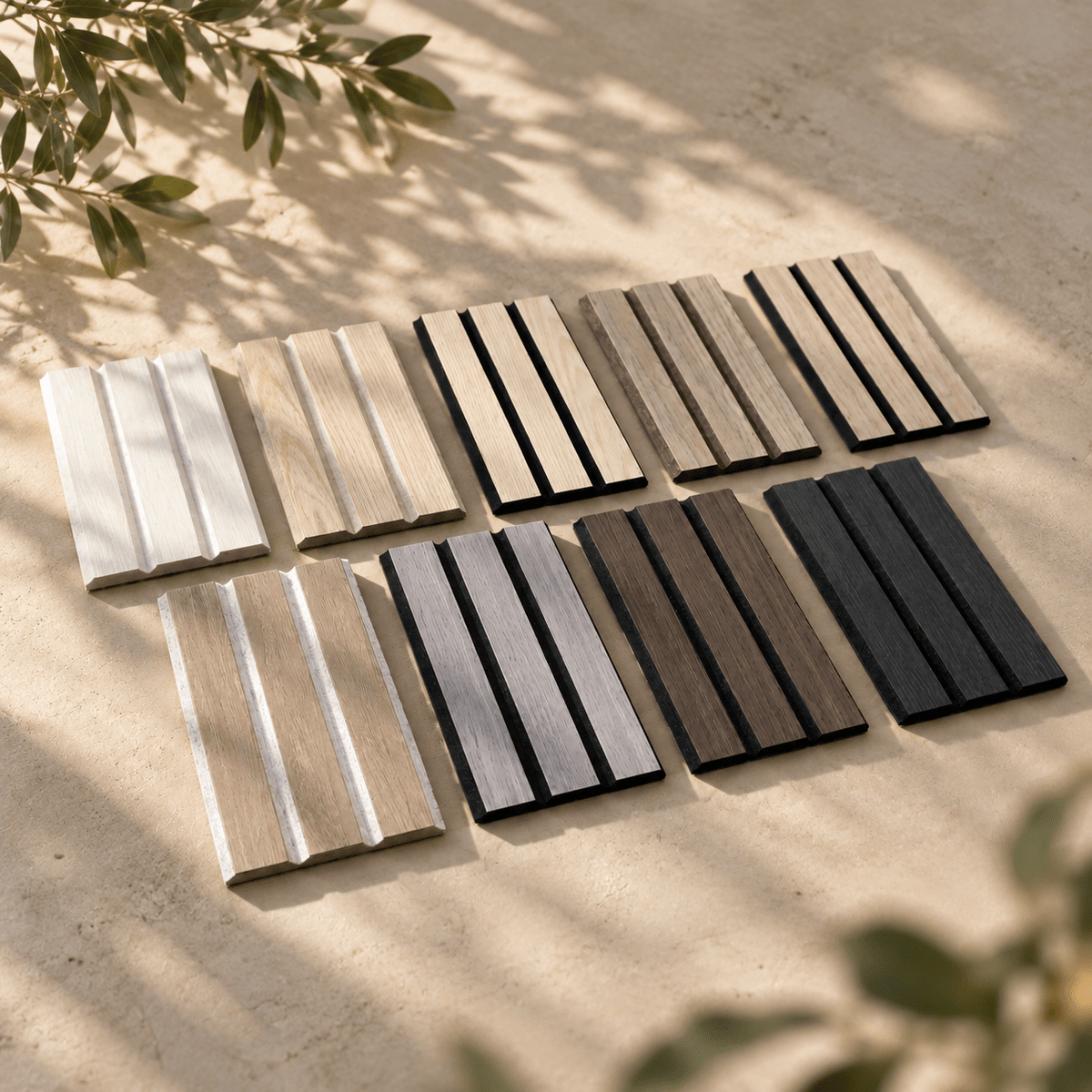
Yes. Solid Bamboo samples are available in both Natural and Medium Brown, so you can see the tone against your own paint and flooring and feel the thickness of the slat before committing to a wall.
Where is Slats.co based?
Slats.co is a family-owned business based in Southern California, and all of our panels ship directly from our SoCal headquarters.
How much does shipping cost on Solid Bamboo panels?
Shipping within the contiguous US is free on orders of $70 or more, so any 94.49″ and 106″ Solid Bamboo order ships free.
The 141.6″ panels are too long for parcel and travel by LTL freight. Four boxes or more ships free; one to three boxes has the freight rate calculated at checkout.
Customer Satisfaction
4.94
out of 5 stars
200+
Customer reviews
20k+
Panels shipped
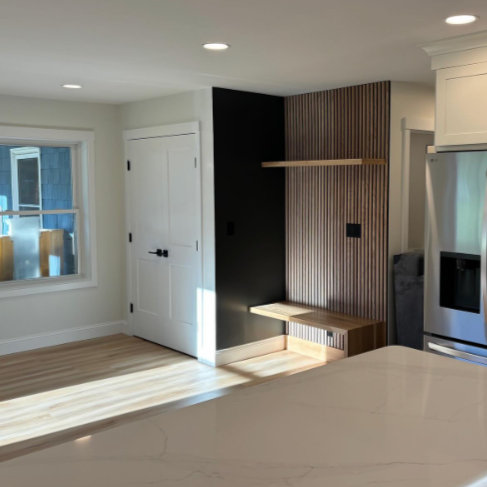
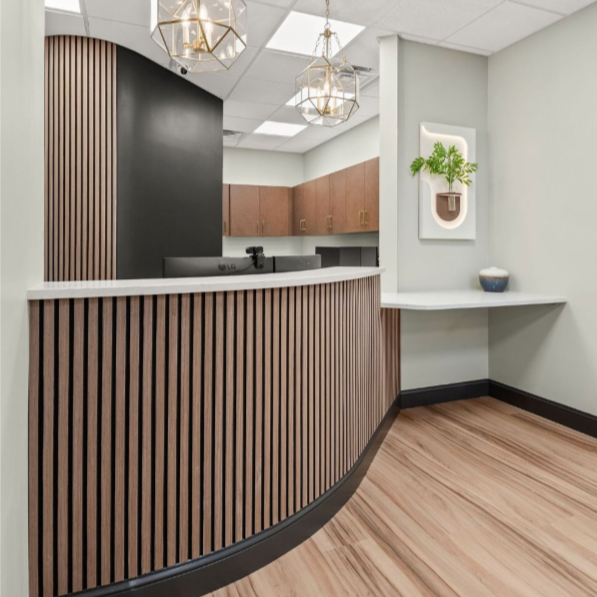
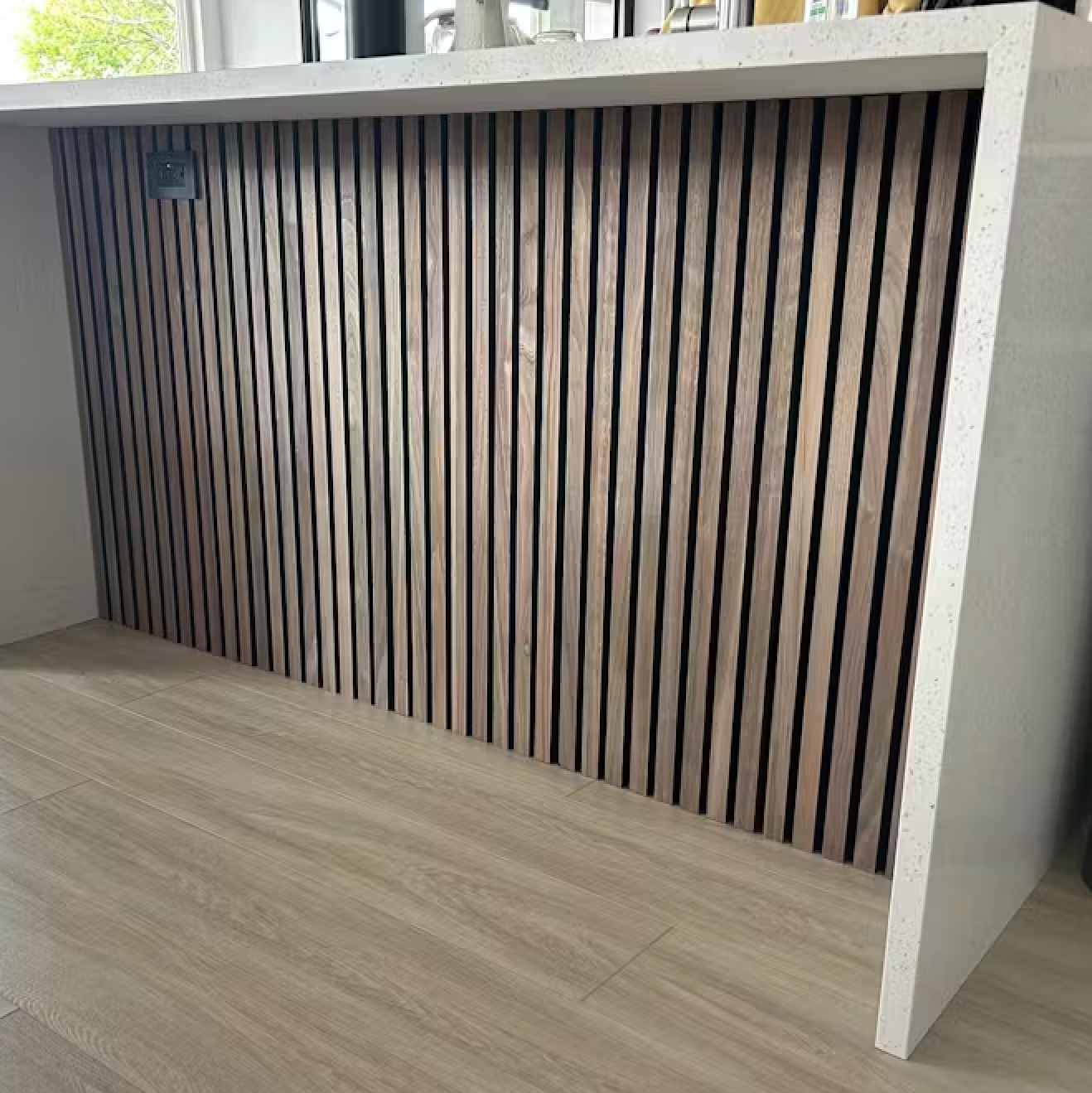
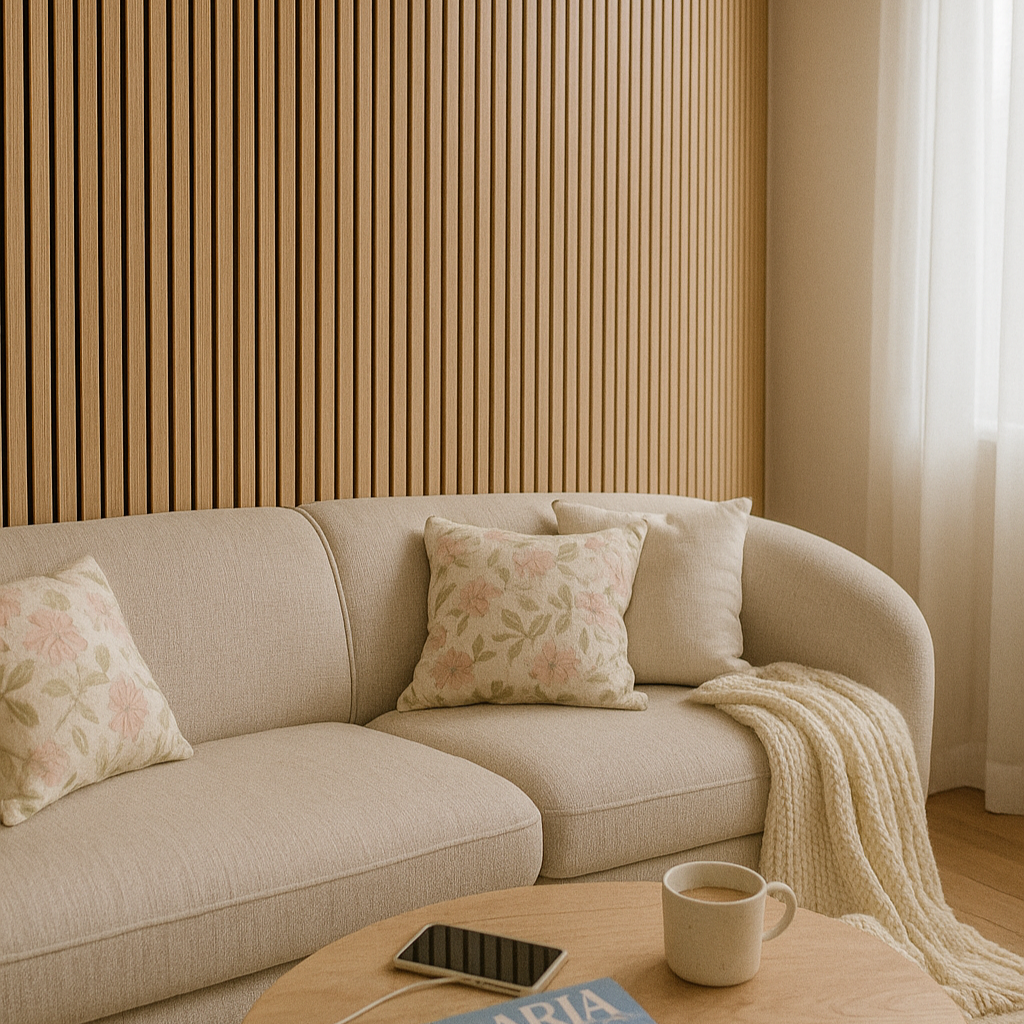
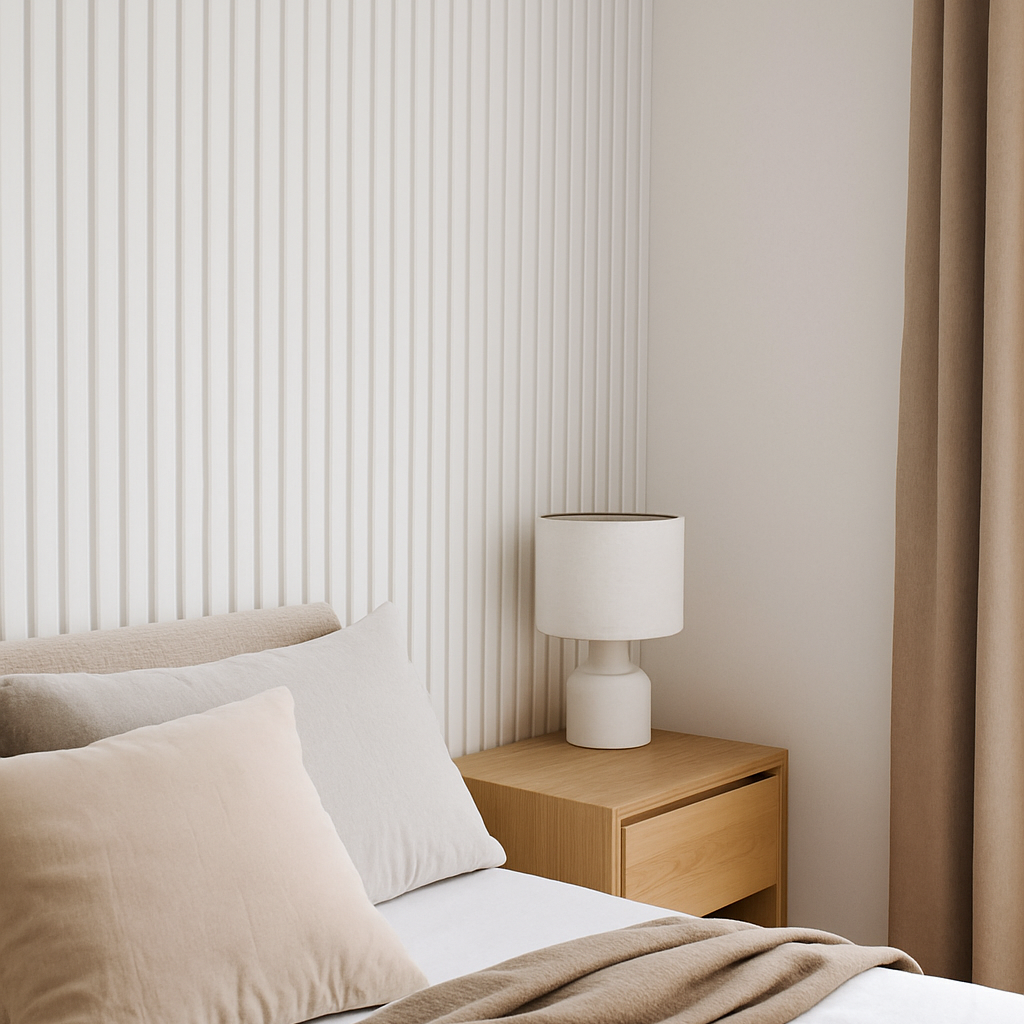
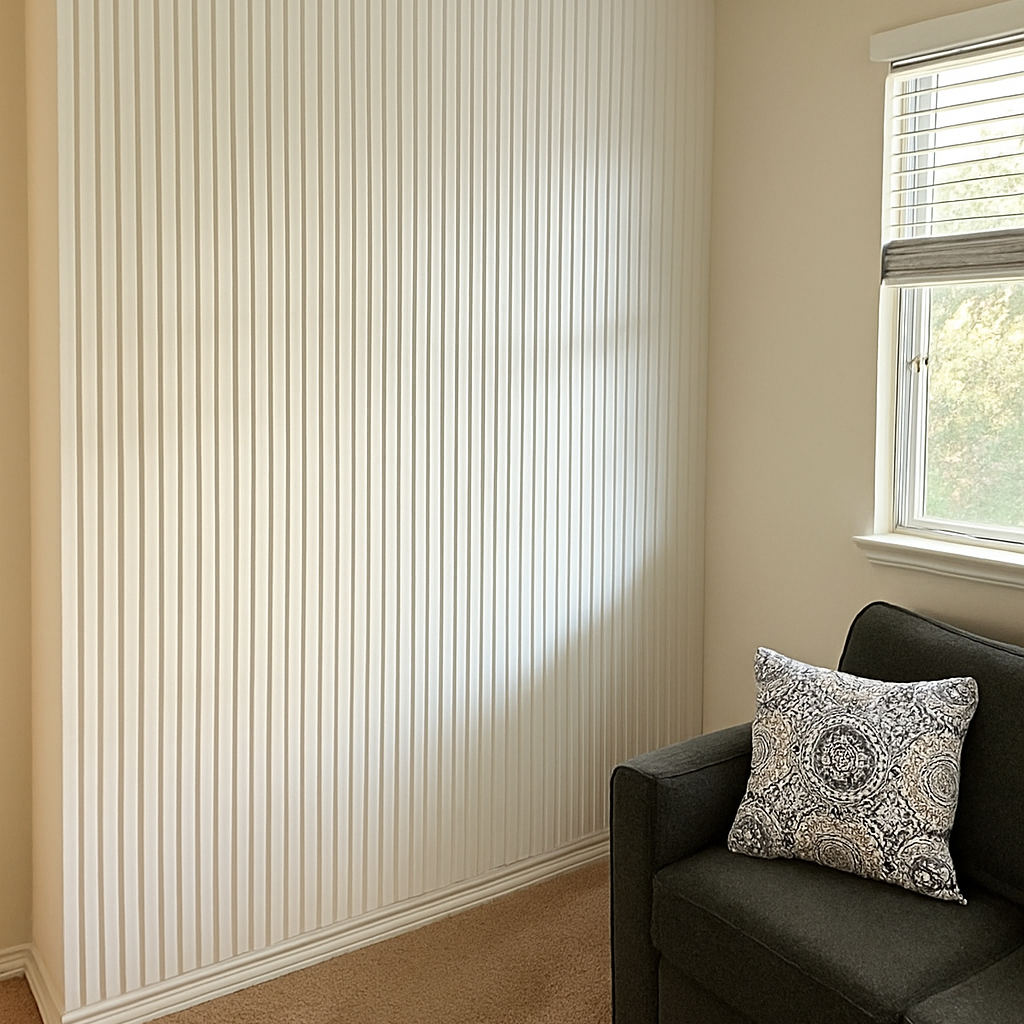
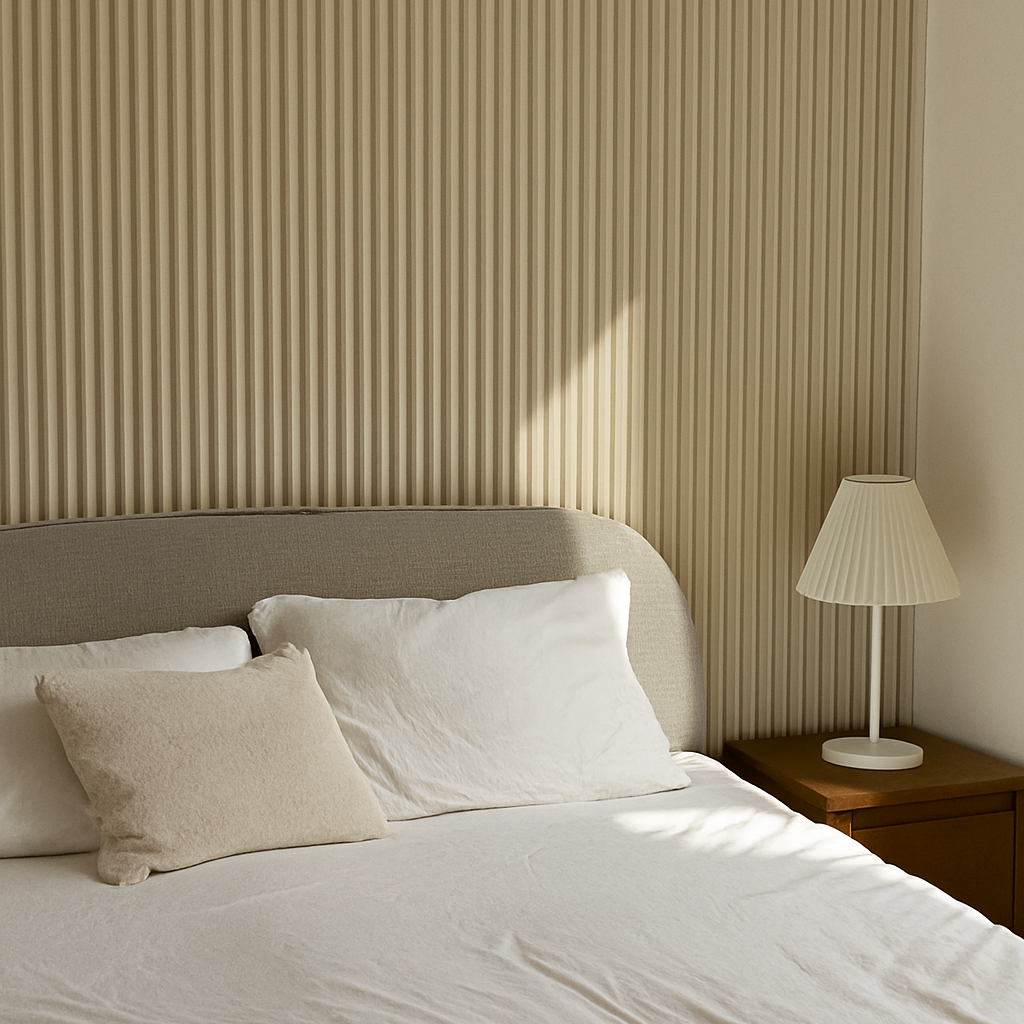
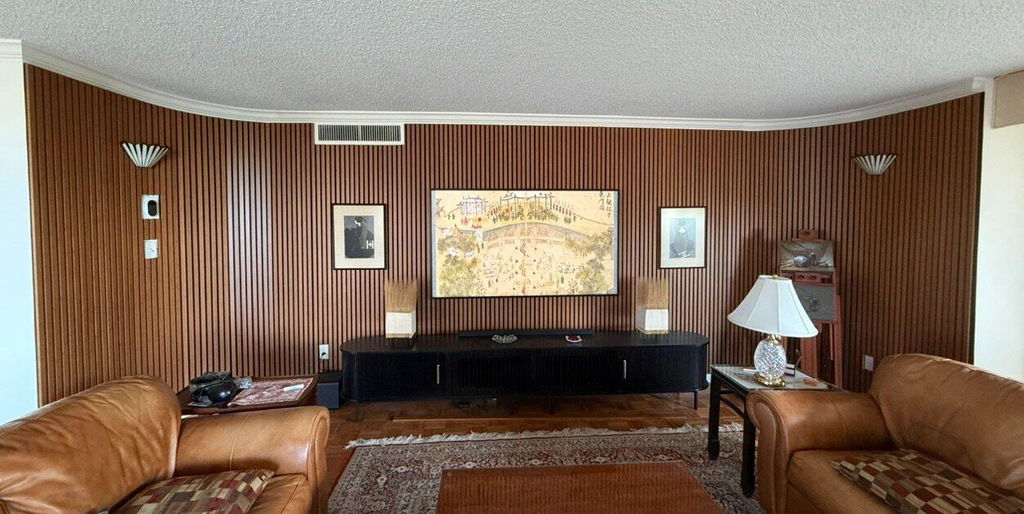
Everything about this company is absolutely outstanding! Quality of the bamboo slats was top notch with excellent, consistent coloring of wood across over 21 feet of slats; customer service answering questions was responsive, clear, courteous, and spot on; the shipping was fast and each pair of slat panels was separately boxed and well-protected so there was ZERO damage to the slats; the installation using circular saw, jig saw, and drill was easy, just like YouTube described. I was worried that cutting the slats would cause splintering, but painter's tape prevented that. I shopped around for two months looking at various companies and wood slats. This company stood out for their solid bamboo slats in 1 foot wide panels from California. The company's attention to detail and superb customer service only made the experience so much more satisfying. But the best part was the final result: the slat panels completely transformed a cold, blank wall into a warm backdrop for our art and Frame TV.
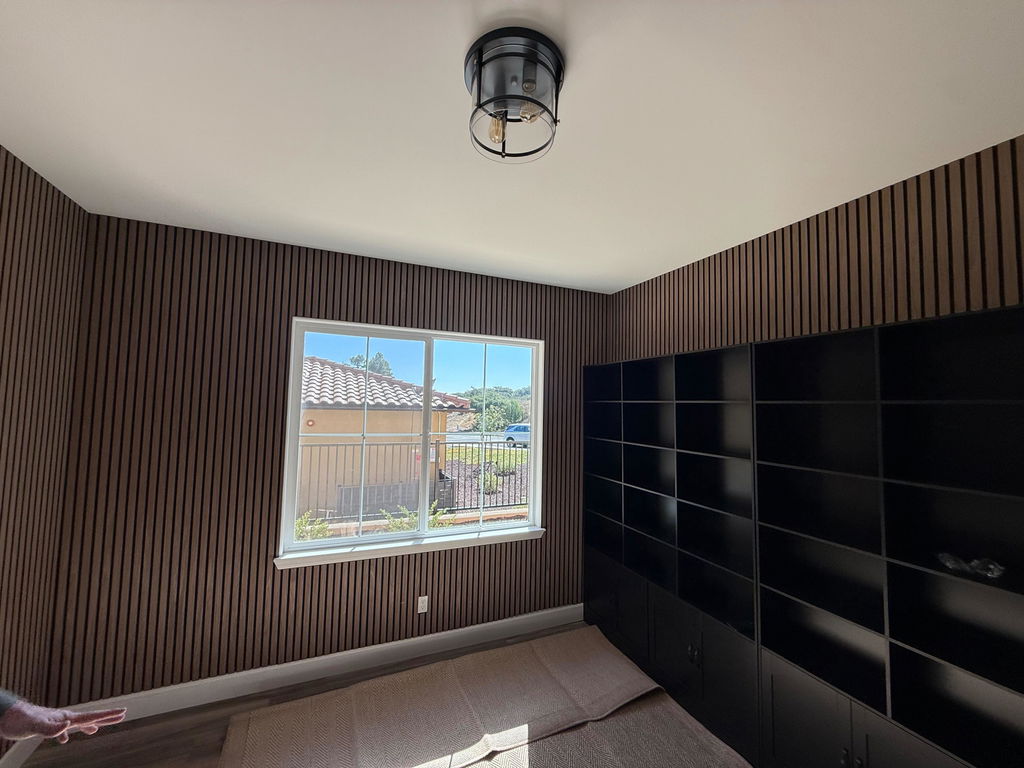
Slats.co makes such an amazing product! I cut and installed their wall panels in my home office in one day and it completely transformed my office into a quiet, warm, inviting, and professional workspace. I cannot say enough about this amazing product! Thank you Slats.co!!
Felt backing and the slats itself are good material. I ordered 3 boxes, out of which 1 had stapled slats on felt while other 2 were glued. The staples one became loose at few points and cutting them was difficult as loose pieces came out. I had to glue them back. I believe they updated the process and now glueing them on the felt which is much better. I would recommend getting the glued on panels instead of staples.
Lite version looks good but I wish they made regular version for long lengths too. Overall, I am happy how they look on the wall - Get the truewood!
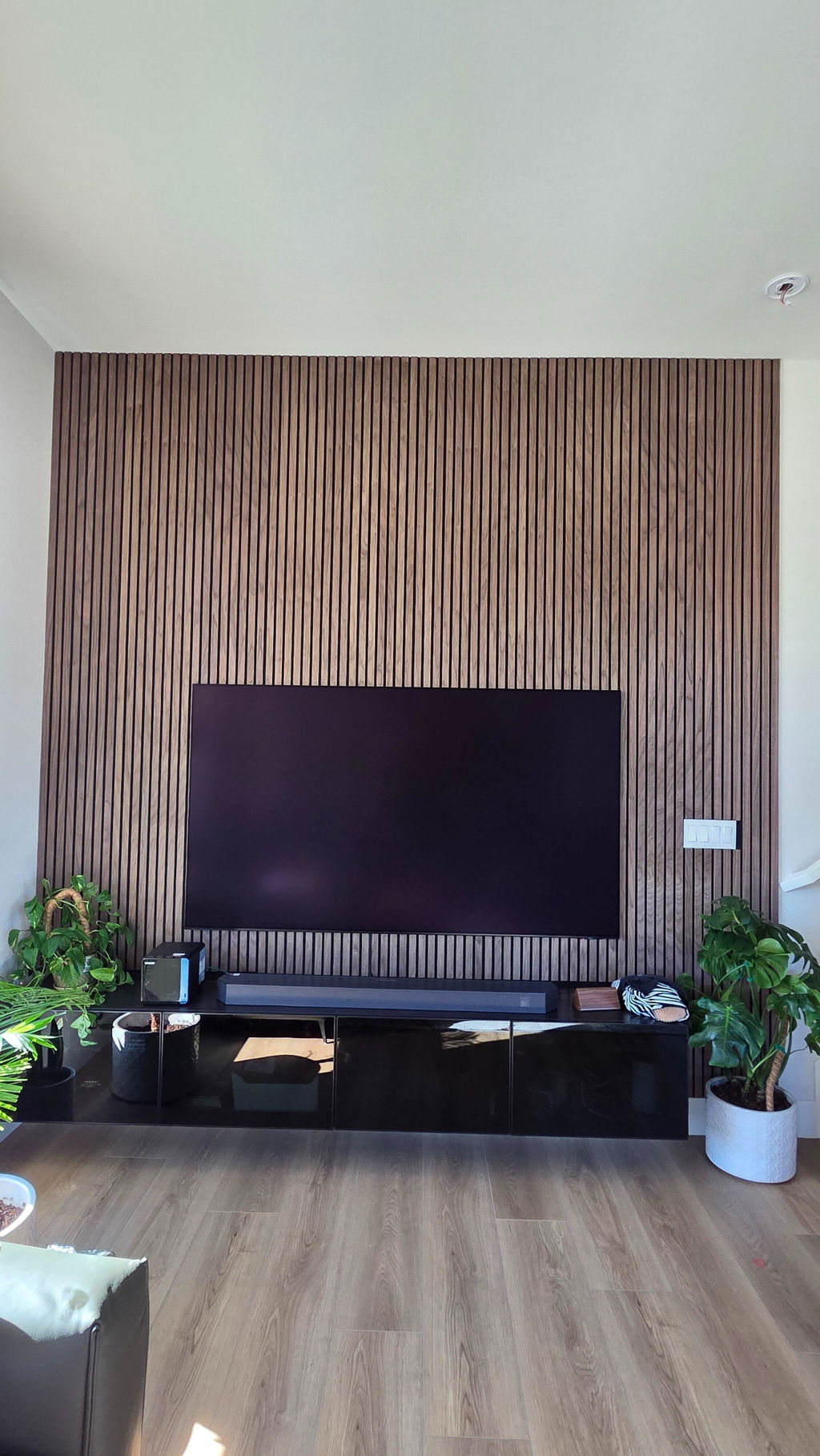
VERY happy with this purchase! Excellent product quality, easy installation, and superb customer service! The wood has dimension to it and looks great, especially in a room with a lot of natural light. Highly recommend!
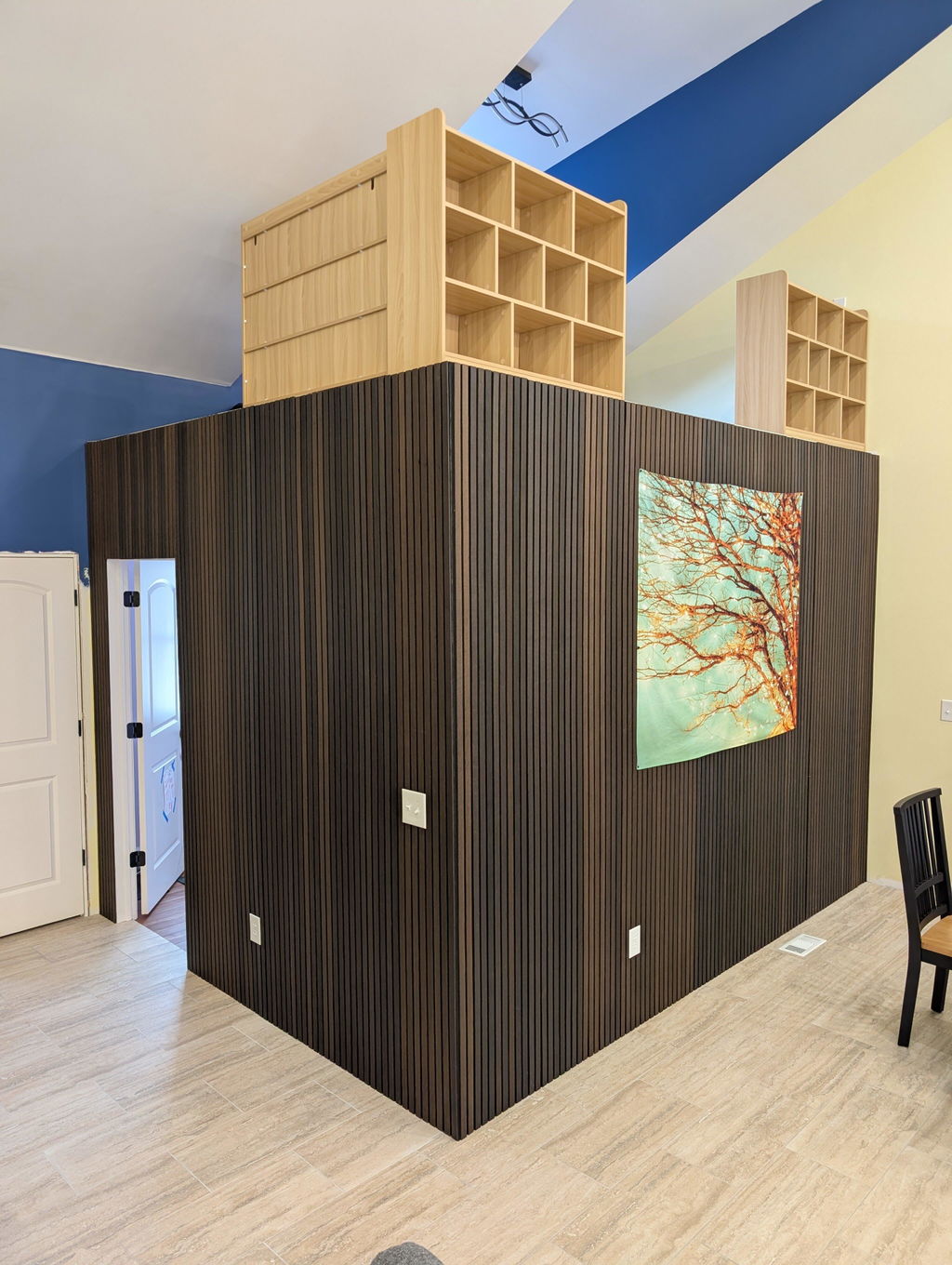
We had a great paper white room hat needed a feature wall to make it pop. So after a ton of research, we figured we needed the Ultralight Walnut version, and we are so glad we did. We are so addicted to the outcome that we have identified two more rooms/walls to do the same, and we ordered 5 more boxes!
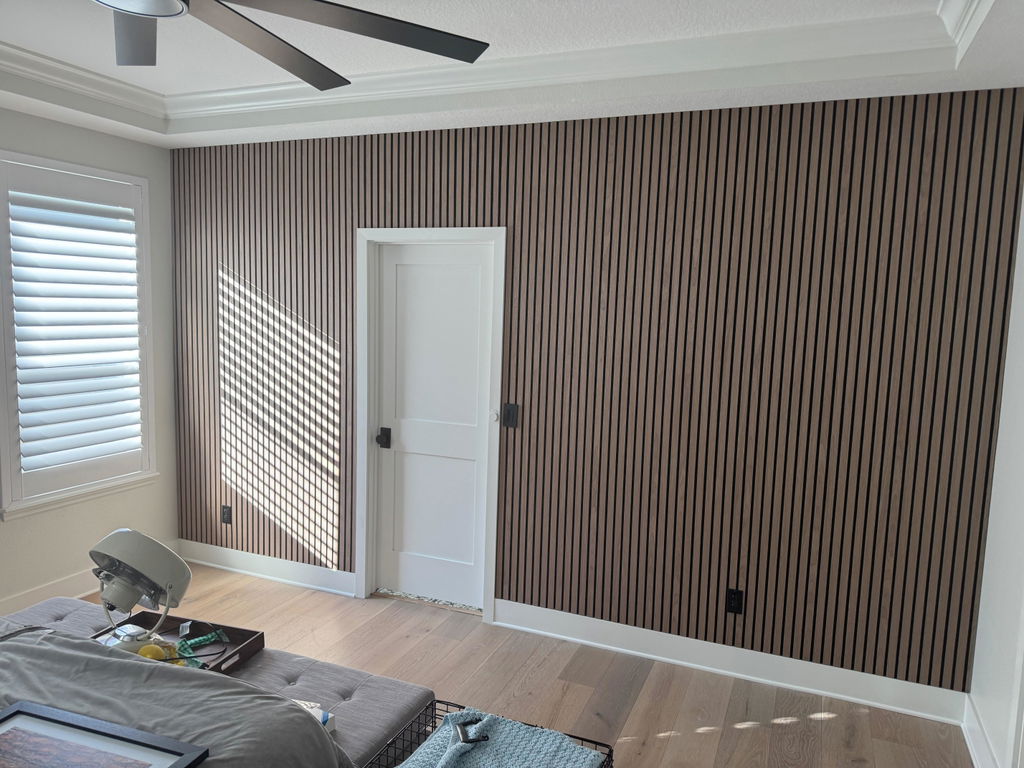
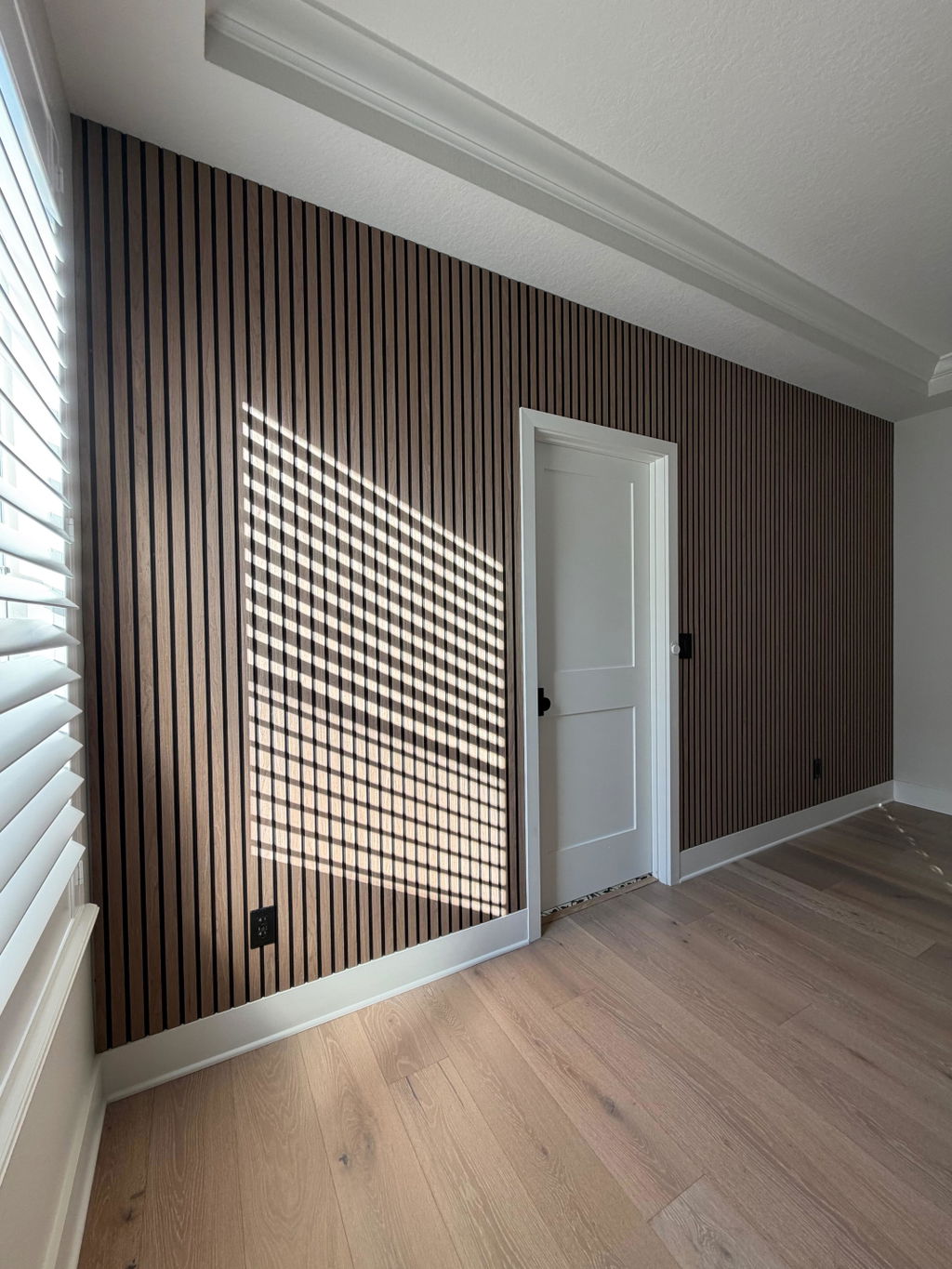
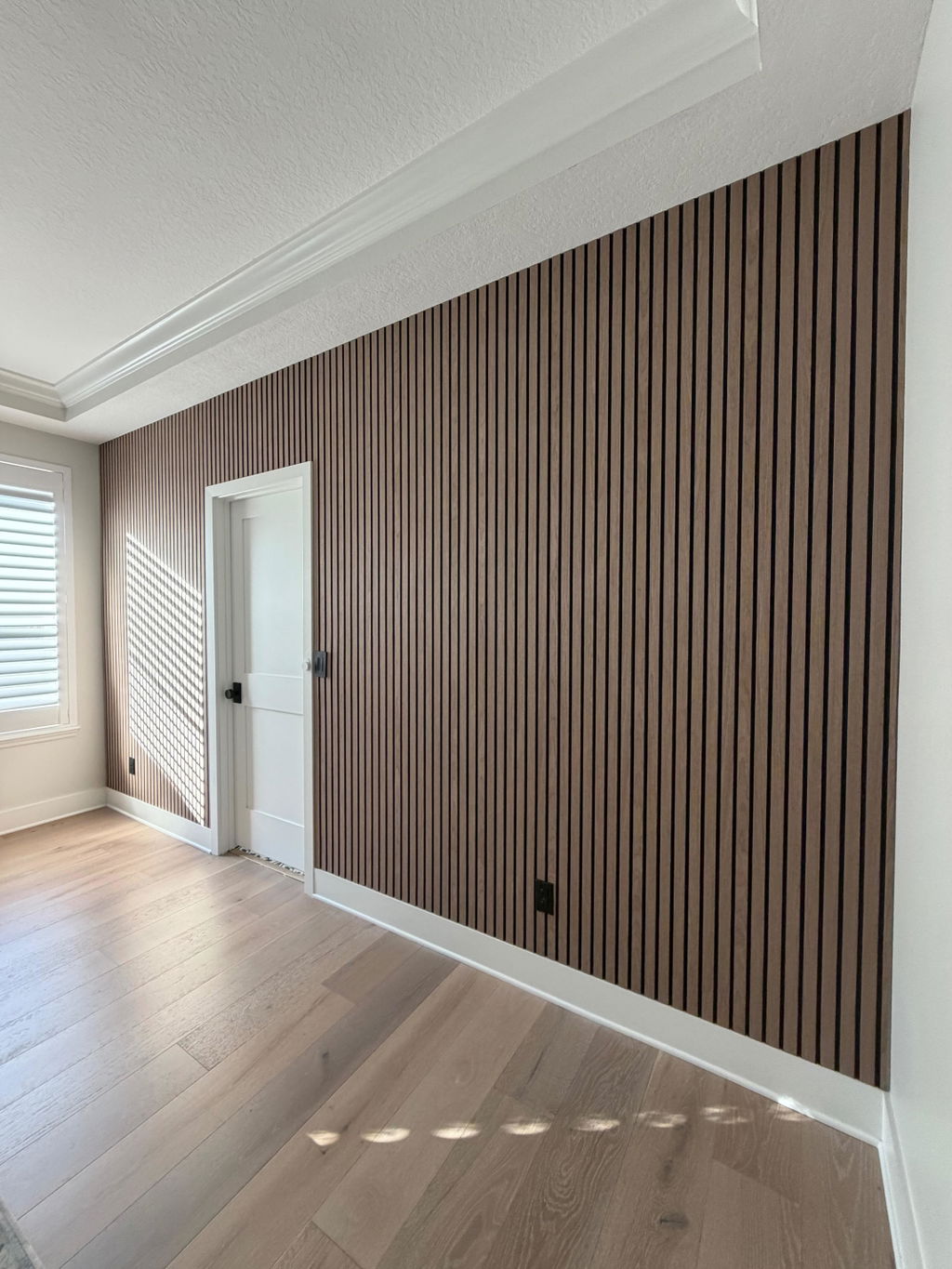
Overall I am happy with the new slats. The veneer is extremely thin and I had to be careful not to chip it simply handling them during cutting and install. They did cut well on my table saw. They look great installed, but I'm not expecting years of durability. If the veneer was even a 16th of an inch, I'd give them 5 stars.
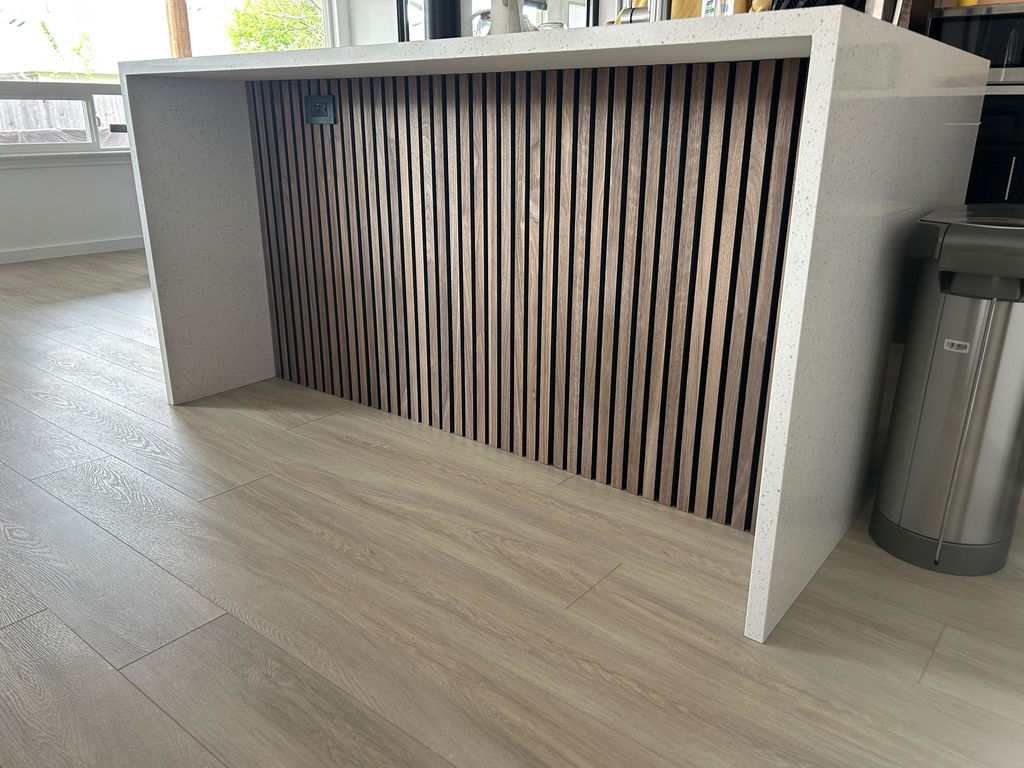
These were just what I was imagining my plain-walled office space needed. Having virtual meetings with an empty white space behind me was getting old and I didn't want to just hang shelves. Enter Slats and I now have the visual interest I needed (with the help of a couple framed pictures). Perfect in every way!
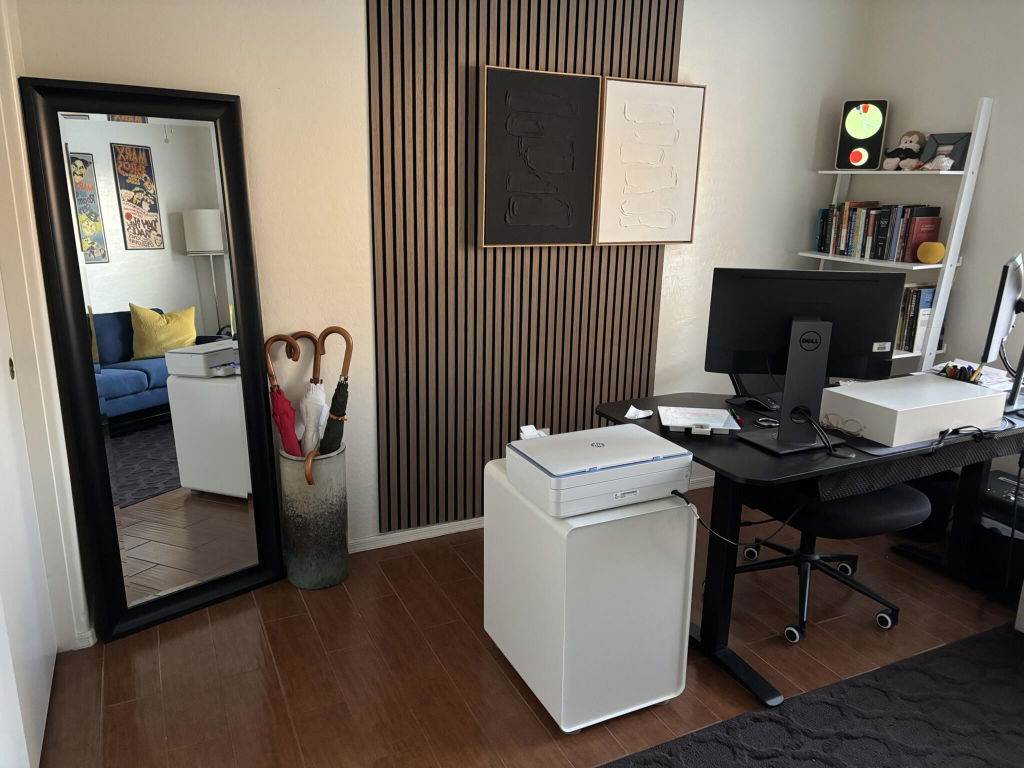
I had a wall that was a little boring and the room on the other side, sometimes complained about noise. It was easy to cover the entire wall with these, and I just used a box cutter, ruler, and finishing nails.
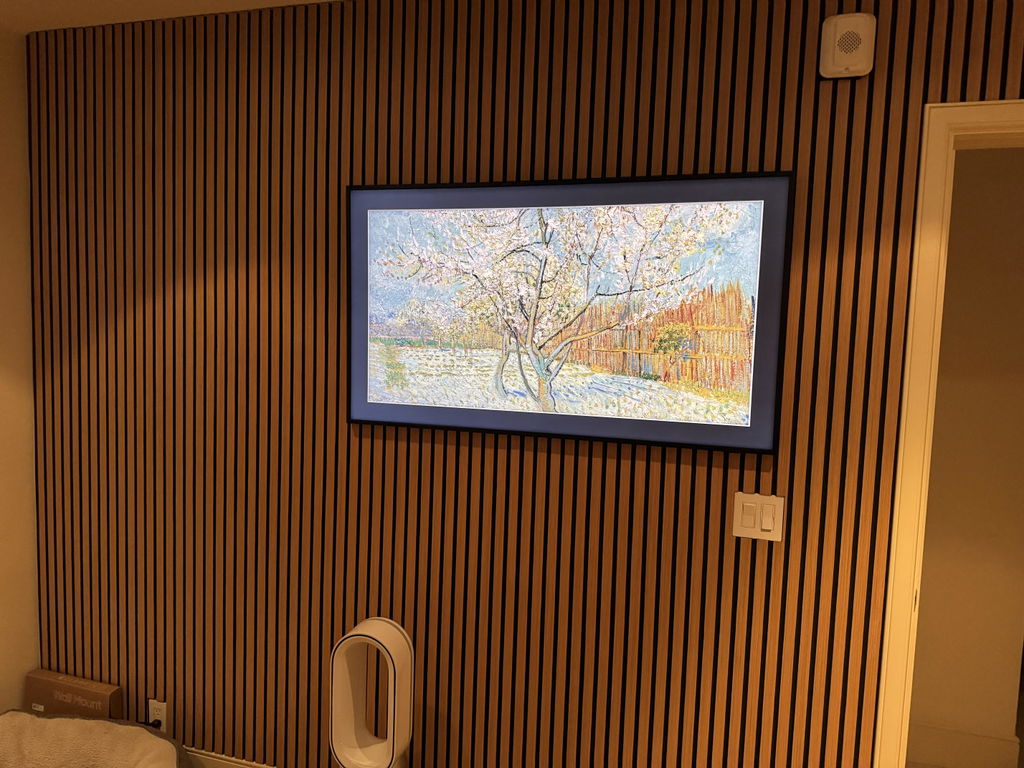
They look beautiful and work well at damping sound. Shipping was quick, and the product was nicely packaged.
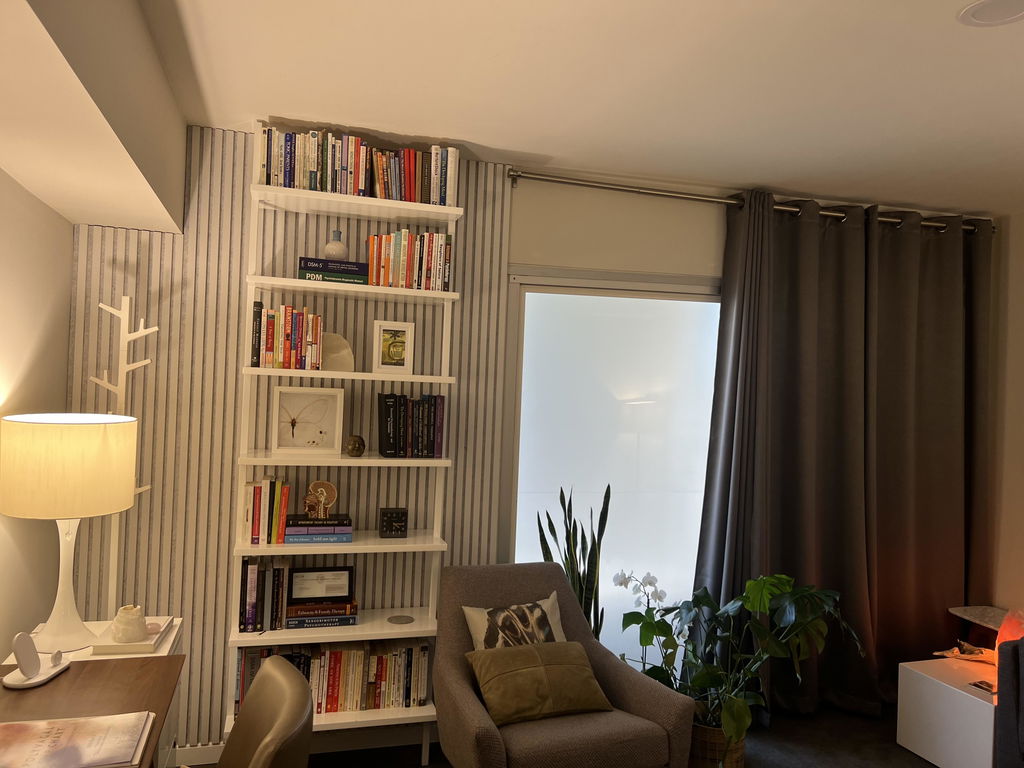
Fantastic product!
Beautiful real solid Walnut hardwood. Surface feels smooth and solid. Natural minor warping, but not a problem after glued and mounted to wall.
Super nice! Just what I was hoping for and they look really classy. The black felt and gray oak is a great combo. These are perfect for our .5" thick trim.
Pleased with the quality and the ease of installation with the product.
Slats has been very helpful with a miss order on my part and resolved my order.
It’s been installed and looks great.
Dark Smoke Oak TrueWood Lite 3-Sided Veneer Acoustic Slat Panel
Very easy to put up and looks amazing
Beautiful wood ! Easy to install only thing that i dislike is the slats come loose. Needsmore staples and maybe glue to hold the slats on . I worked around that prby gluing and tapping the slats that came off.
Could not be happier with American Walnut TrueWood Lite 3-Sided Veneer Acoustic Slat Panel. The order arrived within days. It is a high quality product. The slates went up easily and added a rich look to an otherwise plain room. Will definitely order again for future projects!
American Walnut TrueWood Lite 3-Sided Veneer Acoustic Slat Panel is a great product. Easy install with construction adhesive. Used my trac saw to cut the slats and it worked great both horizontal and vertical. Staining was easy due to the three-sided veneer. Matches perfectly to my black walnut dining table. Slatsco offered great customer service. Can't wait to install some of their other great products.
I absolutely love these slats! The quality is fantastic, and they look beautiful once installed. They’re also surprisingly easy to work with — easy to cut to size, and you can attach them to the wall using adhesive or nails.
One tip: be a little careful when taking them out of the box and handling them before installation, as you don’t want to accidentally bend them.
What really stood out to me was the customer service. Truly A+++! They are incredibly kind, genuine, helpful, and very fast to respond. You can really tell there are real people behind this company who care about their customers.
I also love supporting a small, family-owned business, especially when both the product and service are this good. I would absolutely purchase from them again and highly recommend them to anyone considering these slats!
Great quality product, uniform and clean all around.
ULTRALIGHT Flexible Lightweight White Oak Acoustic Wood Slat Wall Panels with Beige Felt Backing
Very easy to use. Fast shipping. A great easy upgrade to any room!
Took for ever to get them (3 months) even though it says 5 to 7 days shiping
Overpriced. Bed material
They scratch and broke while we were profesionaly installed
Do not rekomend
If posible I will give them -5 ⭐️
Thank you for taking the time to share your feedback — we're truly sorry your experience didn't meet expectations.
Your order was for a pre-order item, which we communicated at the time of purchase and followed up on directly. Our 5-7 day shipping applies to in-stock products, and we completely understand how frustrating the wait can be when you're eager to get your project started.
Throughout your order we did our best to keep communication open and transparent — we shipped complimentary samples via expedited shipping so you could see the product while you waited. We even shipped you another box of the panels at no additional cost. We truly tried our best to make things right.
We genuinely want every customer to have a great experience, and we're sorry we fell short for you. If there's anything else we can do, please let us know! We are truly open to hearing from you.
Very light weight and easy to install. A great product. I did order the $30 sample pack and it said you would get 30. Off your order but I didn’t see anyway to get the 30 taken off on my order.
Lovely well packaged panels that added pizazz to my accent wall.